One small rooftop unit per flat
- Works well when
- Few flats, and enough roof space after water tanks and AC units
- Watch out for
- The roof fills quickly, and long pipe runs to lower floors
Most solar water heater installation in Sharjah falls into two groups.
Most solar water heater installation in Sharjah falls into two groups. The first is landlords of low-rise apartment buildings replacing a flat-by-flat set of electric heaters with solar, either one rooftop unit per flat or a shared system. The second is owners of new homes in communities such as Aljada, Tilal City or Al Zahia, where the developer’s rules shape where the system can go. For a general guide to system types and the installation steps, see installation in the UAE.
Many older Sharjah buildings have an electric water heater in every flat. Moving to solar is a landlord decision, and the main choice is how to arrange it on a shared roof:
Our apartment building guide explains these options in more depth.
Before installation on an occupied building: agree access times with the landlord and building watchman, plan short water shut-offs floor by floor, and let tenants know in advance.
Tell us about the property, occupancy and current hot water setup.
We check the roof, orientation, shading, structure, water supply and pipe routes.
Capacity, collector type and tank are selected and set out in a written quotation.
Frames, collectors, tank, pipework, insulation and controls are fitted.
We fill, test and explain the system, the backup heater and basic care.
What a properly done job means for your property and your hot water.
Sunlight does most of the heating, so the electric backup element runs far less than a conventional heater for most of the year.
A correctly sized tank stores heat collected during the day for evening showers and early mornings.
Capacity is matched to the number of people, bathrooms and fixtures, so the system is neither undersized nor oversized.
Solar heat replaces grid electricity for a household's or building's largest everyday energy use after cooling.
Mounting, insulation and materials are chosen for strong sun, heat, dust, humidity and wind on exposed roofs.
With few moving parts, a well-installed system mainly needs periodic cleaning, checks and an annual service.
A selection of residential, commercial and industrial solar water heating projects we have completed.
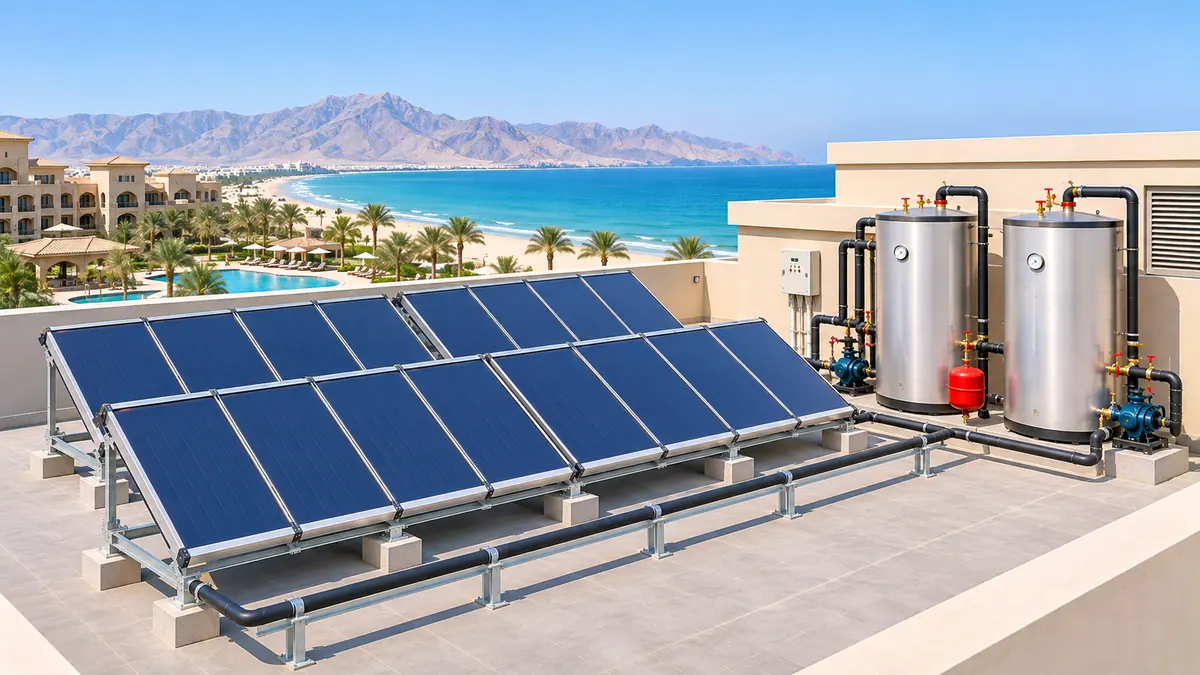
 CommercialBuilding rooftopSharjah · Solar collector array with storage tanks on a Sharjah rooftop
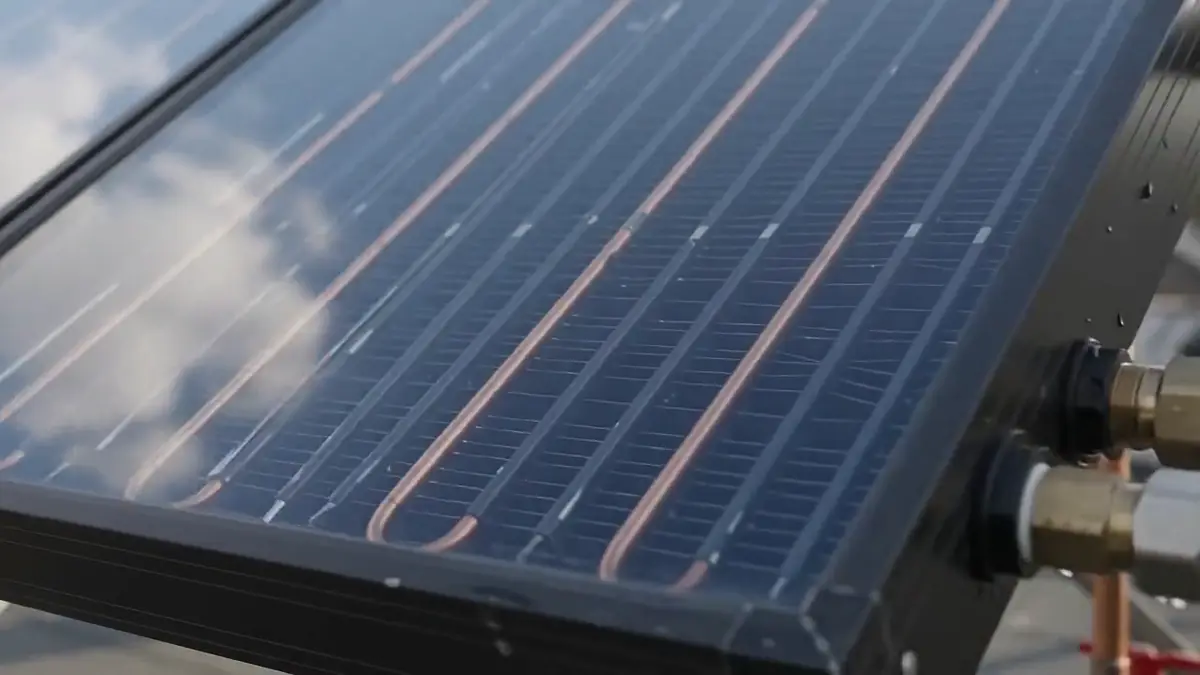 ResidentialCollector and tank connectionsUAE · Video close-up of solar collector pipe connections to the storage tank
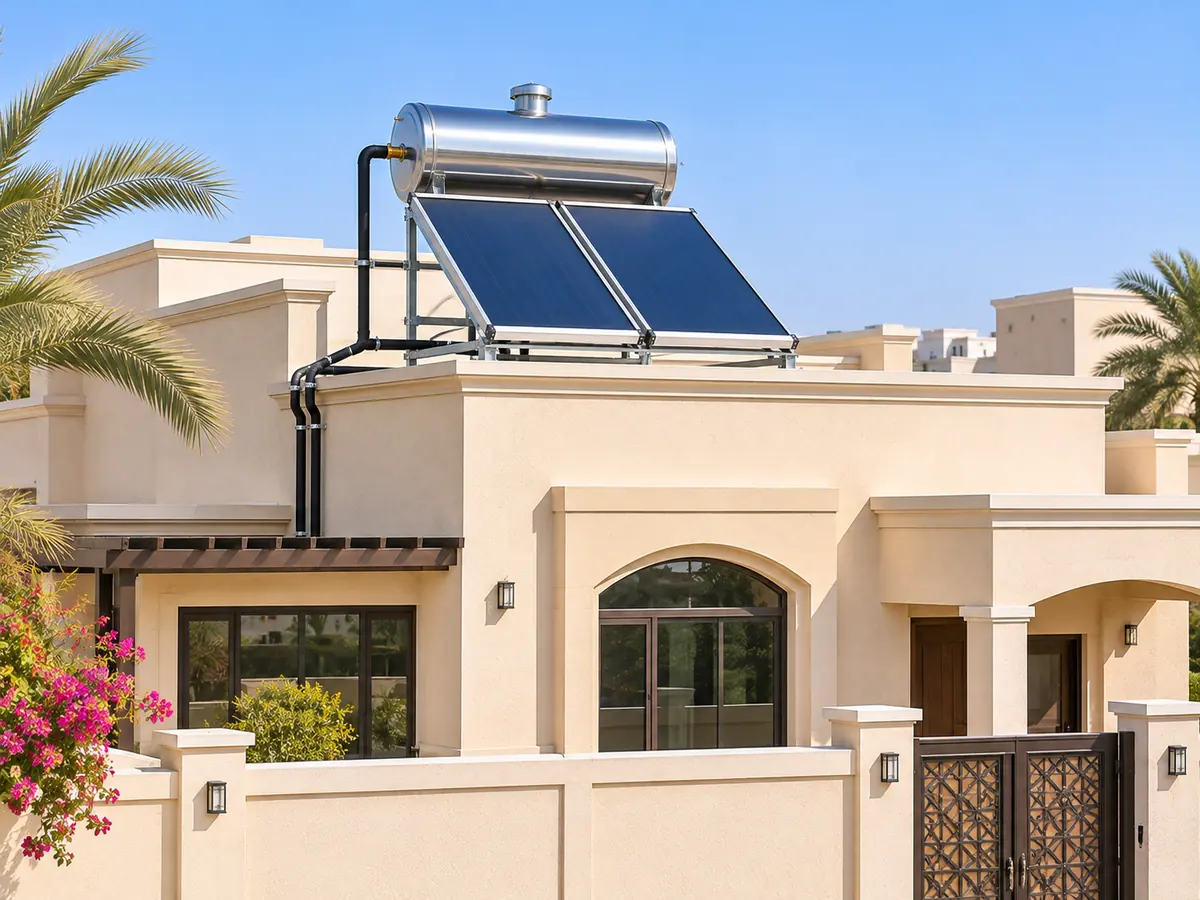
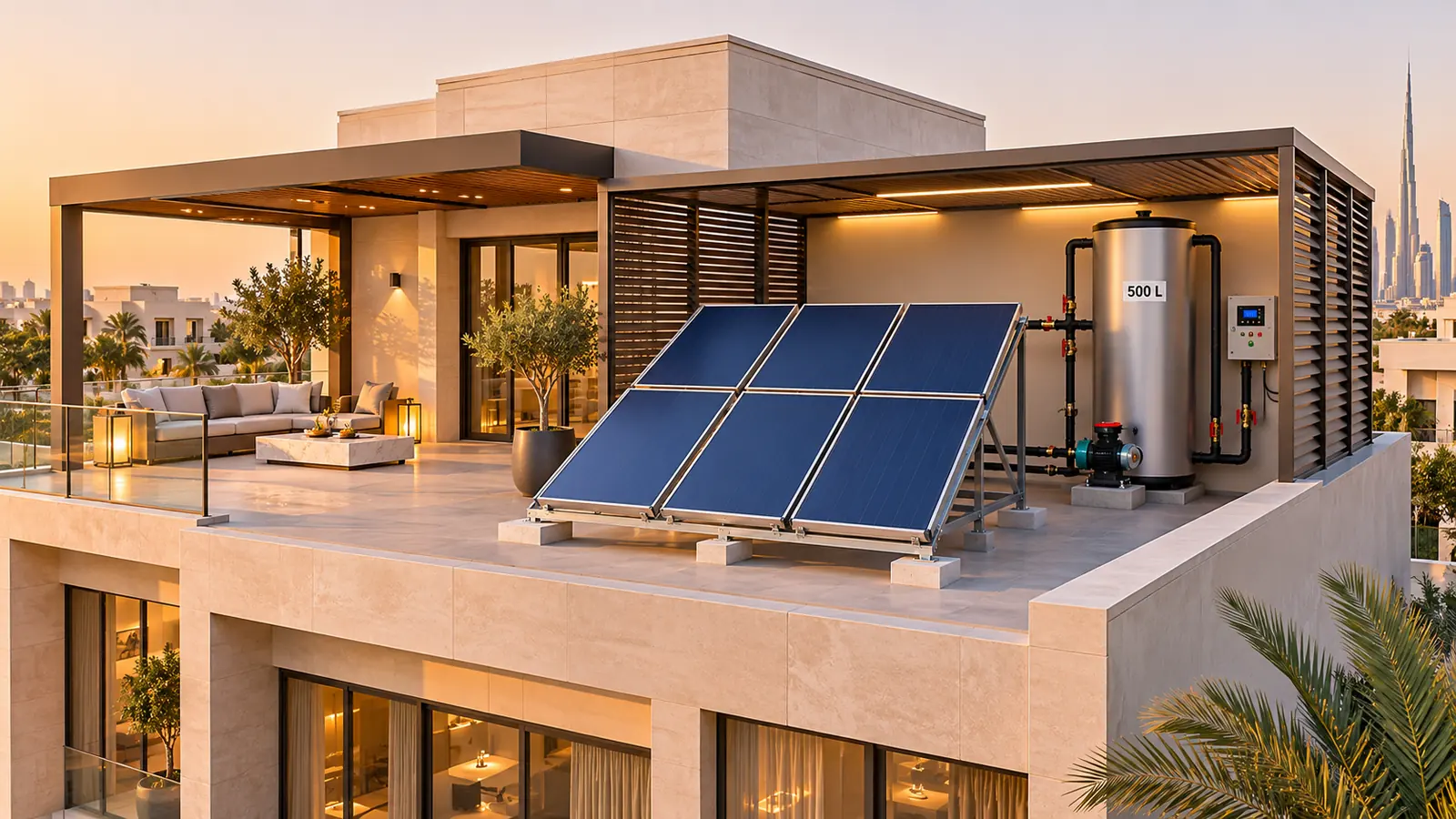 VillaLuxury villa roof terraceDubai · Luxury Dubai villa roof terrace with a solar water heater and storage tank
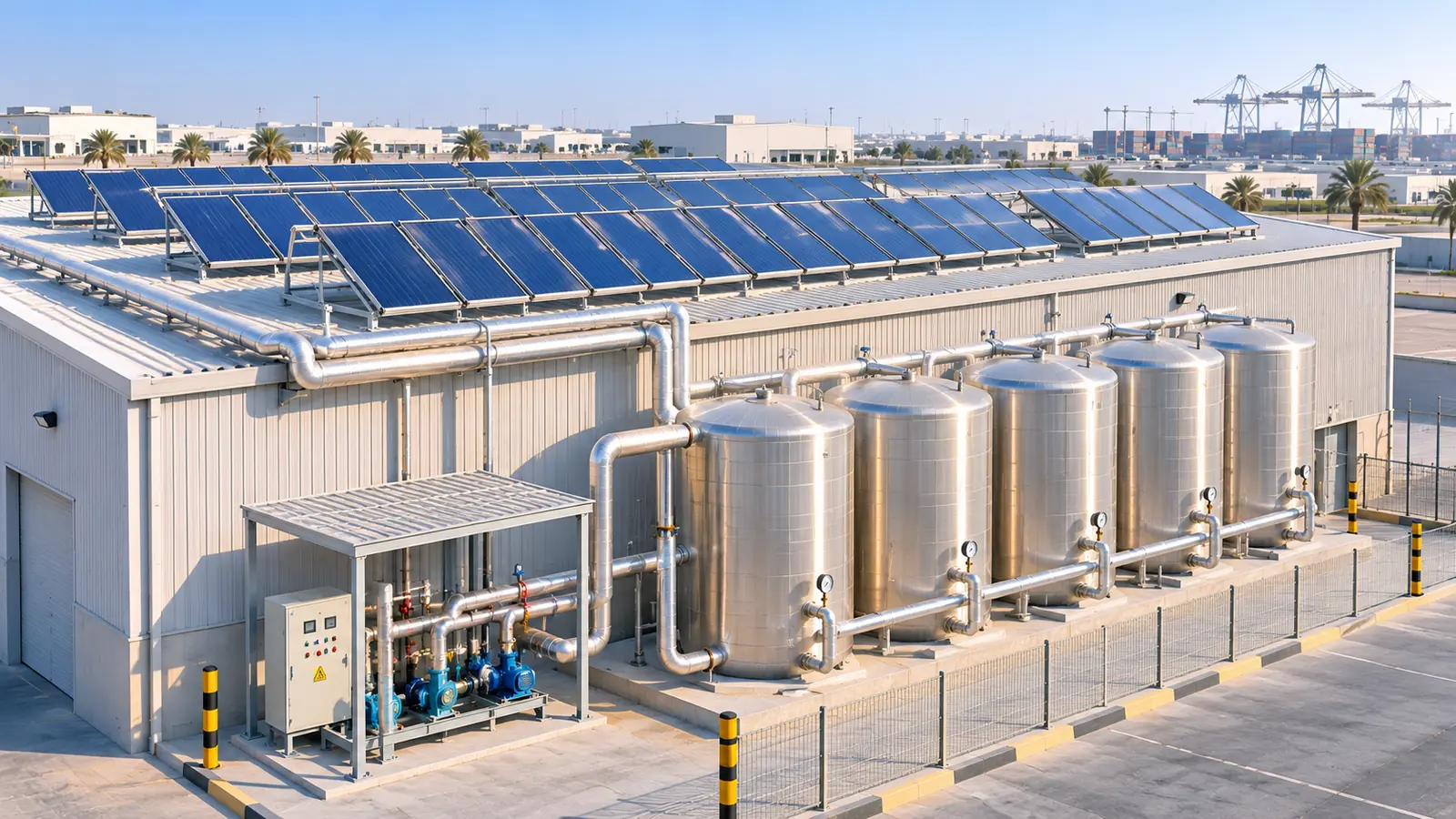 IndustrialIndustrial rooftop plantUAE · Large rooftop solar thermal plant with a row of storage tanks
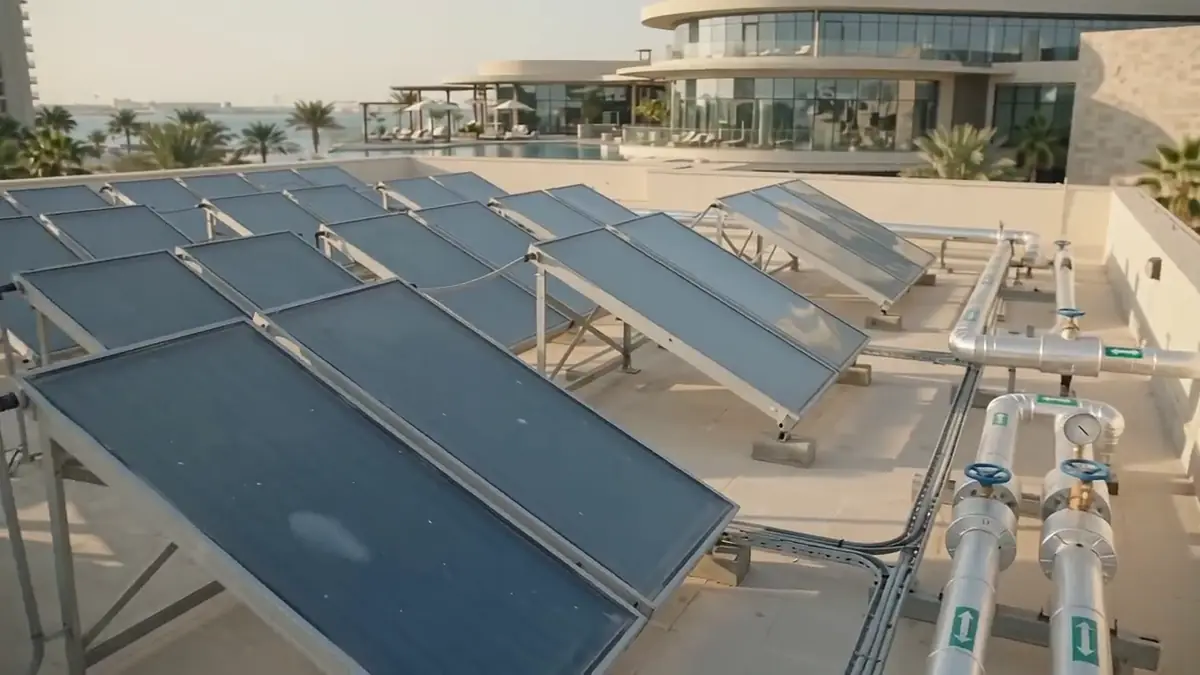 CommercialBeachfront resort rooftopUAE · Video of solar collectors and storage tanks on a beachfront resort roof
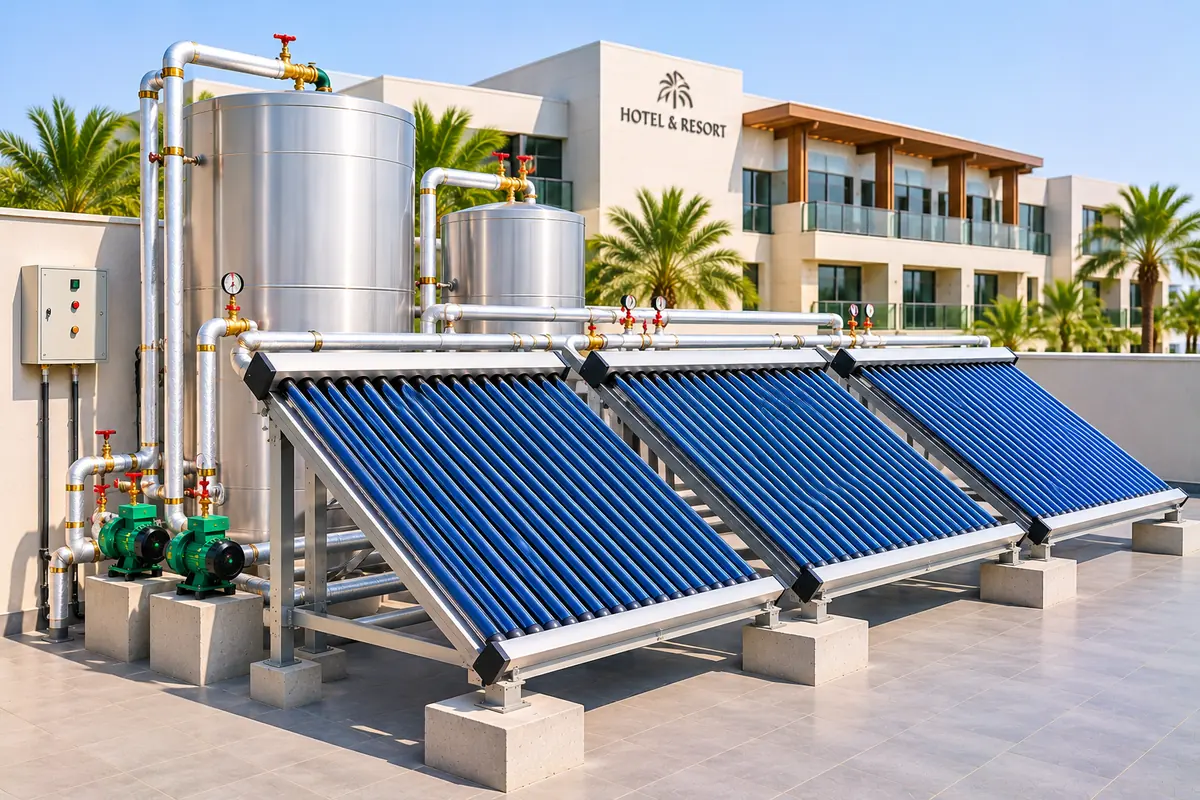 CommercialHotel and resortUAE · Evacuated tube collectors and storage tanks on a hotel resort roof
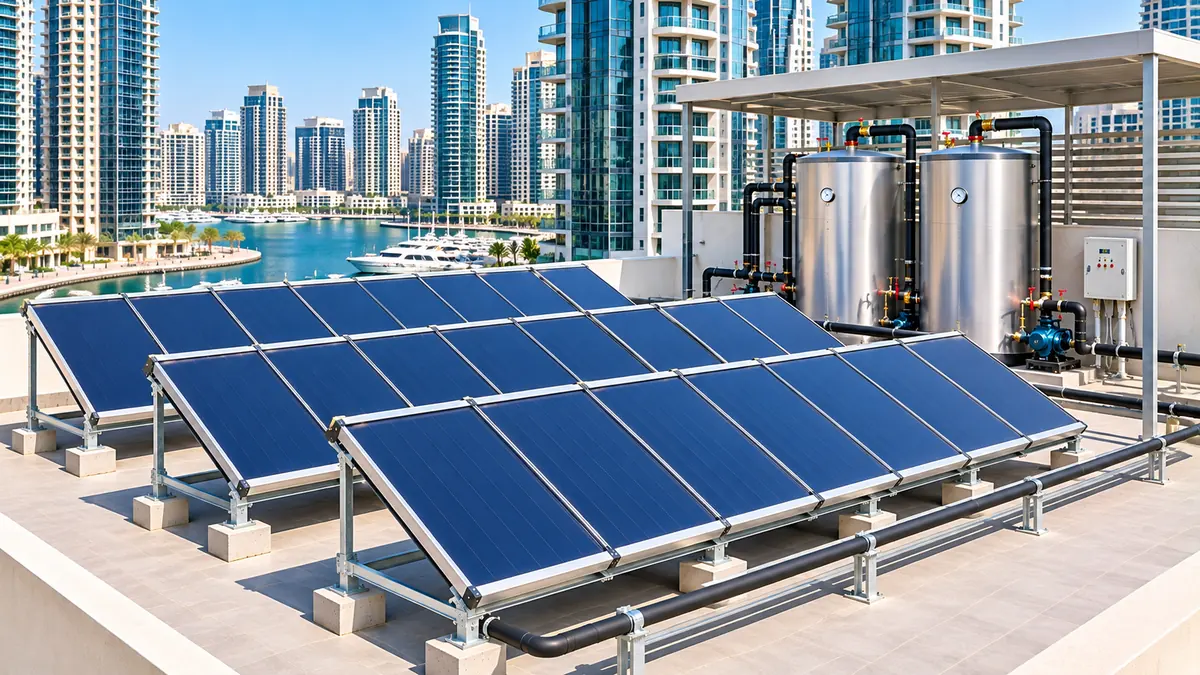
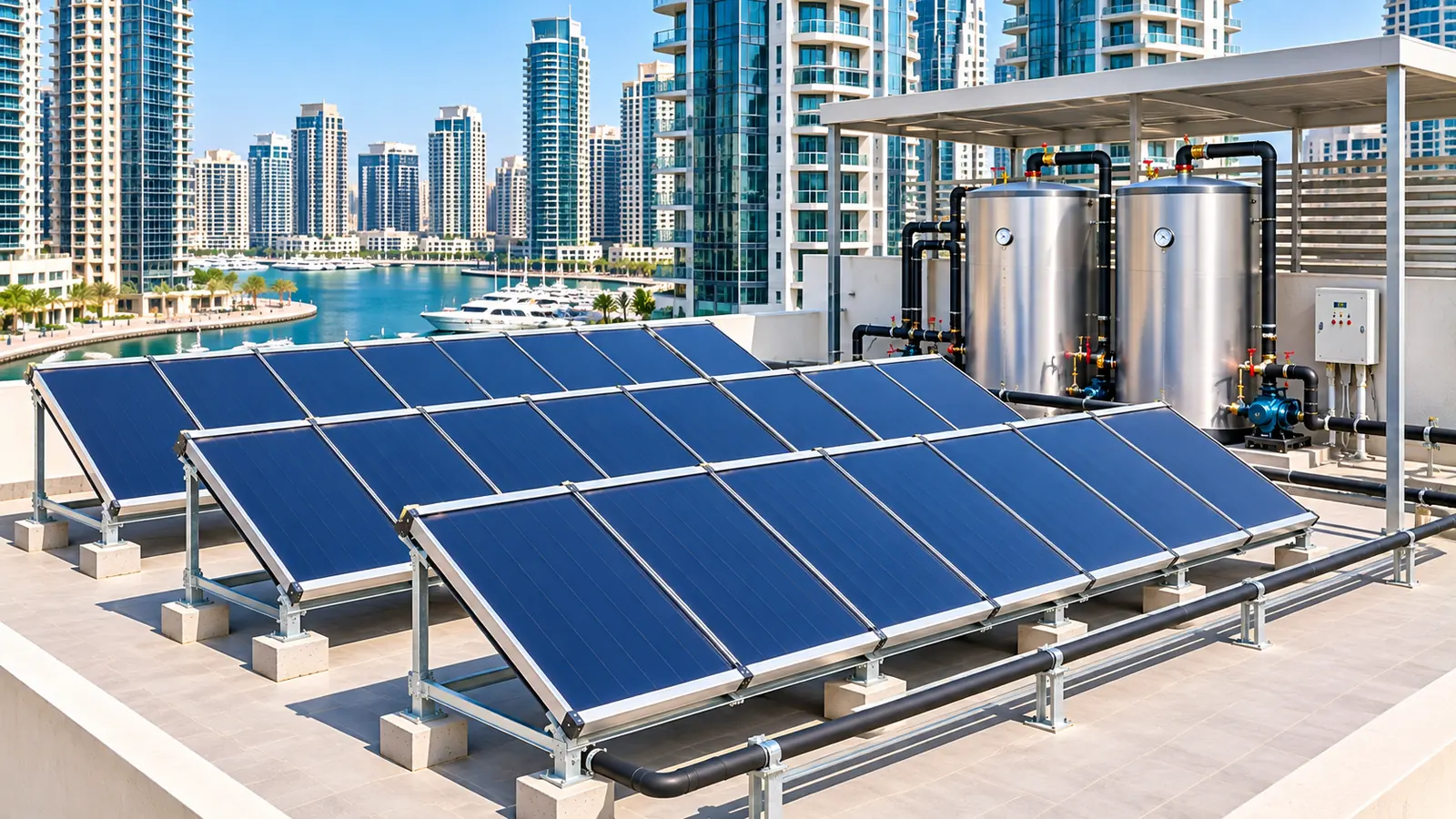 CommercialHigh-rise rooftopDubai · Solar thermal collectors and tanks on a Dubai Marina building roof
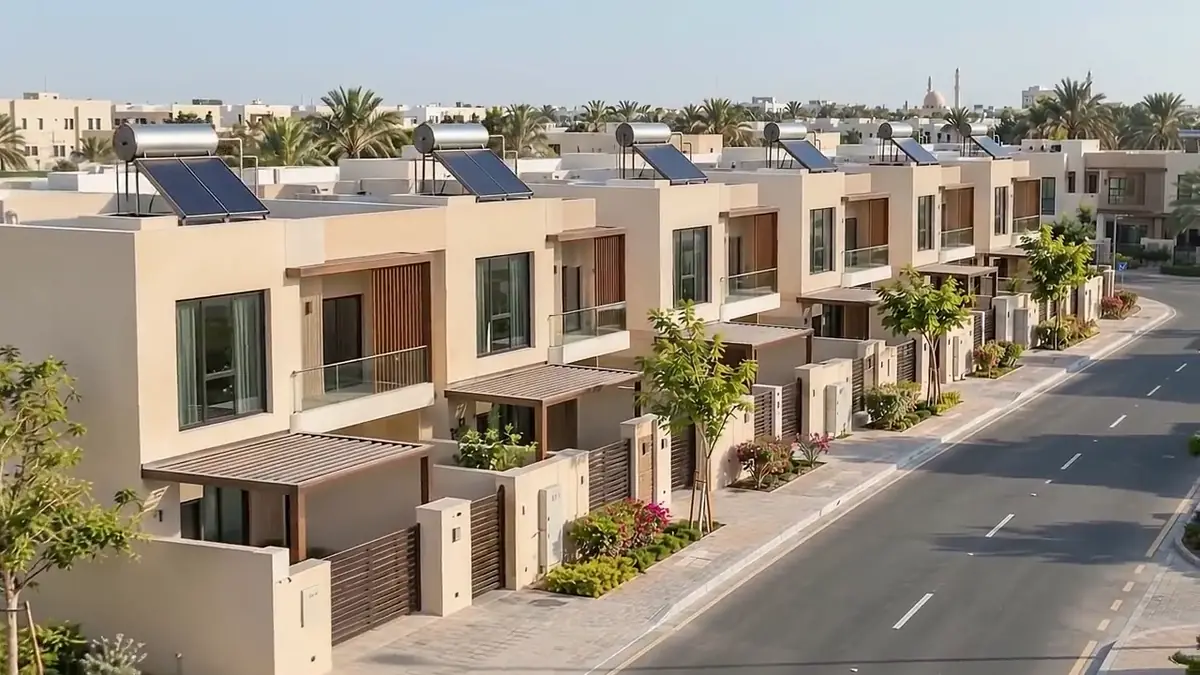 VillaTownhouse communityUAE · Aerial video of townhouses with rooftop solar water heaters
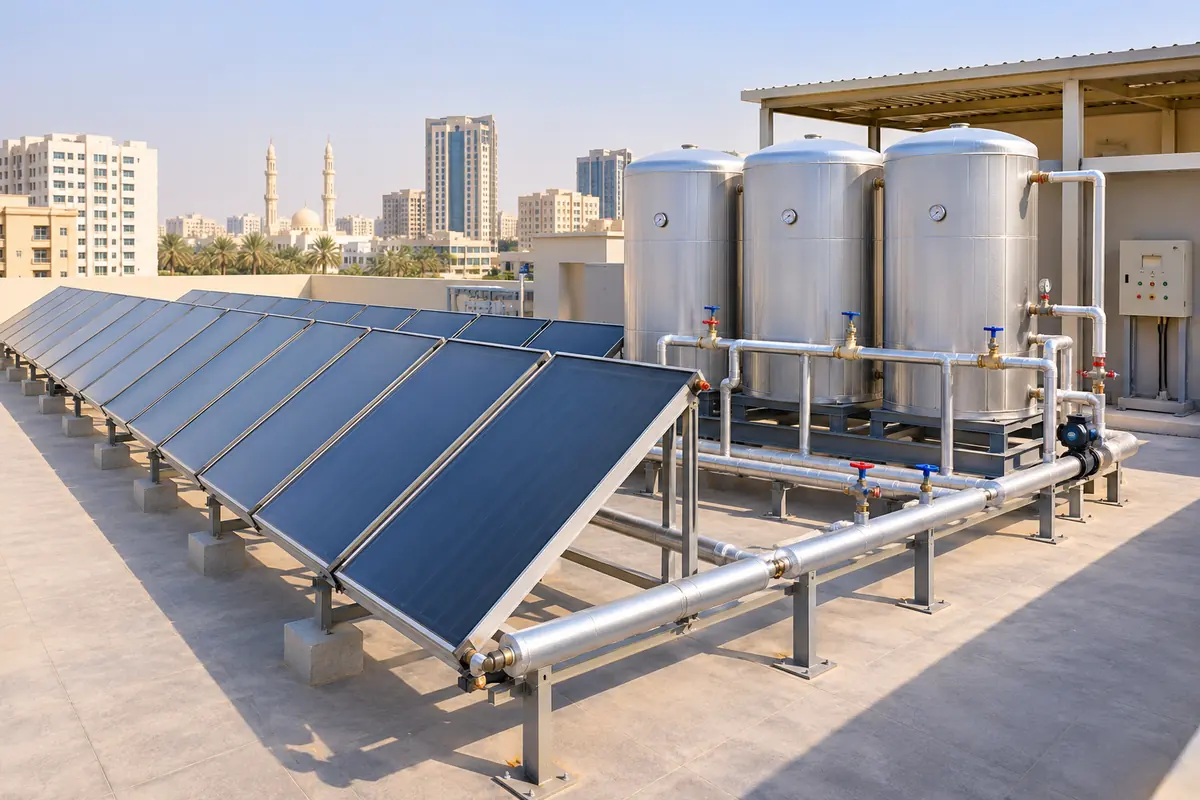
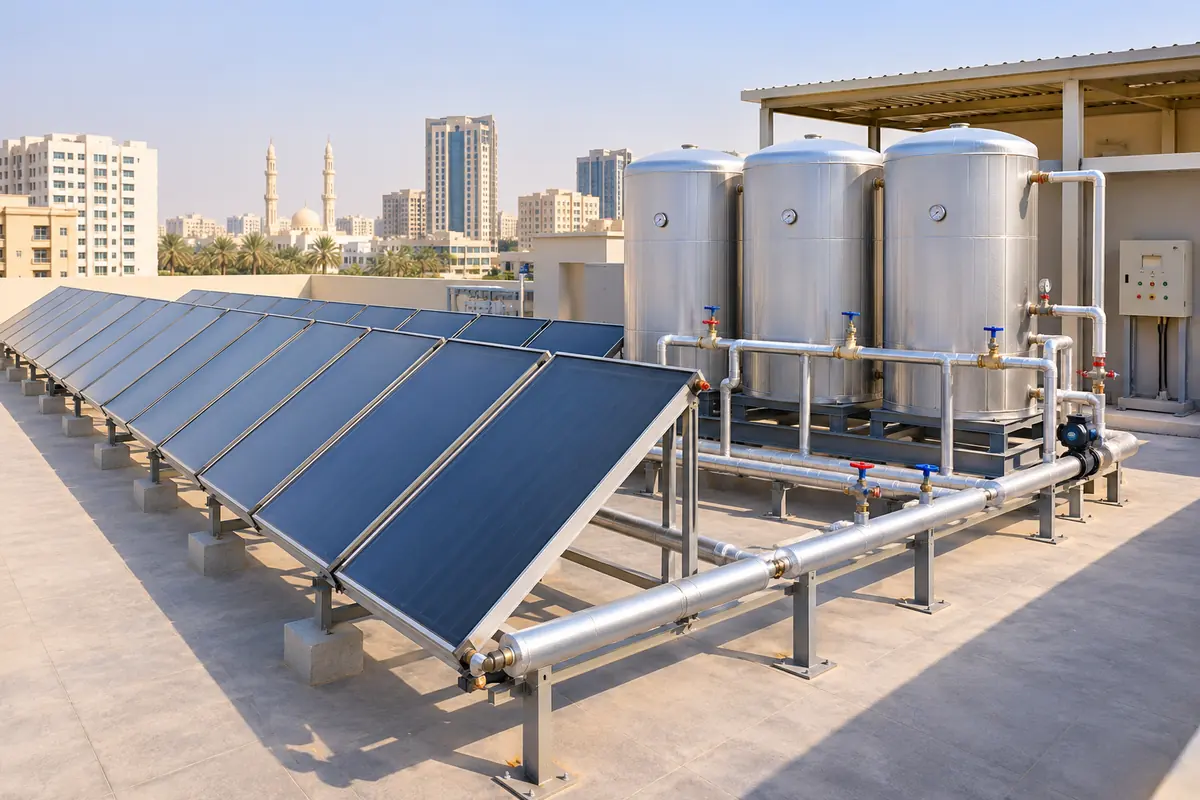 CommercialMulti-tank systemSharjah · Solar collectors feeding three storage tanks on a Sharjah roof
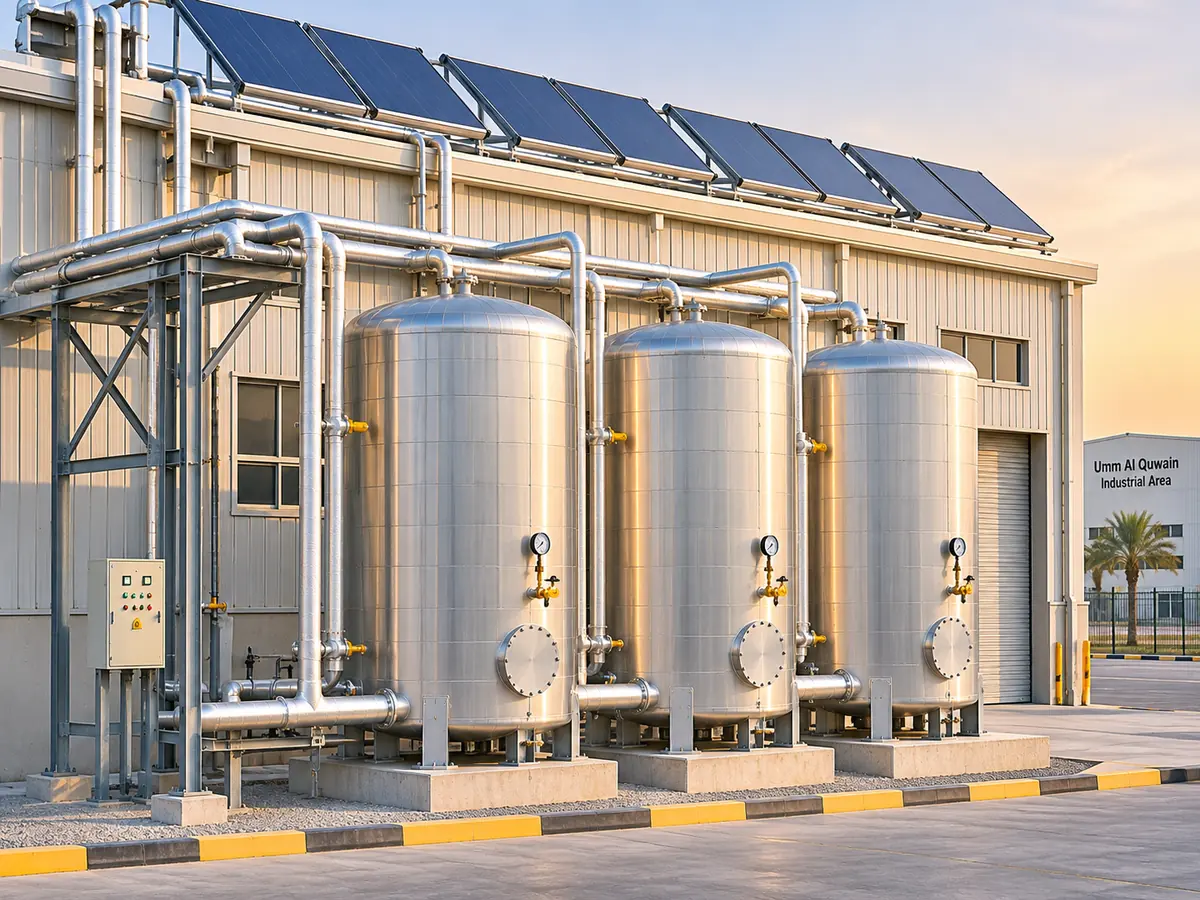 IndustrialIndustrial tank facilityUAE · Bank of large stainless steel solar hot water tanks at an industrial facility
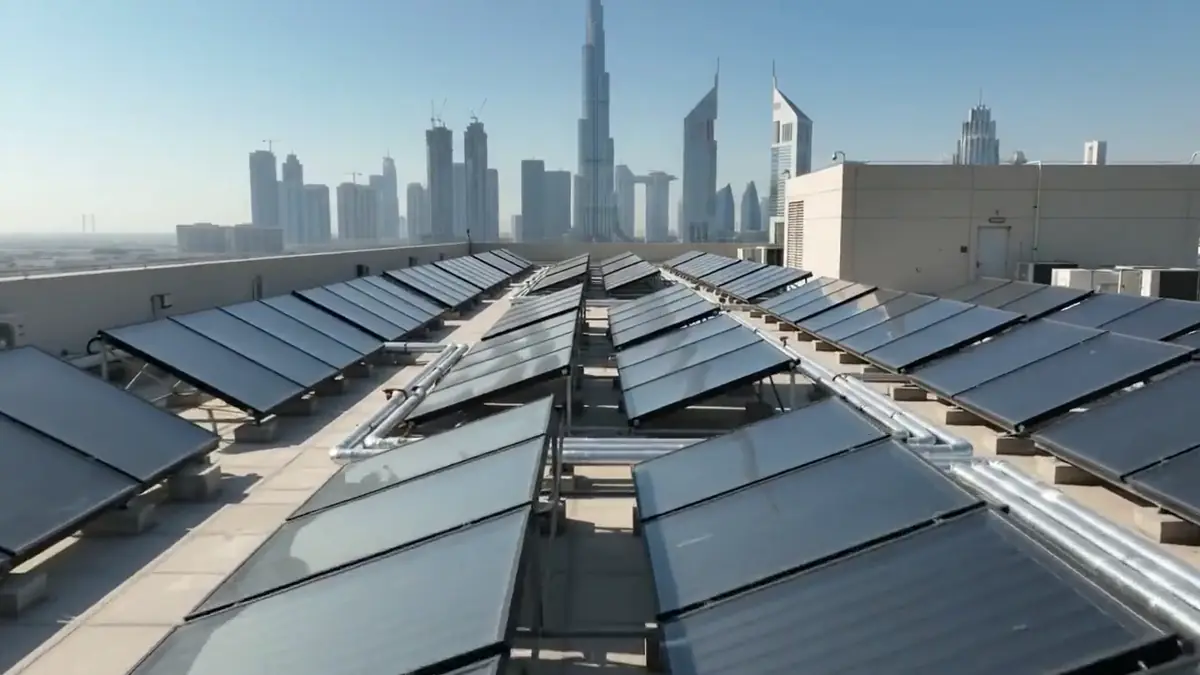 CommercialCommercial rooftop plantUAE · Video of a commercial rooftop solar hot water plant with the Dubai skyline
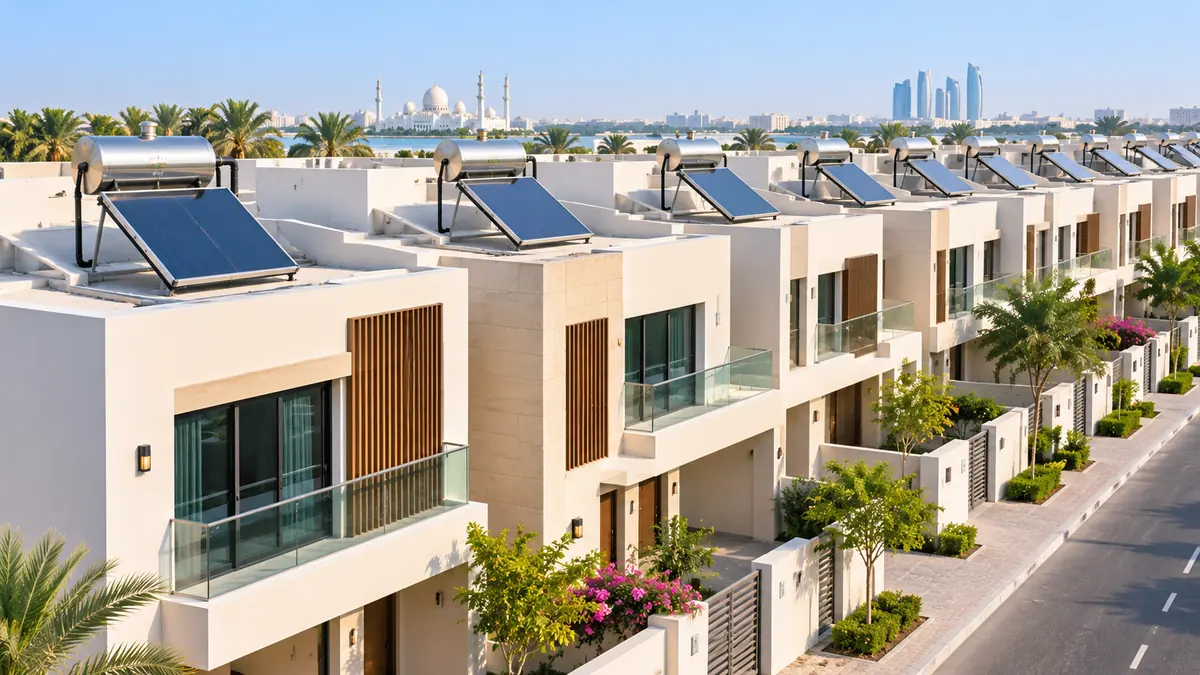
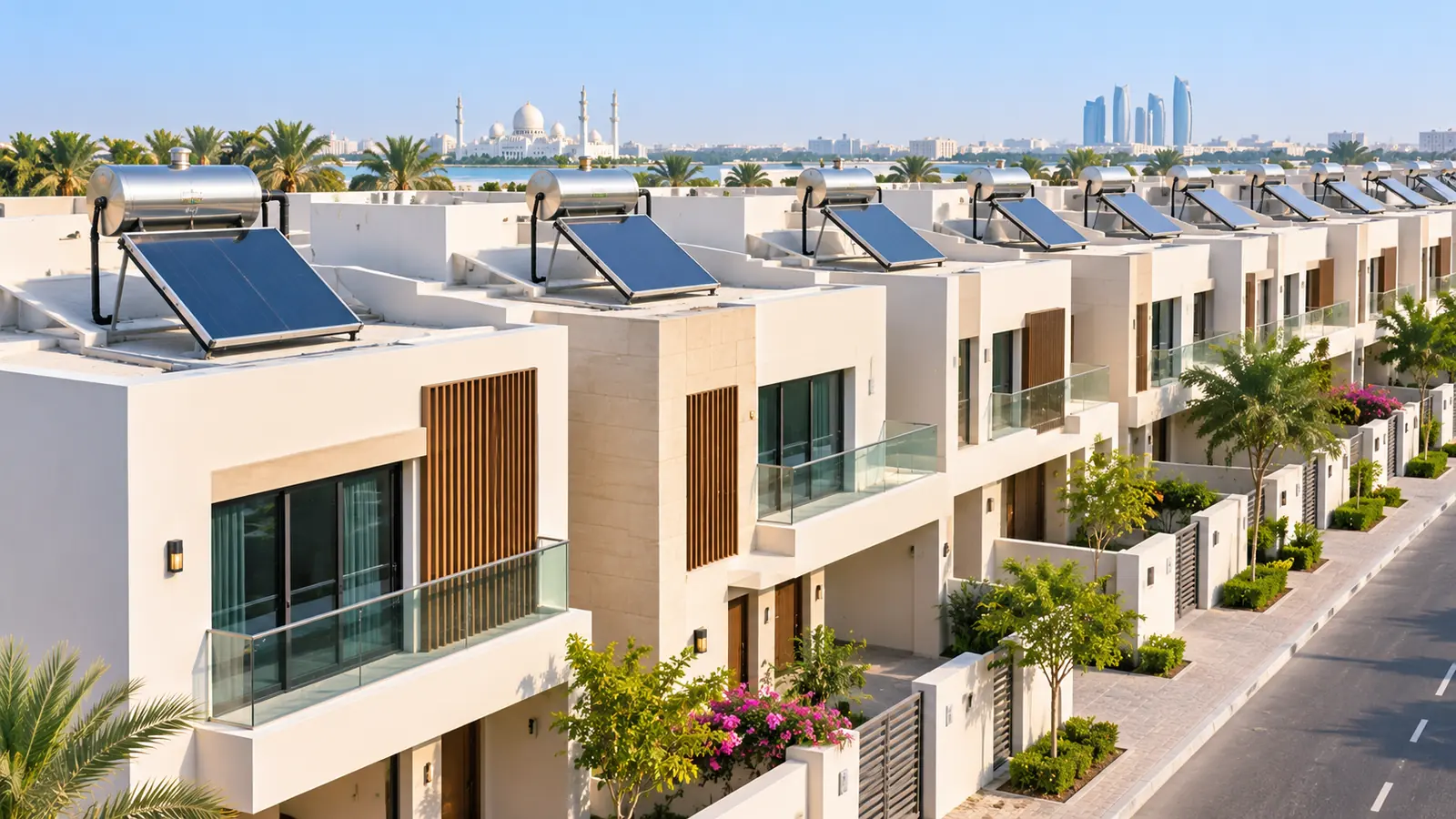 ResidentialTownhouse rooftopsAbu Dhabi · Abu Dhabi townhouses with solar water heaters on every roof
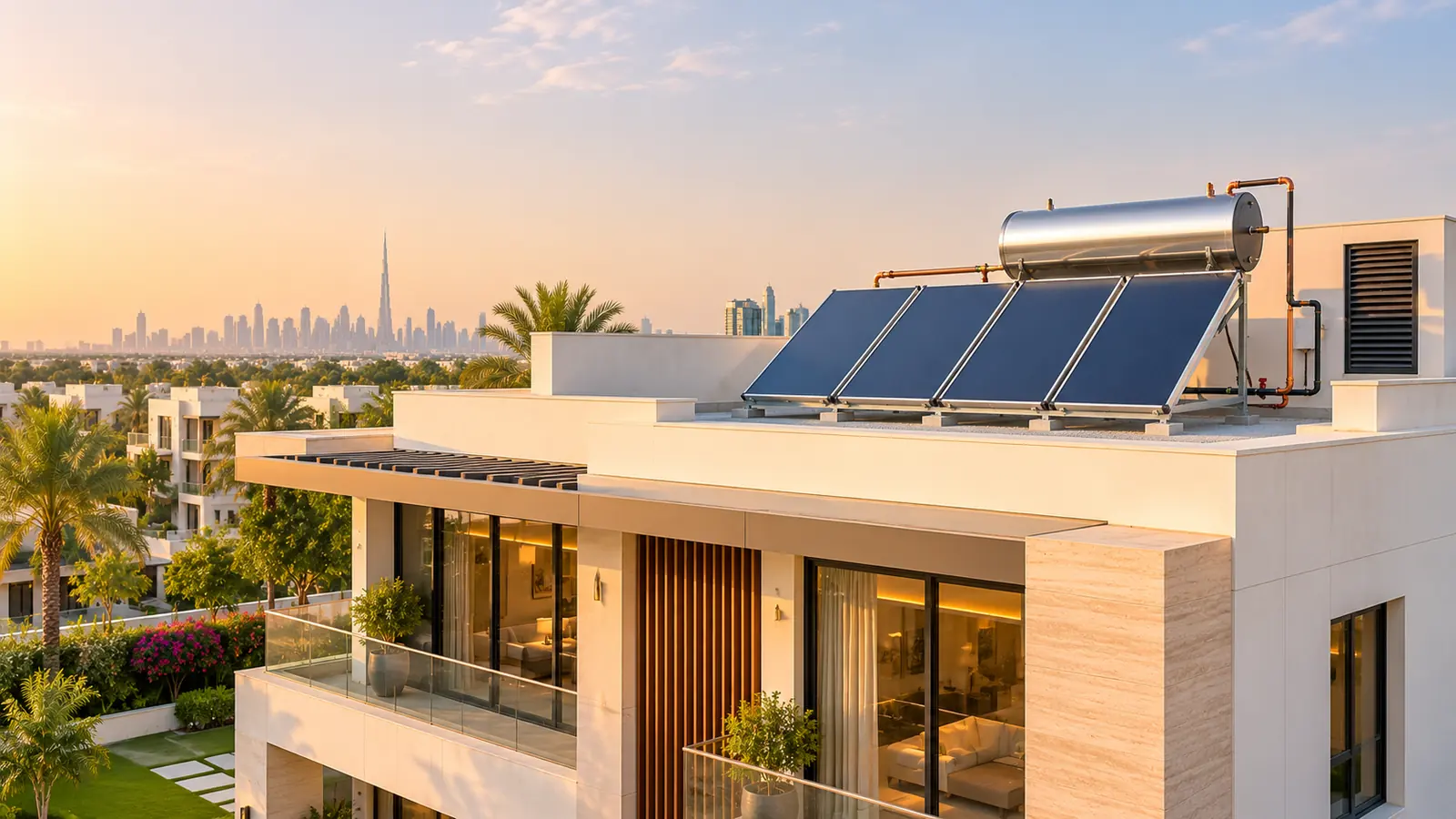 VillaVilla rooftop systemUAE · Modern UAE villa with a flat-plate solar water heater on the roof at golden hour
 CommercialCity hotel hot water plantUAE · Video of a solar water heating plant on a city hotel roof
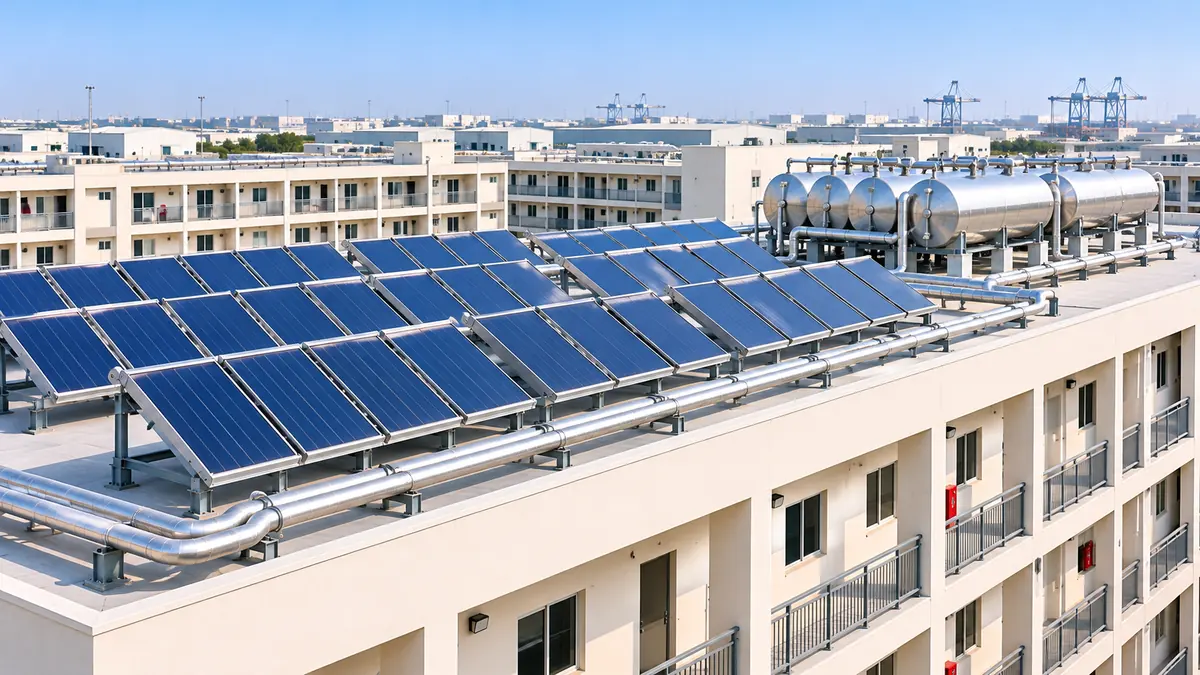
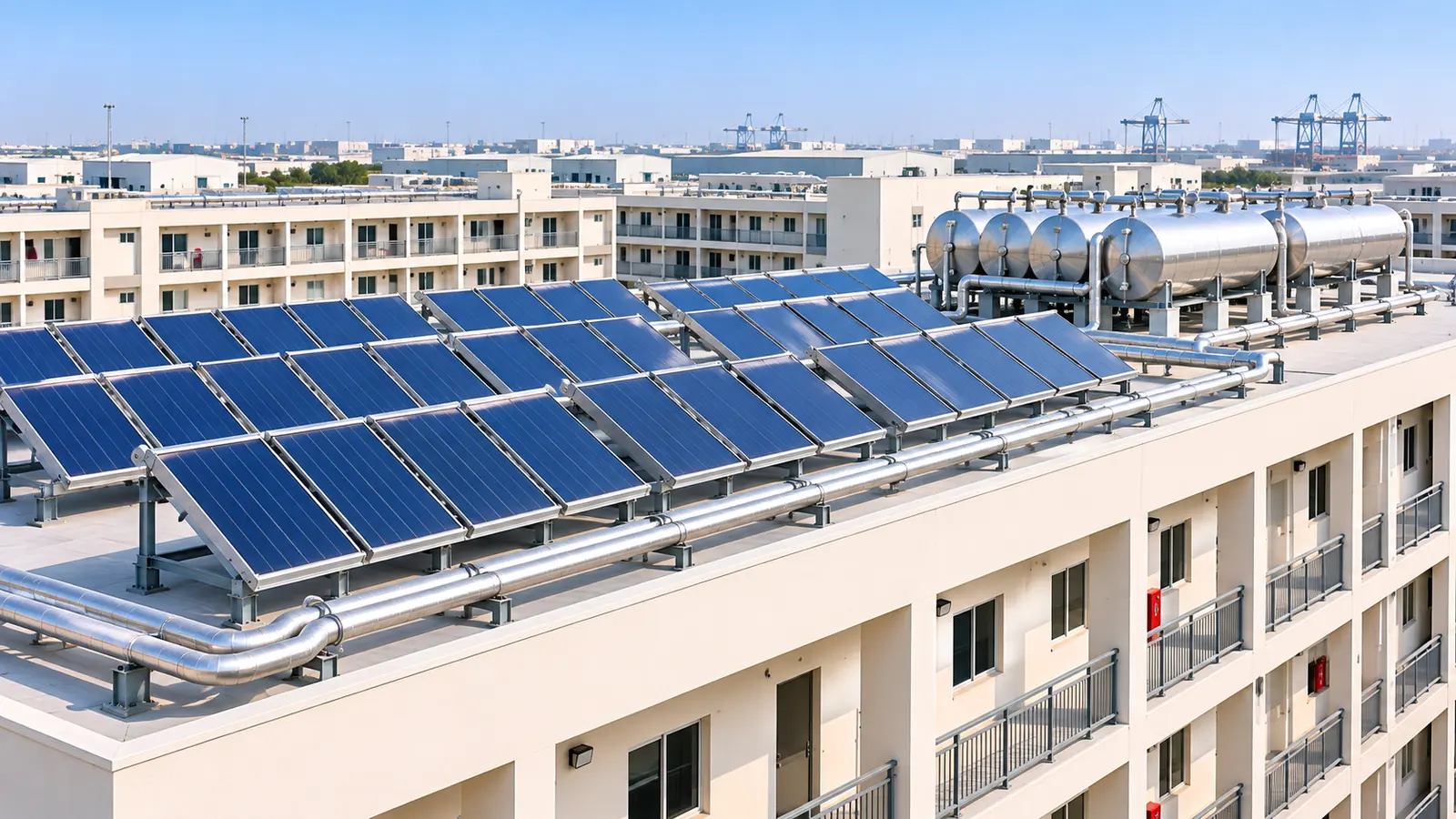 CommercialApartment building arrayUAE · Apartment building roof with rows of solar water heaters
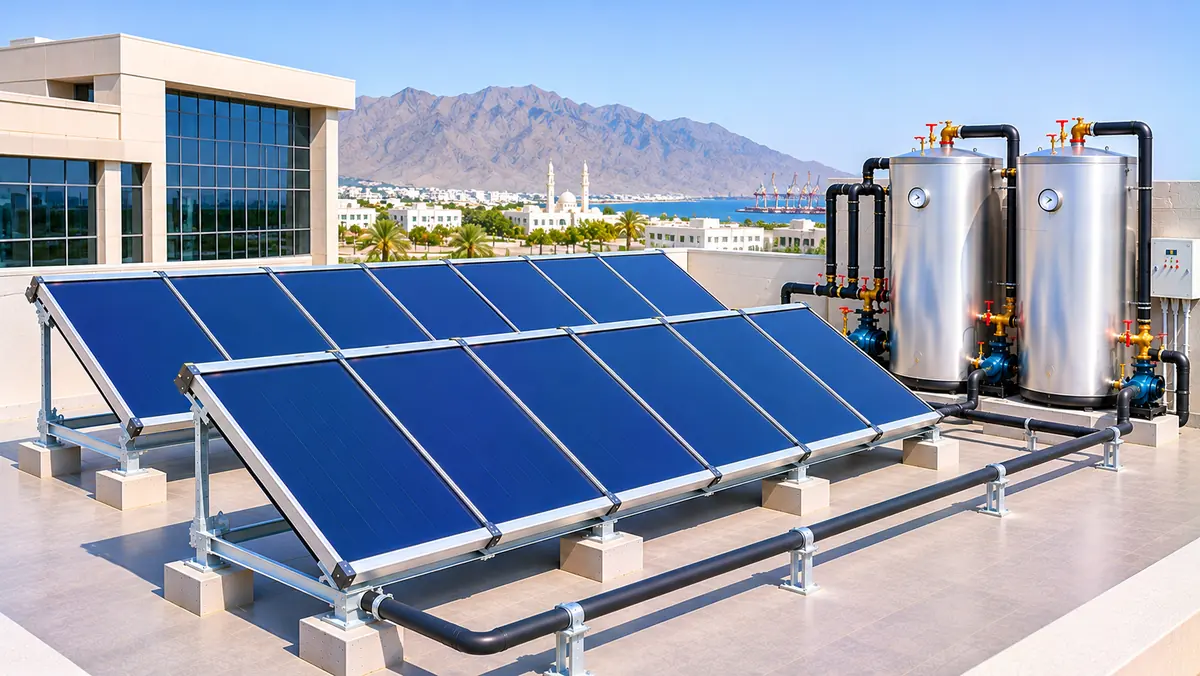
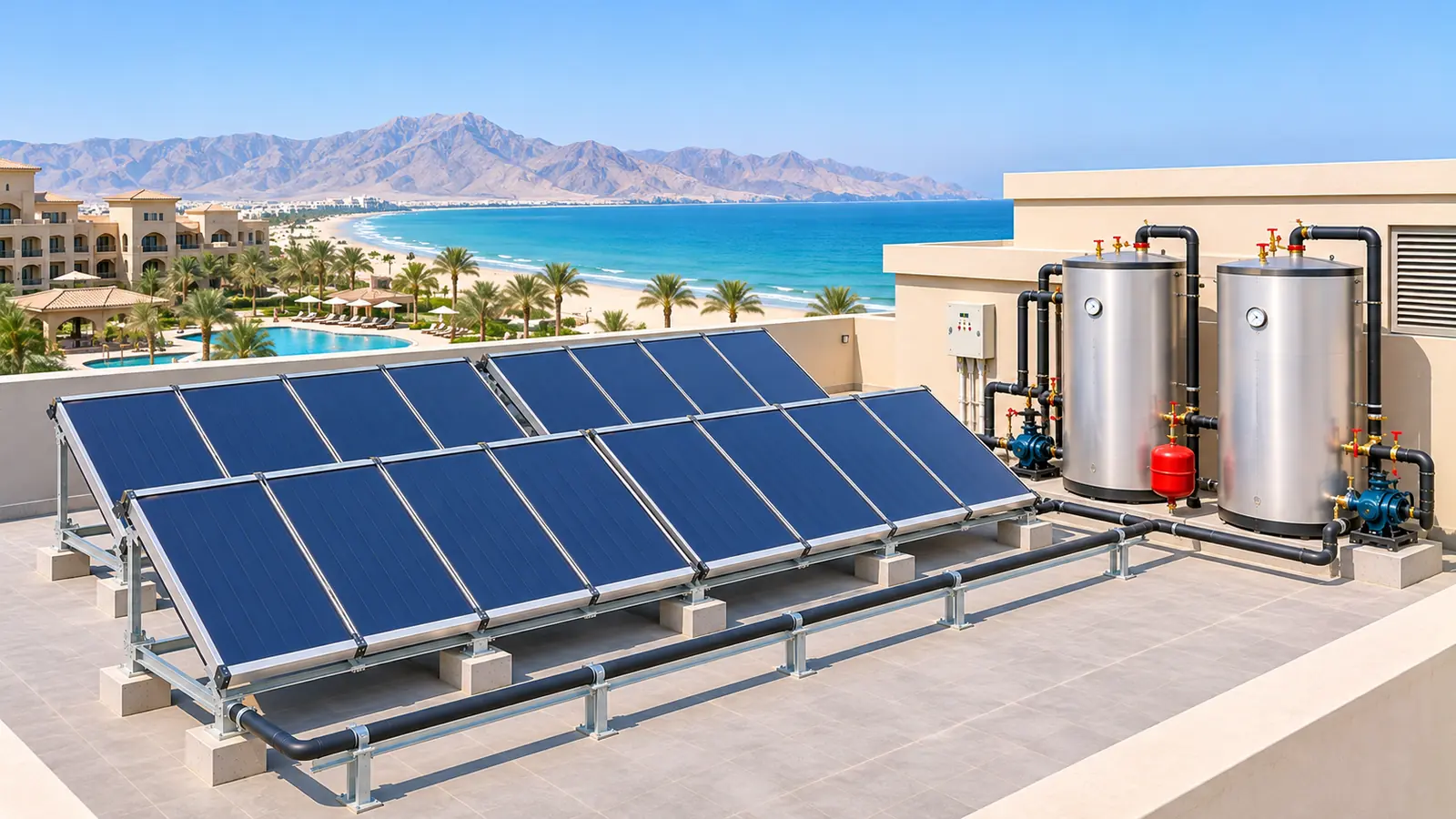 CommercialCoastal resortUAE · Solar thermal collectors and tanks on a coastal resort roof with mountains behind
The four system designs you will find on UAE roofs, and where each one fits.
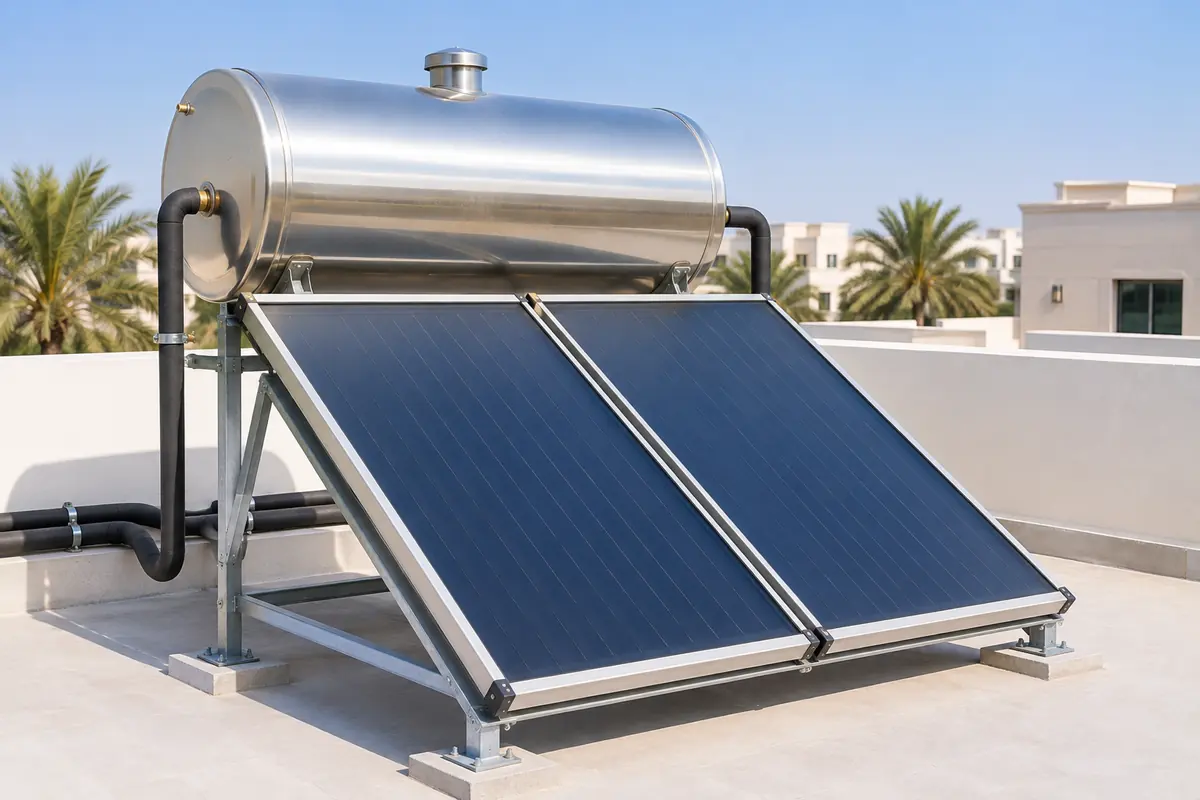
A glazed, insulated panel with an absorber plate and copper risers. Robust, simple to clean and a common choice for homes in the UAE.
Best for: Villas, townhouses and low-rise buildings
Learn more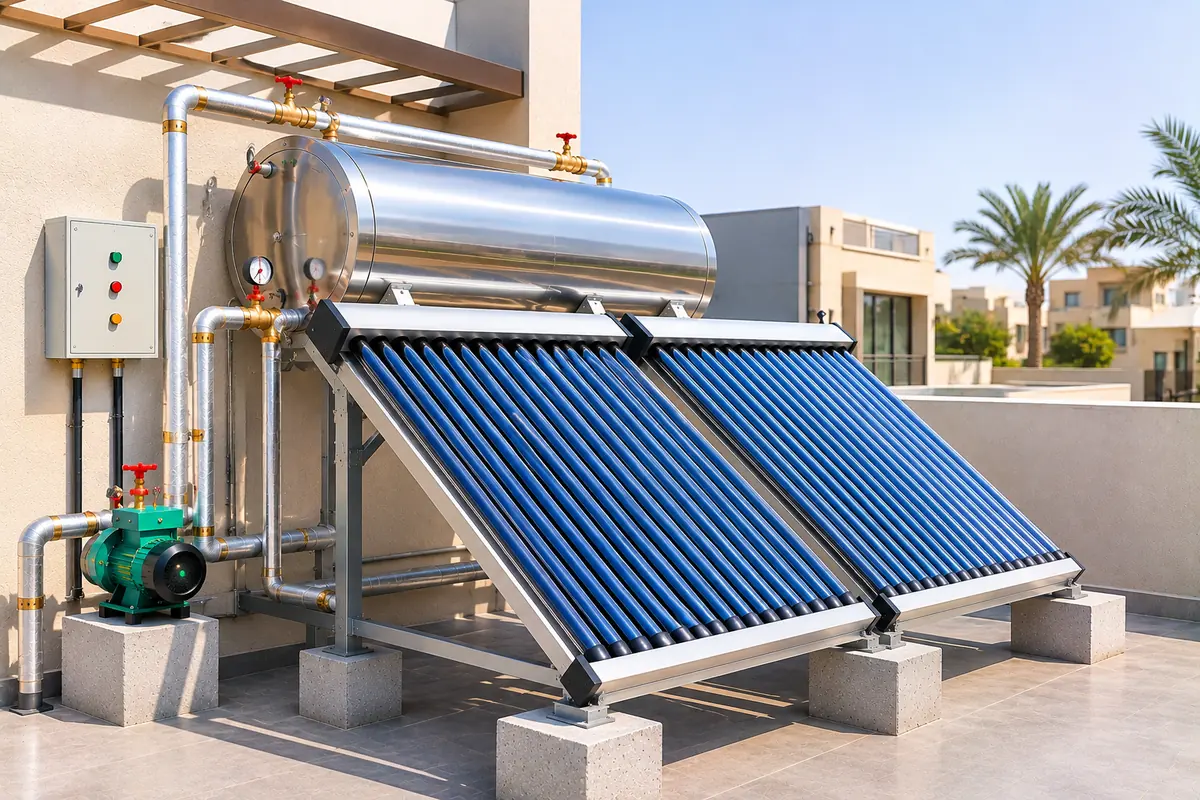
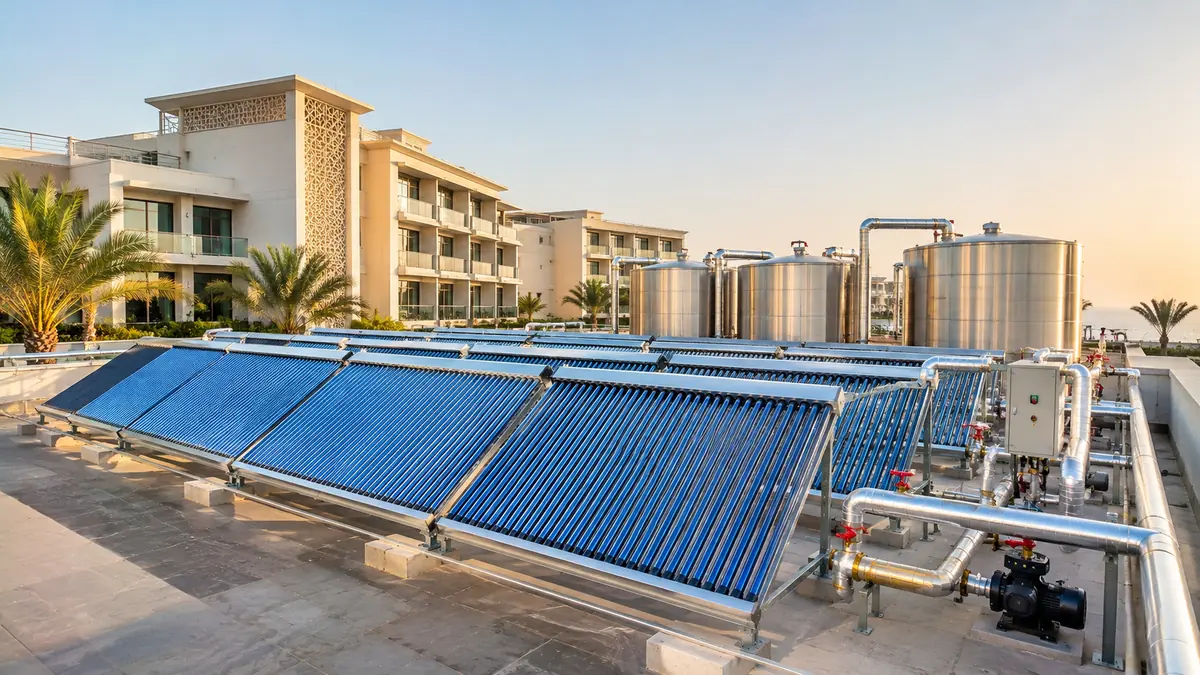
Rows of vacuum glass tubes that lose very little heat. They perform well on cooler or hazy days and suit higher hot water demand.
Best for: Larger homes, hotels and commercial buildings
Learn more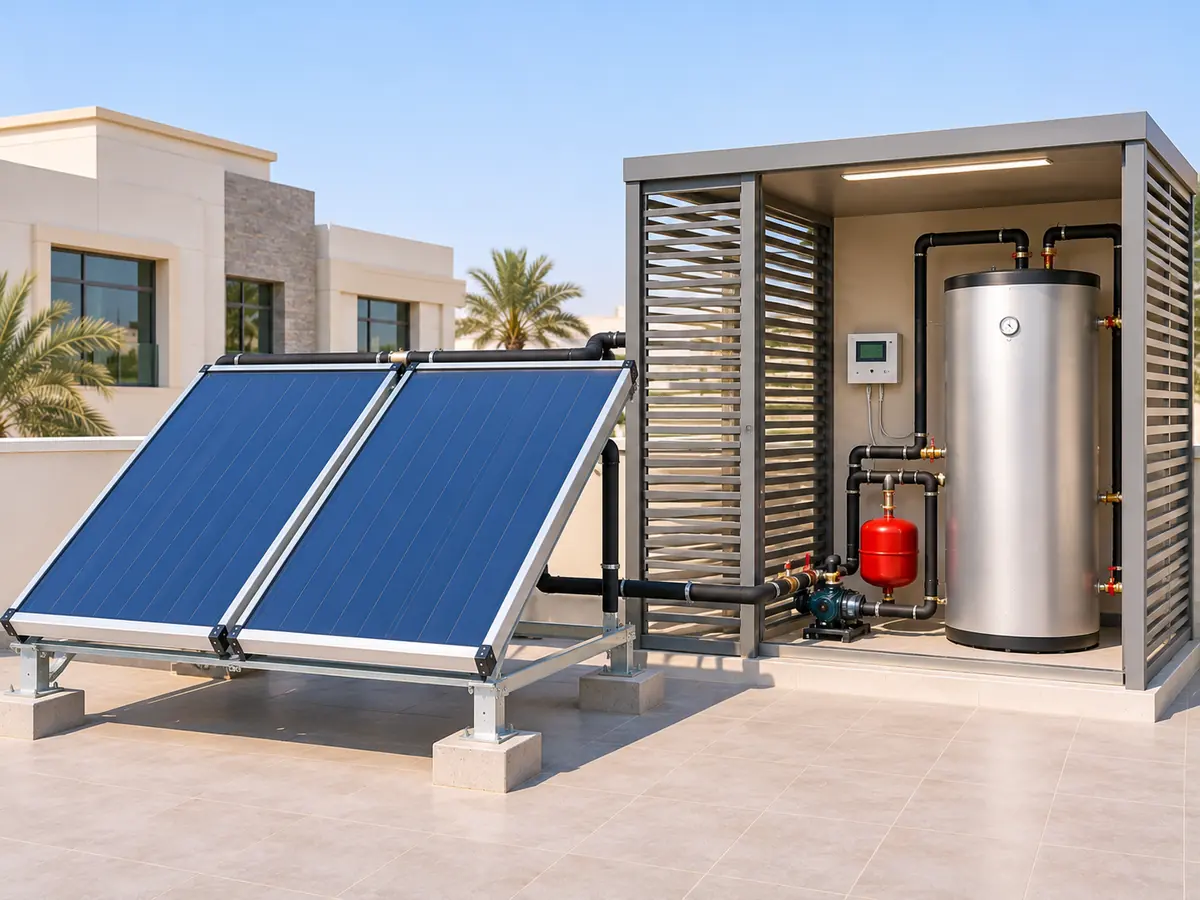
The tank works at mains or pump pressure, so showers and multiple outlets get strong, steady flow. Usually fitted with safety and expansion valves.
Best for: Villas, apartments and buildings with pressurised plumbing
Learn more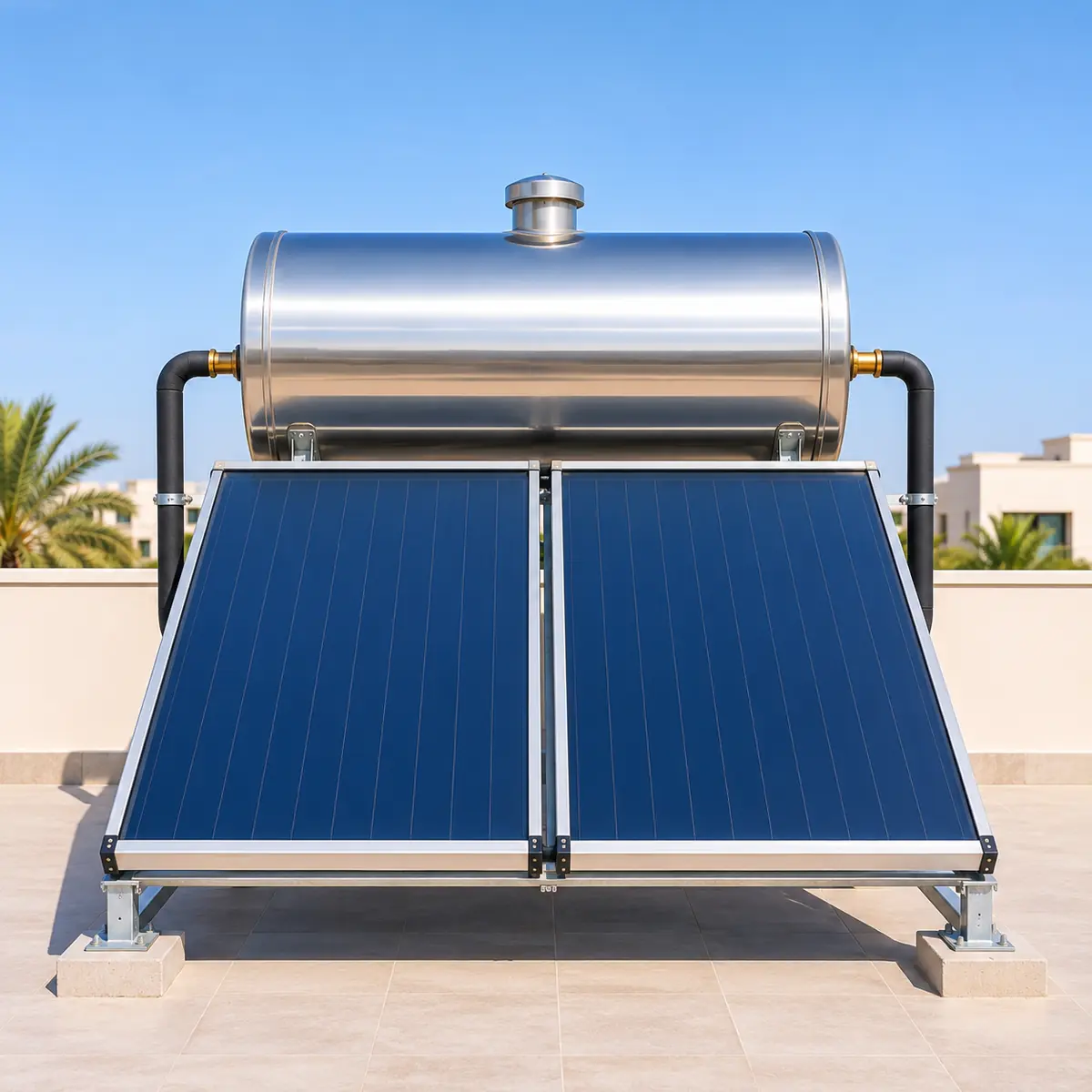
A gravity-fed tank above the collector with no pump. Simple and economical where outlets do not need high pressure.
Best for: Smaller homes, accommodation and gravity-fed supplies
Learn more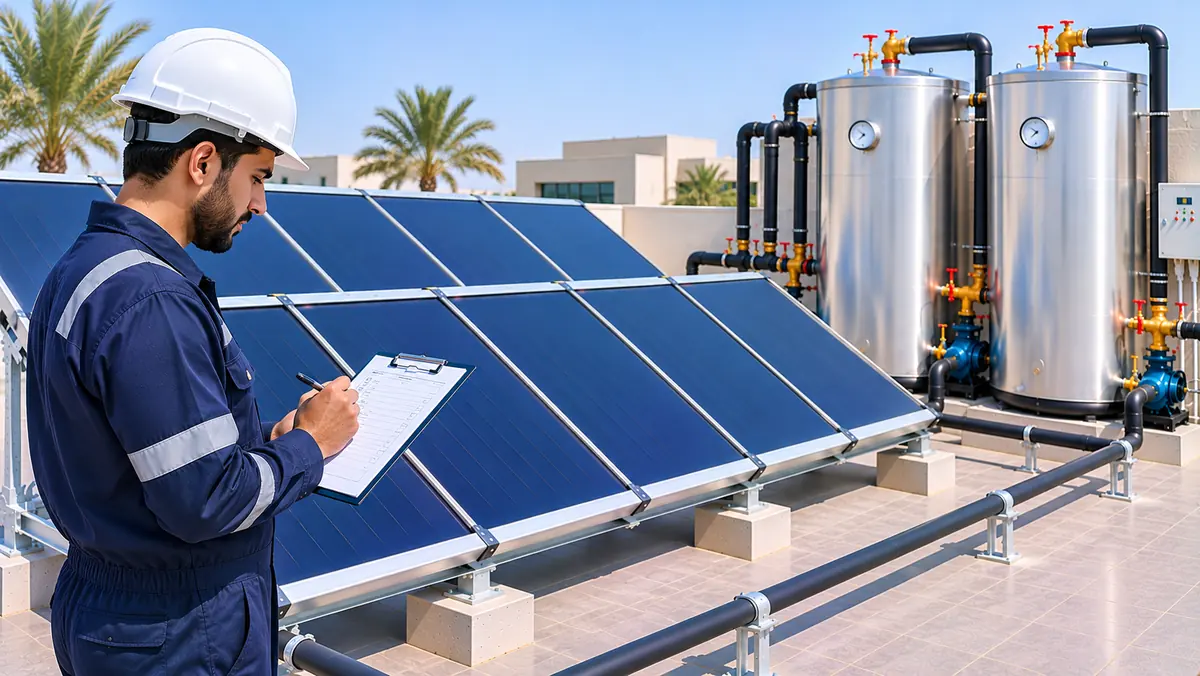
Survey, installation, servicing and repair are carried out by technicians who work on solar hot water systems.
Brands, models and capacities are stated in your quotation, so you know exactly what you are getting.
Systems and parts are chosen for intense sun, heat, dust, humidity and local water quality.
Secure frames, neat insulated pipe runs and a full test before handover.
A site survey comes first, then a written, itemised quote with no vague packages.
Servicing, repairs and annual maintenance plans are available after installation.
In newer communities, the developer or community management usually controls rooftop equipment:
We plan the position and paperwork first, then install. Townhouses often have smaller roofs, so system size and placement need care.
For first-time installs in older villa areas, the roof usually has space, but the plumbing may have been altered over the years. The survey traces where hot water goes before we size the system.
Survey, a written proposal (system, capacity, brand and layout), frame, collector and tank installation, plumbing, insulation and a mixing valve where needed, backup connection by a qualified electrician, then testing and handover.
A solar water heater has two main parts: solar collectors on the roof and an insulated storage tank. The collectors use a dark absorber, either a flat plate or rows of vacuum tubes, to soak up heat from sunlight.
That heat passes into water or a heat-transfer fluid running through the collector. In a thermosiphon system, warm water rises naturally into a tank mounted above the collector; in a pumped system, a small pump and controller move the fluid whenever the collector is hotter than the tank.
The tank stores the hot water until you need it, so showers in the evening still use heat collected during the day. Hot water is drawn from the top of the tank to your taps, and cold mains water refills it from the bottom.
When the sun cannot keep up, on hazy days, in cooler months or with heavy use, an electric backup element with a thermostat tops up the temperature automatically. For most of the UAE year the sun does most of the work.
Every installation is priced from a survey, because the right system for one property can be wrong for the next. We do not publish fixed prices or savings figures because they depend on the property. These are the factors that shape your quotation and your long-term savings:
The tank size in litres, set by how many people and outlets need hot water.
A villa, an apartment building and a hotel have very different demand profiles.
Daily usage and peak times decide collector area and storage.
Collector type, tank material and lining, and brand all affect price.
Roof access, structure, pipe length and any crane or scaffold work.
Water quality and dust exposure shape the servicing a system will need.
Solar heat replaces much of the electricity a conventional water heater would use. How much you save depends on your hot water use, the system size, its condition and how often the backup element runs. We can talk you through the likely effect for your property during the survey.
Choose your emirate for local conditions, property types and contact options.
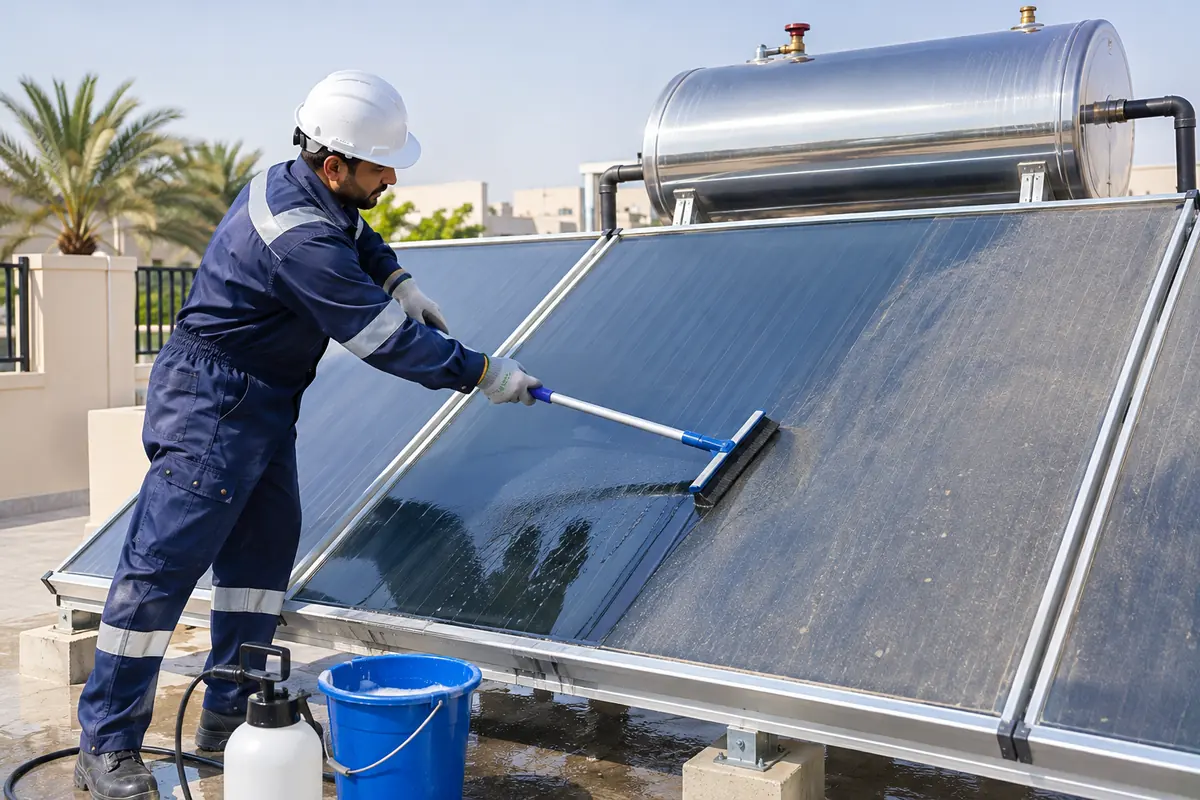
Read our maintenance checklist or see solar water heater maintenance and annual maintenance contracts.
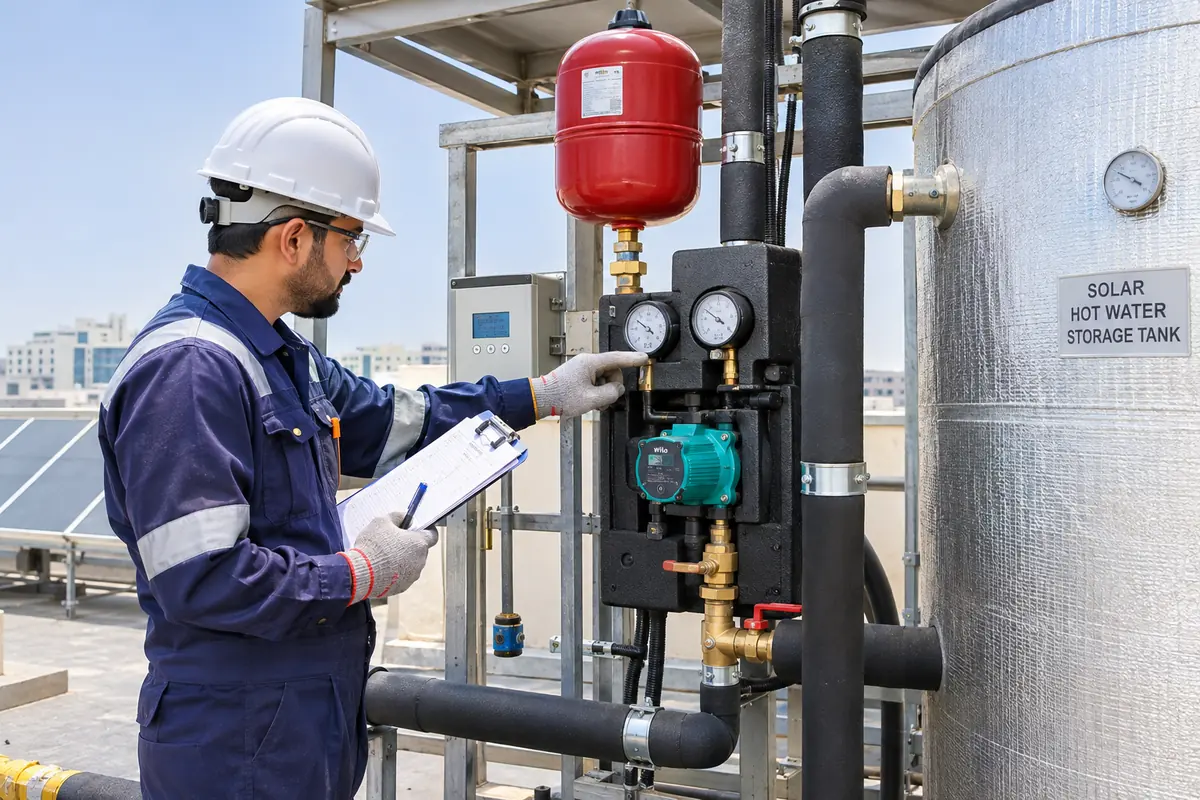
Solar water heater maintenance in Sharjah: servicing shared building rooftops, villas, dusty industrial sites…
View service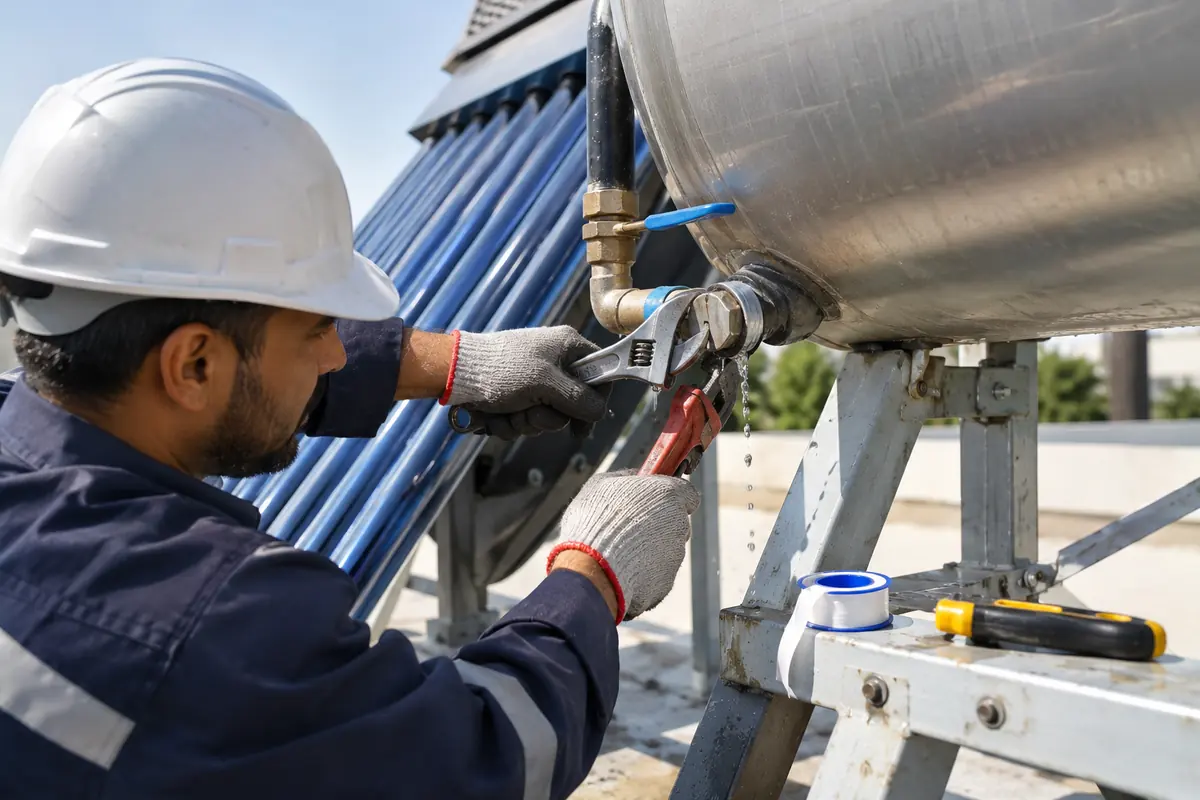
Solar water heater repair in Sharjah for older villa and building systems: unknown brands, shared roofs,…
View service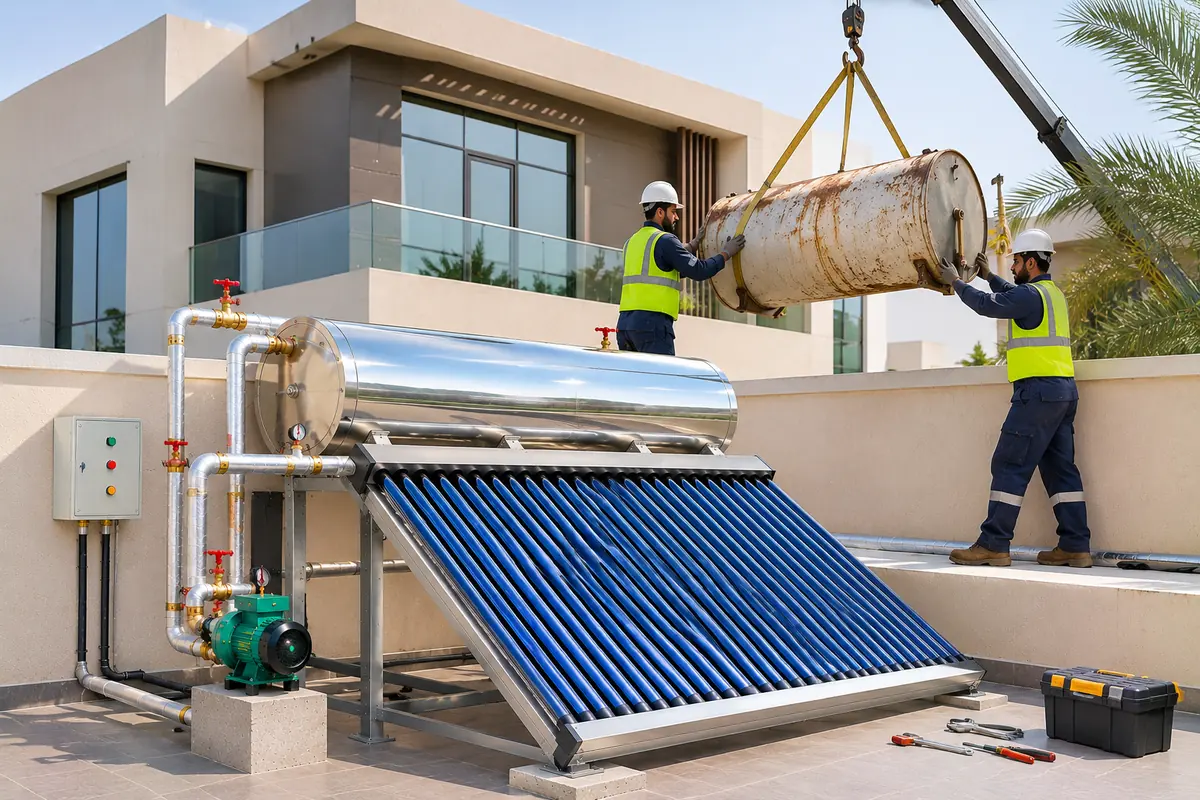
Solar water heater replacement in Sharjah: renewing rows of old rooftop units on low-rise buildings,…
View service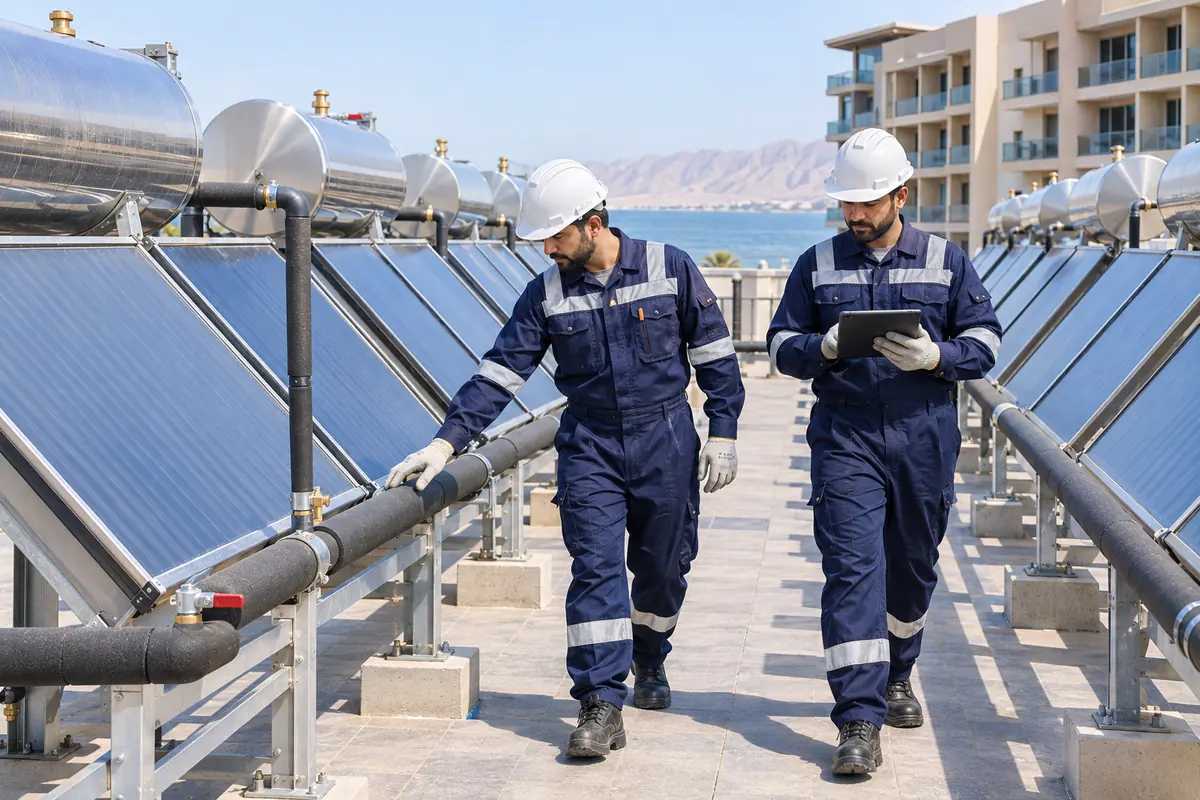
Solar water heater AMC in Sharjah for landlords with several buildings, owners' associations and industrial…
View service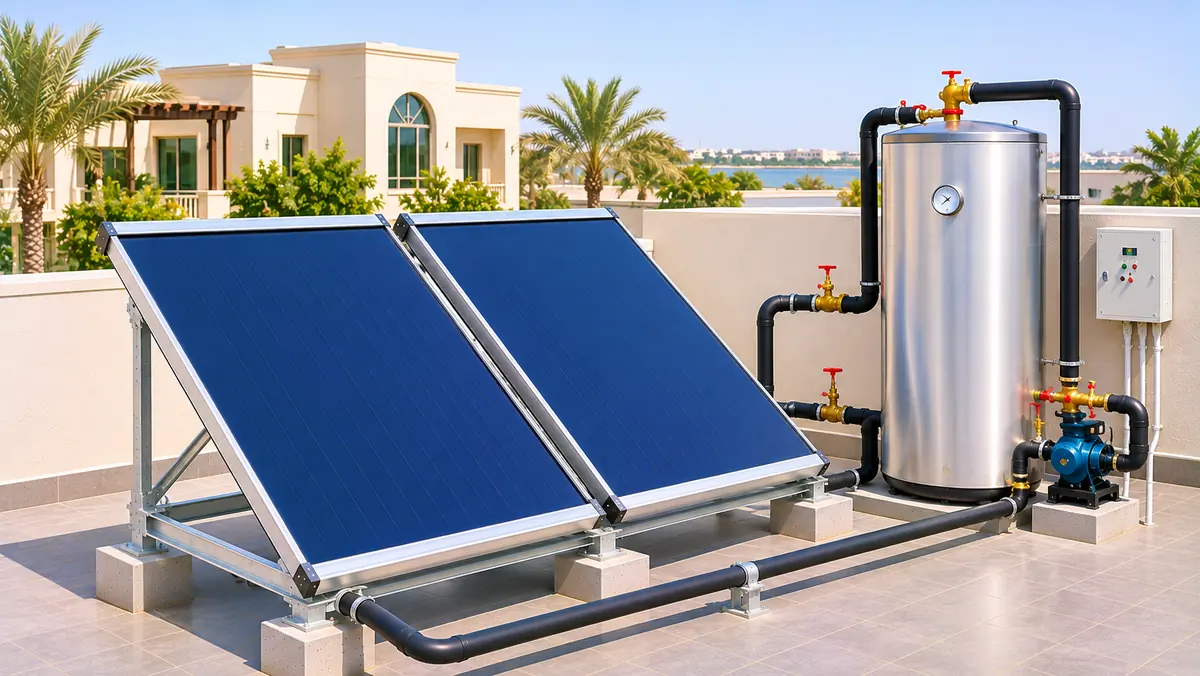
Only with the landlord’s approval and a suitable spot on the shared roof. In most buildings, the landlord decides for the whole building.
Most master-planned communities require approval for rooftop equipment.
It depends on the system, its condition and the work required. We survey or diagnose first and then give you a written quotation, so you know the cost before any work starts.
It depends on the job. Many residential visits can be completed in a day, while larger systems, commercial sites and replacements take longer. We confirm the expected timing in your quotation.
Yes. The UAE has strong sun for most of the year. On hazy or cloudy days, and in cooler months, the electric backup element tops up the temperature automatically.
Most systems benefit from an annual service, with collector cleaning more often in dusty locations. Hard water may call for more frequent descaling.
Yes. We work on villas, townhouses and apartments as well as hotels, buildings, accommodation and industrial sites.
Equipment warranties are set by the manufacturer and vary by brand and component. The warranty terms that apply are confirmed in writing in your quotation.
Often, yes. Depending on its condition, a system can be enlarged, have parts replaced, or have solar added to an existing electric heater setup. We assess it on site first.
Contact our team for a professional assessment and a customised quotation for your property.
Tell us the area, property type, number of flats or bathrooms, and attach roof photos.
Also see: all our Sharjah services · routine servicing in Sharjah