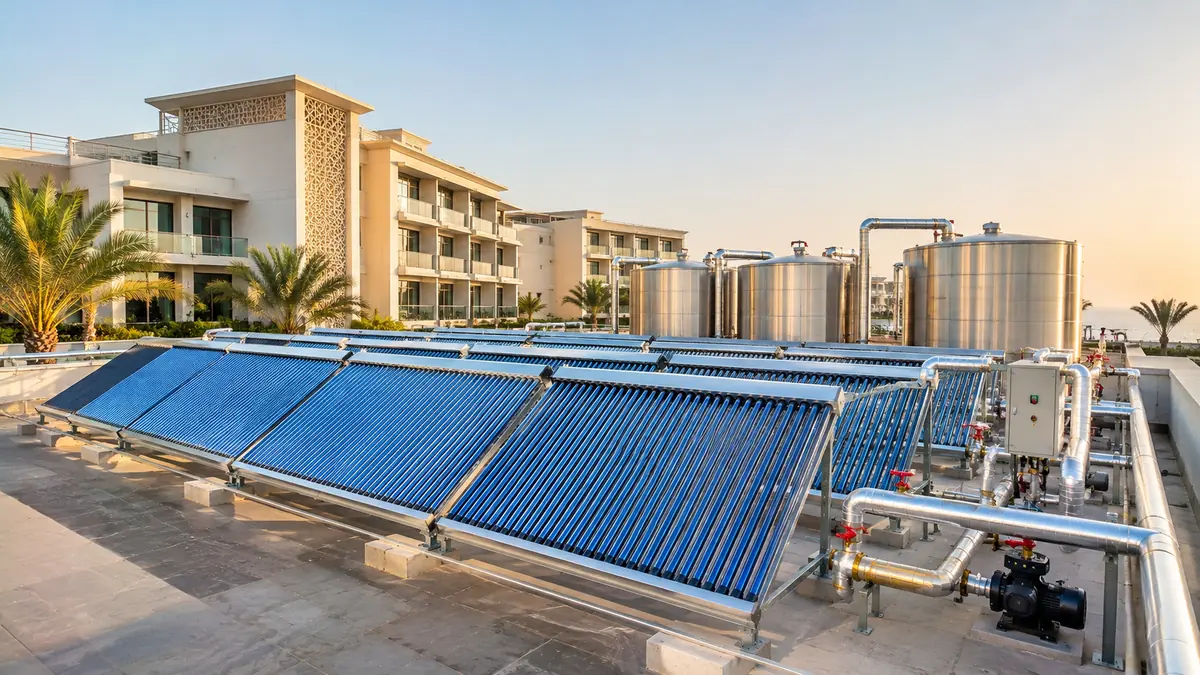
Solar water heating for apartments is normally planned for the whole building, not individual flats. The roof is shared, so the owner, developer or management company decides whether to install a central system feeding all units, separate systems for each unit, or a solar pre-heat that supports the building’s existing water heaters. The right choice depends mainly on how much roof area there is compared with the number of apartments.
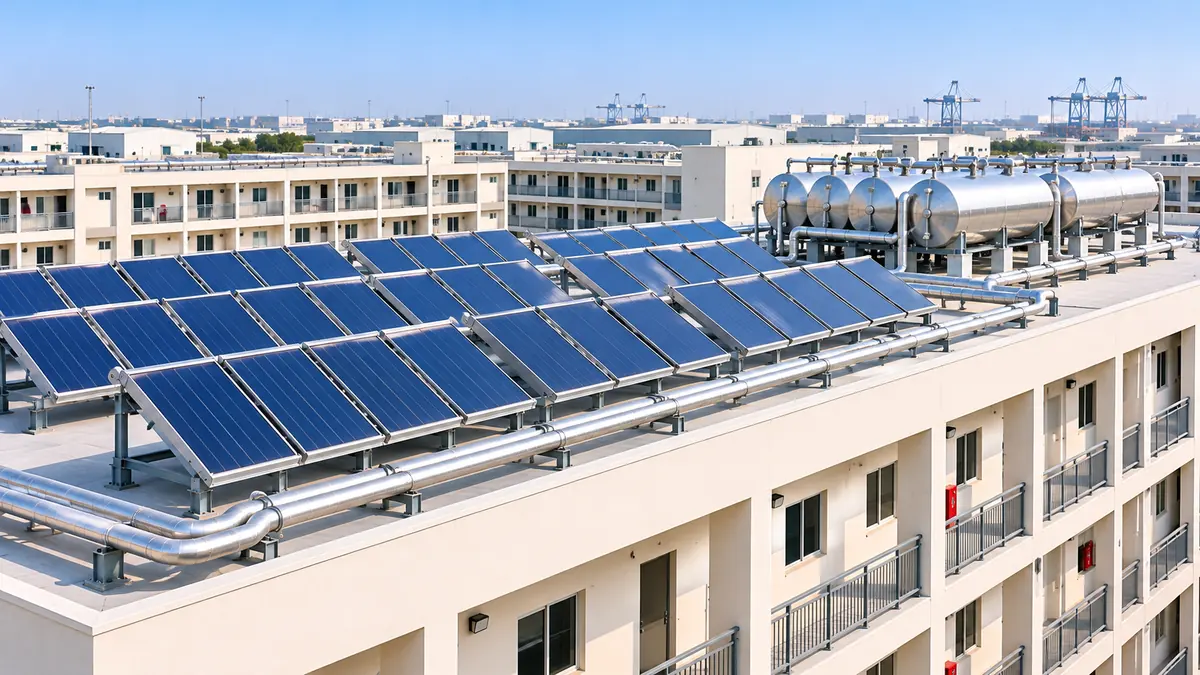
The Key Constraint: Roof Area vs Number of Units
A low-rise building with a large roof and a few apartments can often meet most of its hot water needs from solar. A tall tower has a lot of apartments but a small roof, often already crowded with plant, tanks and lift rooms, so solar can supply only part of the demand. That doesn’t make it pointless. It changes the design.
Low-rise (G+2 to G+4), good roof space
- Typical approach
- A central solar system, or individual rooftop units per apartment, can carry most of the hot water load
Mid-rise
- Typical approach
- A central solar system with backup, sized to the available roof
High-rise tower
- Typical approach
- Solar pre-heat: solar heats water before it reaches the building’s existing heaters, which top it up
Central or Individual Solar Water Heating for Apartments?
Layout
- Central system
- Shared collectors and storage, with distribution to each unit
- Individual systems per apartment
- One small system per unit on the roof
Roof use
- Central system
- More efficient use of limited space
- Individual systems per apartment
- Can fill the roof quickly
Maintenance
- Central system
- One plant to maintain
- Individual systems per apartment
- Many units to maintain and access
Billing
- Central system
- May need hot water or energy metering per unit
- Individual systems per apartment
- Each unit’s system is separate
Best for
- Central system
- Owner-managed buildings with an FM team
- Individual systems per apartment
- Small buildings, or where units are separately owned
For how pre-heat connects to existing plant, see our commercial guide to pre-heat with existing plant.
Practical Considerations
- Approvals Building permits, owners’ association consent and, for existing buildings, coordination with tenants.
- Roof loading Large storage tanks may need structural checks.
- Access Safe routes for installation and future maintenance.
- Pumped design Central systems are usually forced circulation, with pumps, controllers and sensors that need regular checks. See forced circulation systems.
- Hygiene Shared hot water storage should be managed to safe temperatures.
Maintaining a Building System
A building’s solar hot water system serves many households, so a fault affects many people. Most building owners choose an annual maintenance contract with scheduled visits and reports. When older systems fail across a building, a phased replacement plan keeps hot water running while units are renewed.
Who We Work With
- Building owners and landlords
- Developers and MEP consultants on new buildings
- Owners’ associations
- Facilities management companies
Frequently Asked Questions
Can I install a solar water heater for my own apartment?
Usually only with the building owner’s or management’s approval, and only if there’s suitable roof access and space.
Is solar worth it for a high-rise building?
Solar can rarely meet all the hot water demand of a tall tower, but as a pre-heat it can still reduce the energy the main heaters use. We assess the roof and demand before recommending it.
Who maintains a shared solar water heater?
Normally the building owner or their facilities management company, often under an AMC.
Request an Apartment Building Assessment
Tell us the building’s emirate, number of floors and apartments, and what currently heats the water. Roof photos or drawings help.
See also: residential solar water heaters.