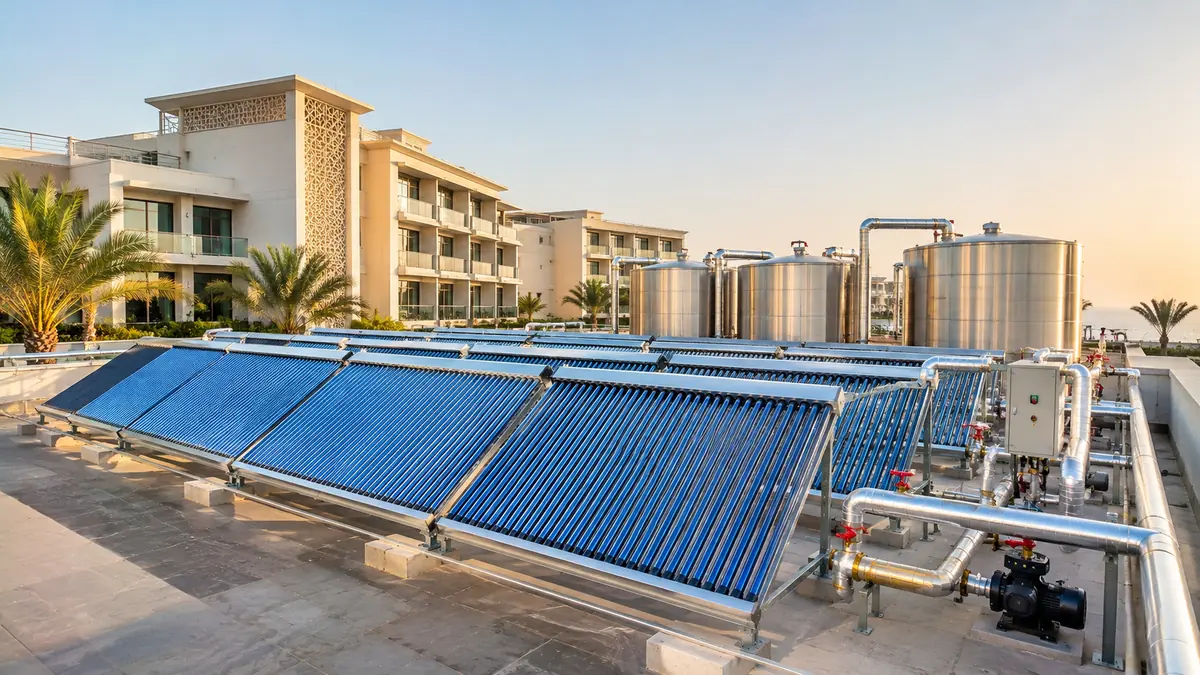
Here’s how solar water heaters work: a collector on the roof absorbs heat from sunlight and passes it to water (or a heat-transfer fluid) flowing through it. That heated water moves into an insulated storage tank, either rising naturally or pumped, where it’s kept hot until you use it. When the sun isn’t enough, an electric backup element tops up the temperature, and safety valves keep pressure and temperature under control.
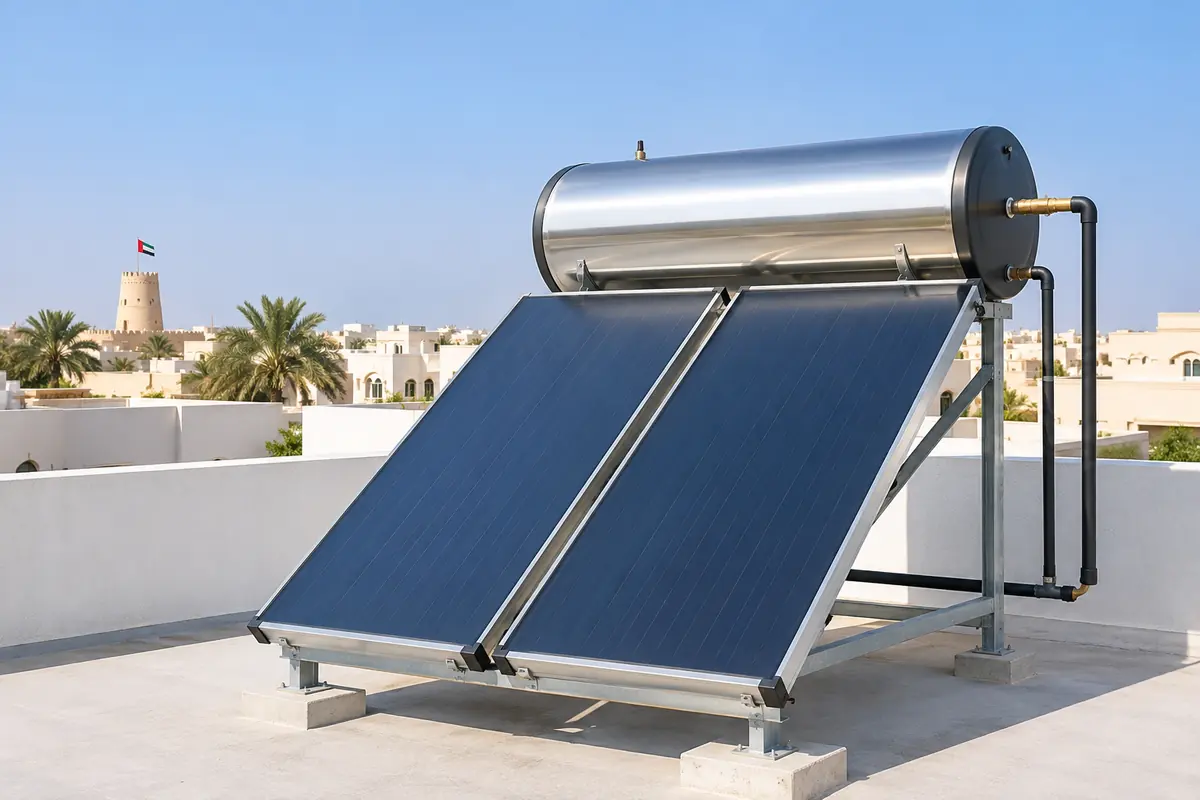
How Solar Water Heaters Work, Step 1: The Collector Absorbs Heat
The collector is the part you see on the roof. It contains a dark surface that absorbs sunlight and turns it into heat.
- In a flat plate collector, that surface is a metal plate under glass, with small channels carrying water.
- In an evacuated tube collector, each glass tube has a vacuum layer that stops heat escaping.
It’s heat, not electricity. A solar water heater is different from solar PV panels, which generate electricity.
Step 2: The Heat Moves Into the Tank
Heated water has to get from the collector to the tank. There are two ways:
Thermosiphon (natural)
- How it works
- Hot water is lighter than cold, so it rises from the collector into a tank mounted above it, while cooler water sinks back down to be heated. No pump needed
Forced circulation (pumped)
- How it works
- A small pump moves water between the collector and a tank that can be anywhere. A controller switches the pump on when the collector is hotter than the tank
Step 3: The Tank Stores the Hot Water
The storage tank is heavily insulated so water stays hot overnight. Hot water sits at the top, where it’s drawn off to your taps, and cold mains water enters at the bottom.
Step 4: The Backup Heater Fills the Gaps
On cloudy days, in cooler months or after heavy use, solar heat may not be enough. An electric heating element inside the tank, controlled by a thermostat, tops up the temperature. A timer can make sure it heats only when needed.
Step 5: Safety and Comfort Controls
- Pressure and temperature relief valve Releases water if the pressure or temperature gets too high
- Non-return valve Stops hot water flowing backwards
- Thermostatic mixing valve Blends hot and cold so tap water is never scalding, which matters in UAE summers
- Safety cut-out Switches off the element if it overheats
Direct and Indirect Systems
Most UAE home systems are direct: the water you use is the water heated in the collector. Indirect systems heat a separate fluid that passes its heat to the water through a heat exchanger. They’re more common in colder climates or in specific commercial designs.
What This Means for You
- The collector must stay clean, because dust blocks the sunlight it depends on. See cleaning.
- The backup element does more work in winter, so it needs to be in good order.
- Safety valves must never be capped or removed.
- The tank size decides how much hot water you have at once. See the capacity guide.
Want to know which kind suits you? Read types of solar water heaters, or ask us about installation.