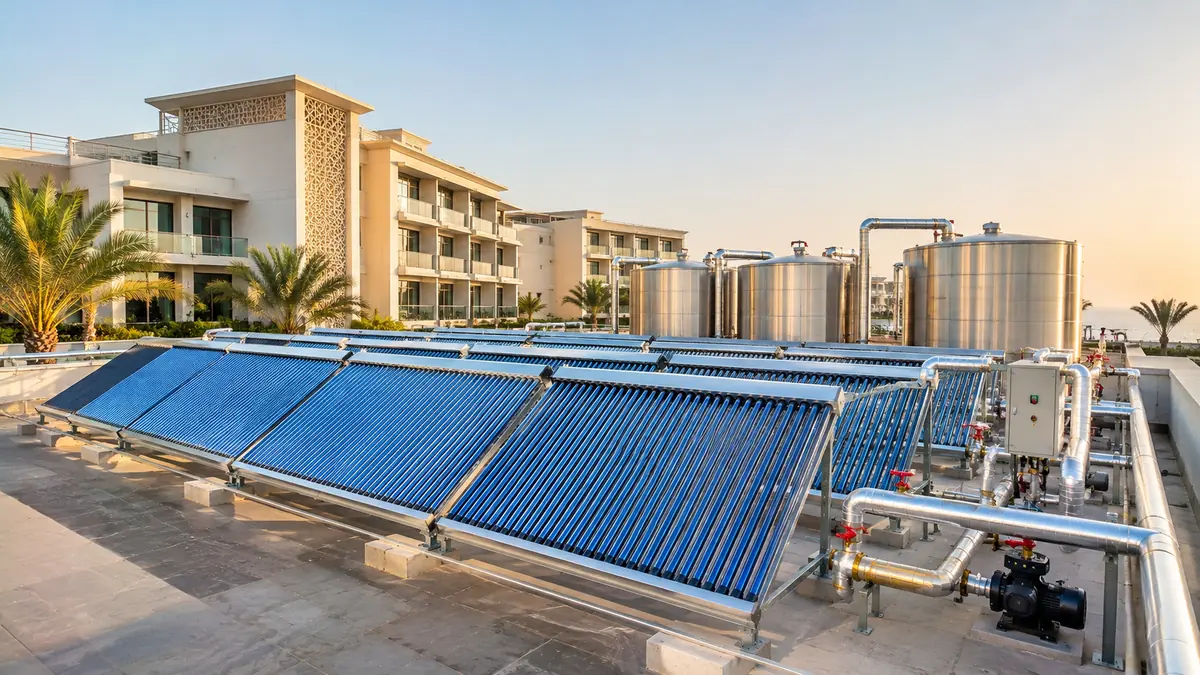
In the flat plate vs evacuated tube solar water heater choice, both types work well in the UAE. Flat plate collectors are robust, simple to clean and well suited to the region’s strong sun and high temperatures. Evacuated tube collectors hold heat better when it’s cooler or windy, but need more care to avoid overheating in summer and have glass tubes that can break. For most UAE homes the deciding factors are demand, roof conditions, maintenance and budget, not which technology is "better" in general.
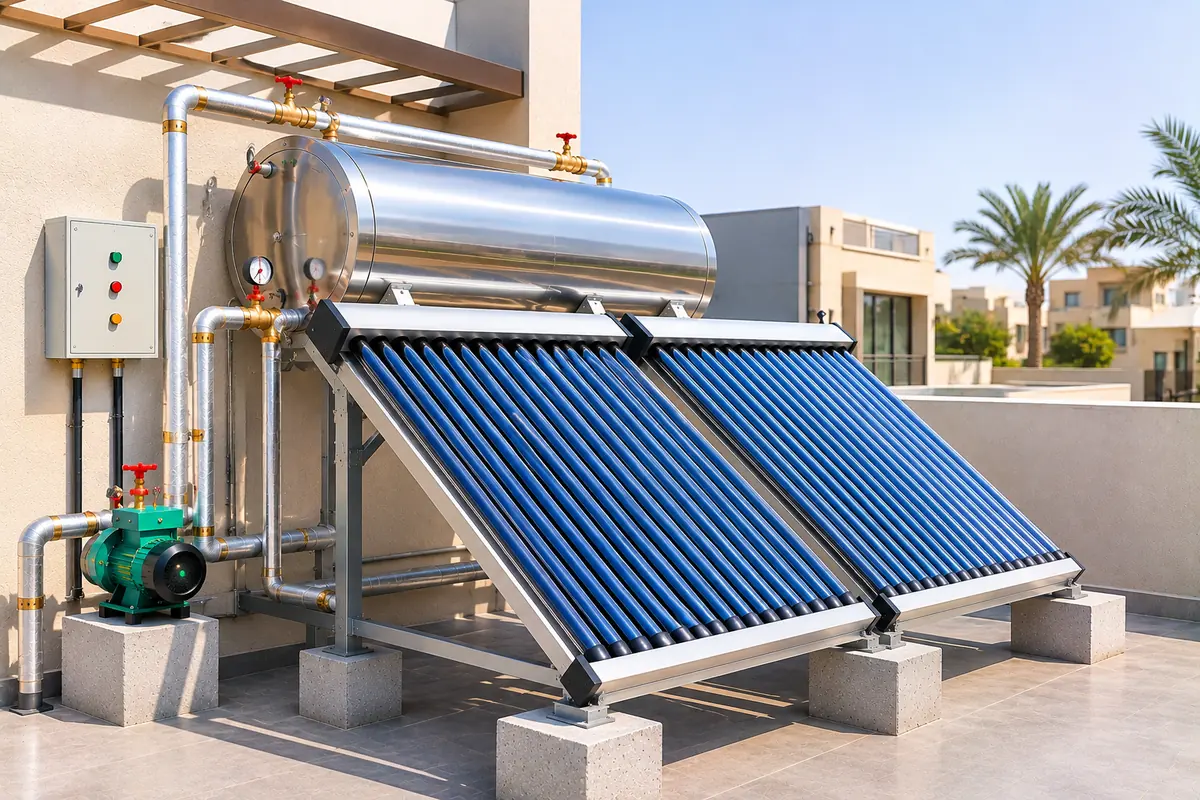
How Each Collector Works
Flat plate collector
A dark absorber plate sits in an insulated box under a sheet of glass. Water (or fluid) flows through channels bonded to the plate and picks up the heat. The glass and insulation reduce heat loss.
Evacuated tube collector
A row of double-walled glass tubes, with a vacuum between the walls. The vacuum is an excellent insulator, so very little heat escapes. Heat is carried either by water flowing into the tubes (water-in-glass) or by a sealed heat pipe in each tube that transfers heat to a manifold at the top.
Flat Plate vs Evacuated Tube: Side-by-Side Comparison
Heat retention in cooler or windy conditions
- Flat plate
- Good
- Evacuated tube
- Very good: the vacuum insulates
Performance in strong, hot sun
- Flat plate
- Very good
- Evacuated tube
- Very good, but higher overheating risk
Overheating and stagnation in summer
- Flat plate
- Lower risk
- Evacuated tube
- Higher risk if oversized or not drawn on
Dust and sand
- Flat plate
- Smooth glass, quick to clean
- Evacuated tube
- Many curved surfaces, slower to clean
Impact resistance
- Flat plate
- One tough glass sheet
- Evacuated tube
- Individual tubes can break
Repairs
- Flat plate
- Glazing and seals; absorber leaks often mean replacement
- Evacuated tube
- Single tubes can usually be replaced
Weight on roof
- Flat plate
- Heavier panel
- Evacuated tube
- Lighter per tube, but the manifold and tank still add weight
Appearance
- Flat plate
- Flat, neat panel
- Evacuated tube
- Visible rows of tubes
What This Means in the UAE
Summer heat favours simplicity
For most of the year, UAE sun is strong and air temperatures are high, so the extra insulation of evacuated tubes matters less. What matters more is coping with very hot, low-demand summer days without overheating. Flat plate systems generally handle this with less risk.
Winter is where tubes can help
In the cooler months and on windy, exposed roofs, evacuated tubes lose less heat, which can help households with high winter demand.
Dust is a daily reality
Both types lose performance when dusty. Flat plate glass is quicker to clean, which matters on dusty sites. See solar water heater cleaning.
Breakage and repair
A single broken tube is a cheap, quick fix on many models. A cracked flat plate panel is less common but more serious. See collector repair.
Which Should You Choose?
Want a simple, low-maintenance home system
- Consider
- Flat plate
Have a dusty site and want easy cleaning
- Consider
- Flat plate
Have high winter demand or a windy, exposed roof
- Consider
- Evacuated tube
Want individual parts to be replaceable
- Consider
- Evacuated tube (heat pipe types especially)
Have a commercial system with steady, high demand
- Consider
- Either. Decide during design
The collector must also be matched to the tank. See our capacity guide, and the flat plate and evacuated tube systems we supply.
Questions to Ask Before Buying
- Which collector type does the manufacturer recommend for UAE conditions?
- What overheating protection does the system have?
- Can individual tubes or glazing be replaced, and are spares available locally?
- How should it be cleaned without voiding the warranty?
For a full buying checklist, read how to choose a solar water heater.
Get Advice for Your Roof
We’ll recommend a collector type after looking at your roof, demand and site conditions. See installation in the UAE.