Typical residential area
- Collector cleaning
- Every 3–6 months
- Descaling / flushing
- Check at the annual service
Solar water heater cleaning in the UAE: safe collector and tube cleaning, descaling and tank flushing, plus how often to clean in dusty and coastal areas.
Solar water heater cleaning has two parts: outside, removing dust, sand and salt from the collector glass or tubes so they absorb full sunlight; and inside, removing scale and sediment from the tank and heating element so heat transfers efficiently. In UAE conditions, most collectors benefit from cleaning every few months, while descaling depends on your water and usage.
Clean the collector after any significant sandstorm, whatever the schedule.
What a properly done job means for your property and your hot water.
Clean collectors and a healthy heat-transfer loop let the system collect the heat it was designed to.
A well-maintained solar side means the electric element switches on less often.
Regular checks catch failing pumps, valves and elements before they leave you without hot water.
Descaling, anode checks and leak repairs slow the wear that shortens the life of tanks and collectors.
Relief valves, expansion vessels and thermostats are checked so the system runs within safe limits.
Service notes help you plan repairs, budgets and eventual replacement with real information.
A selection of residential, commercial and industrial solar water heating projects we have completed.
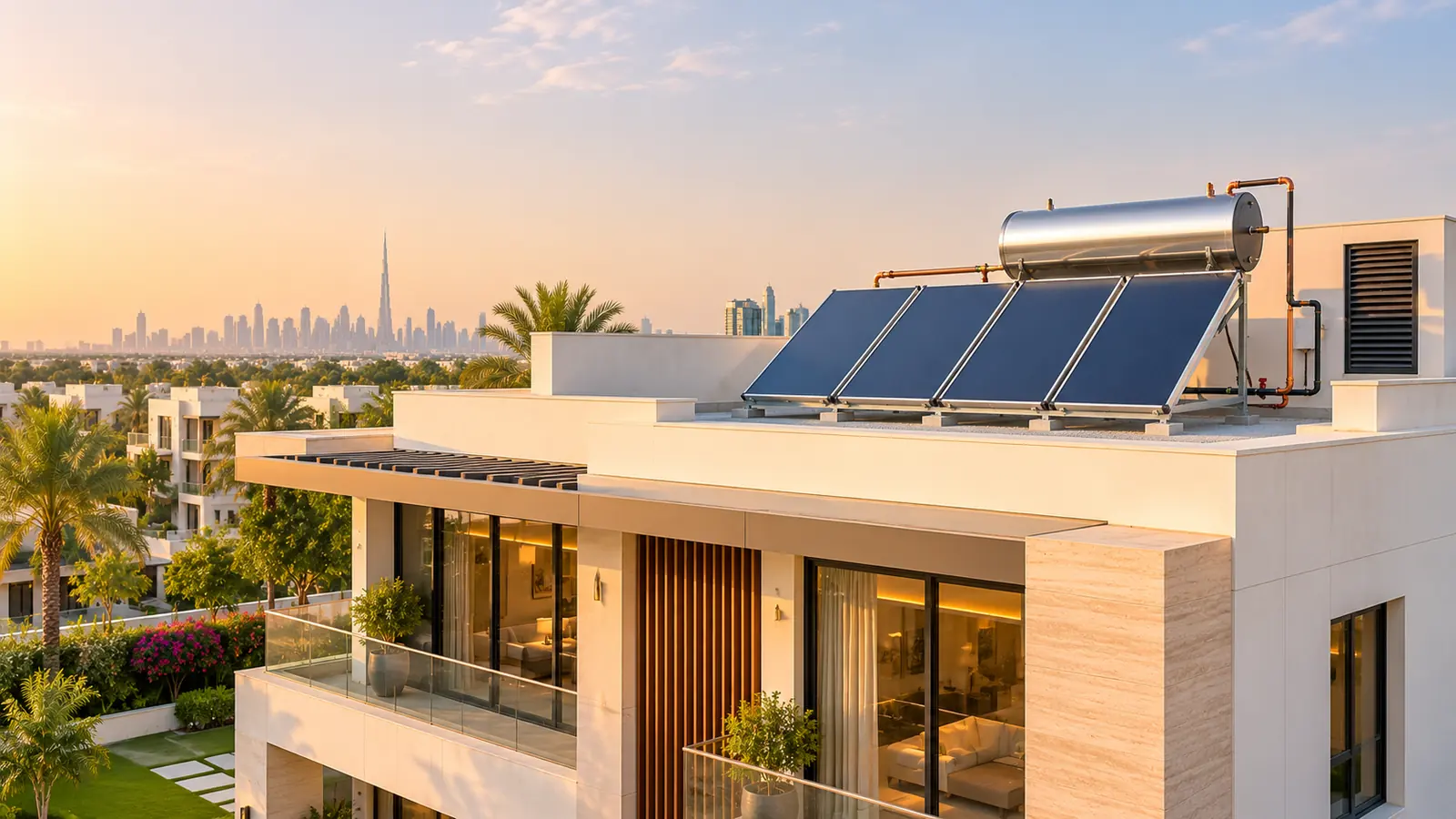 VillaVilla rooftop systemUAE · Modern UAE villa with a flat-plate solar water heater on the roof at golden hour
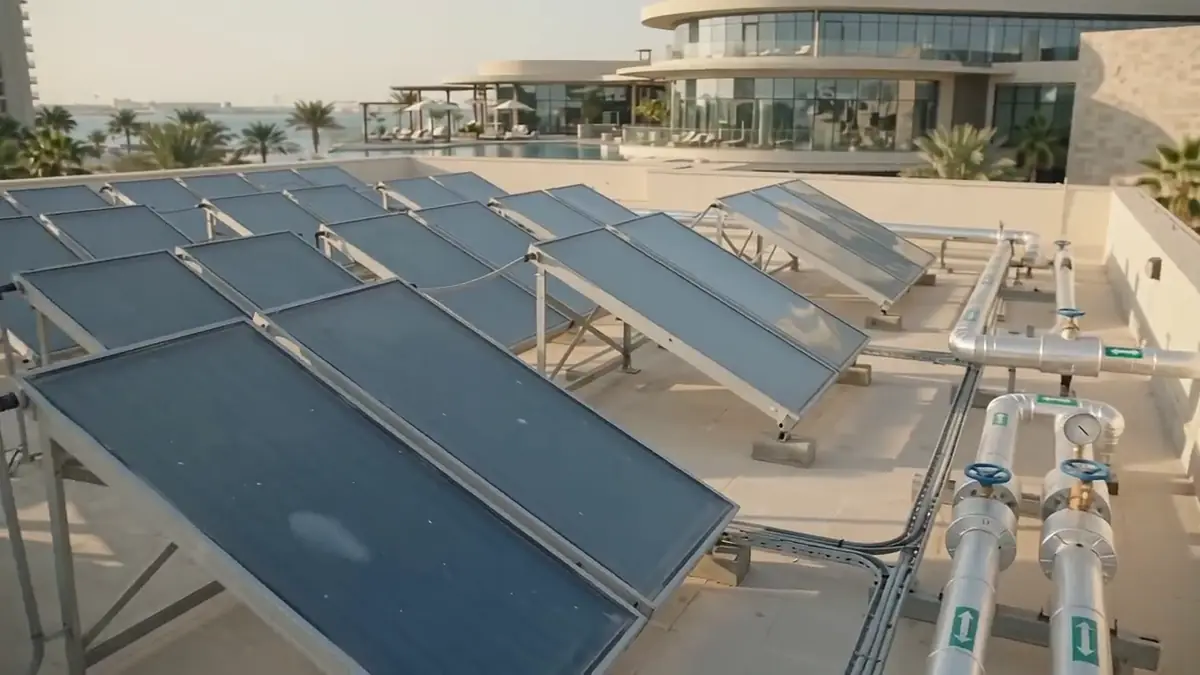 CommercialBeachfront resort rooftopUAE · Video of solar collectors and storage tanks on a beachfront resort roof
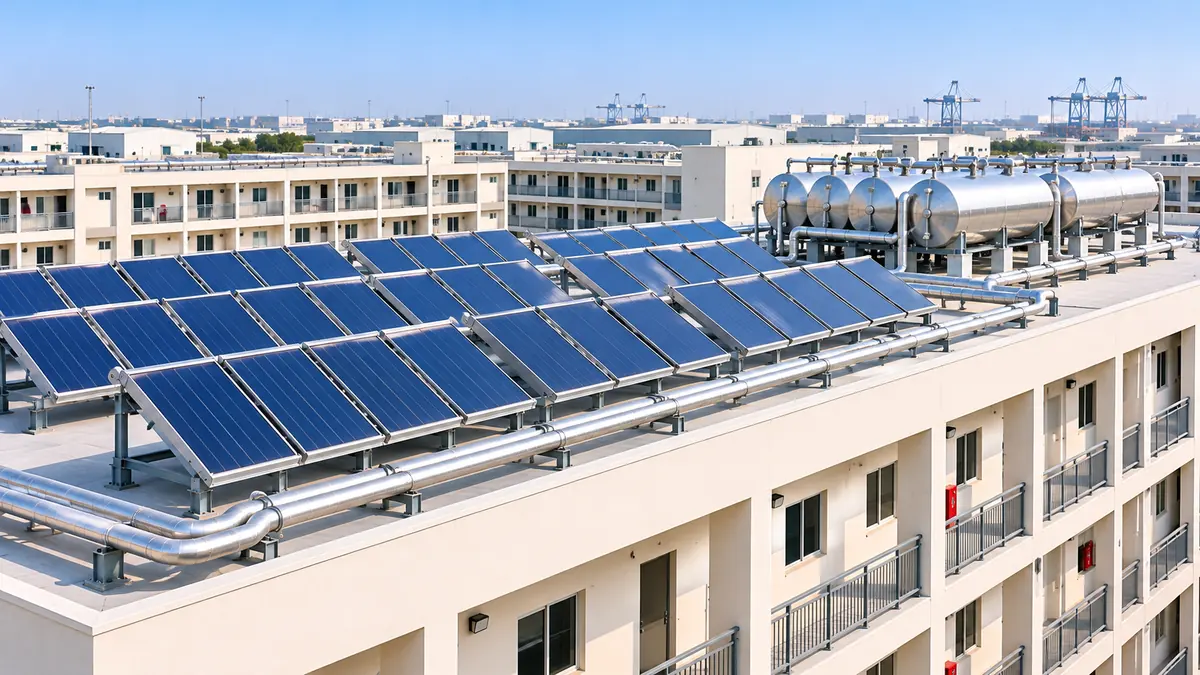
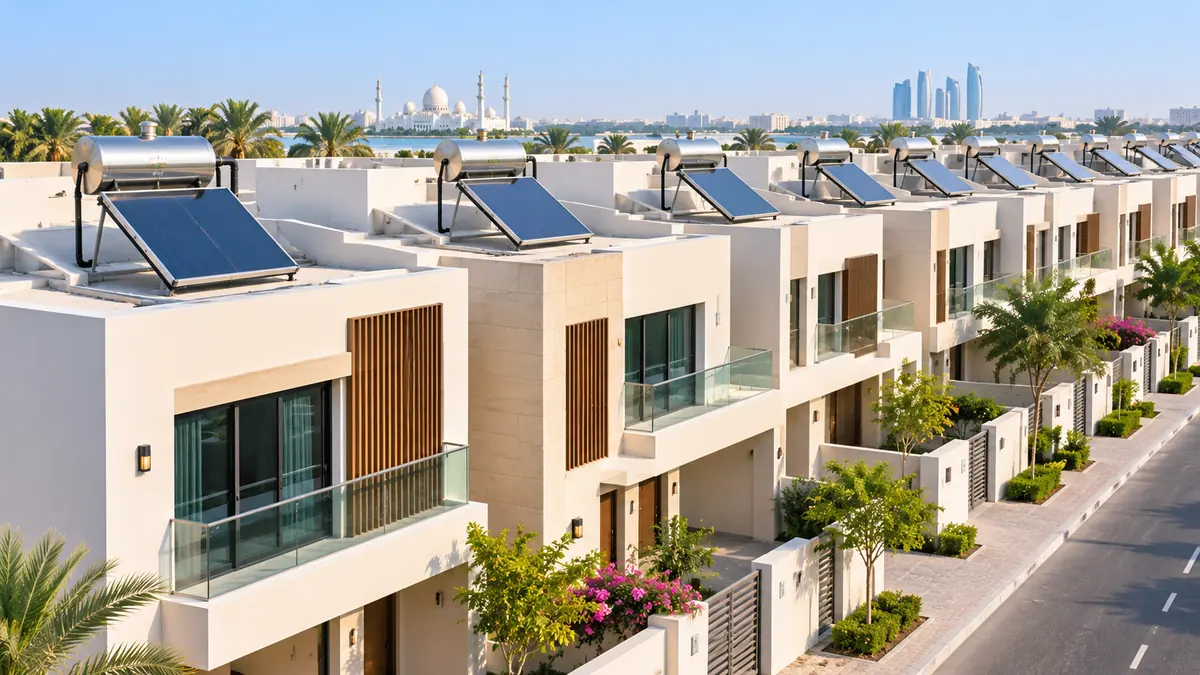
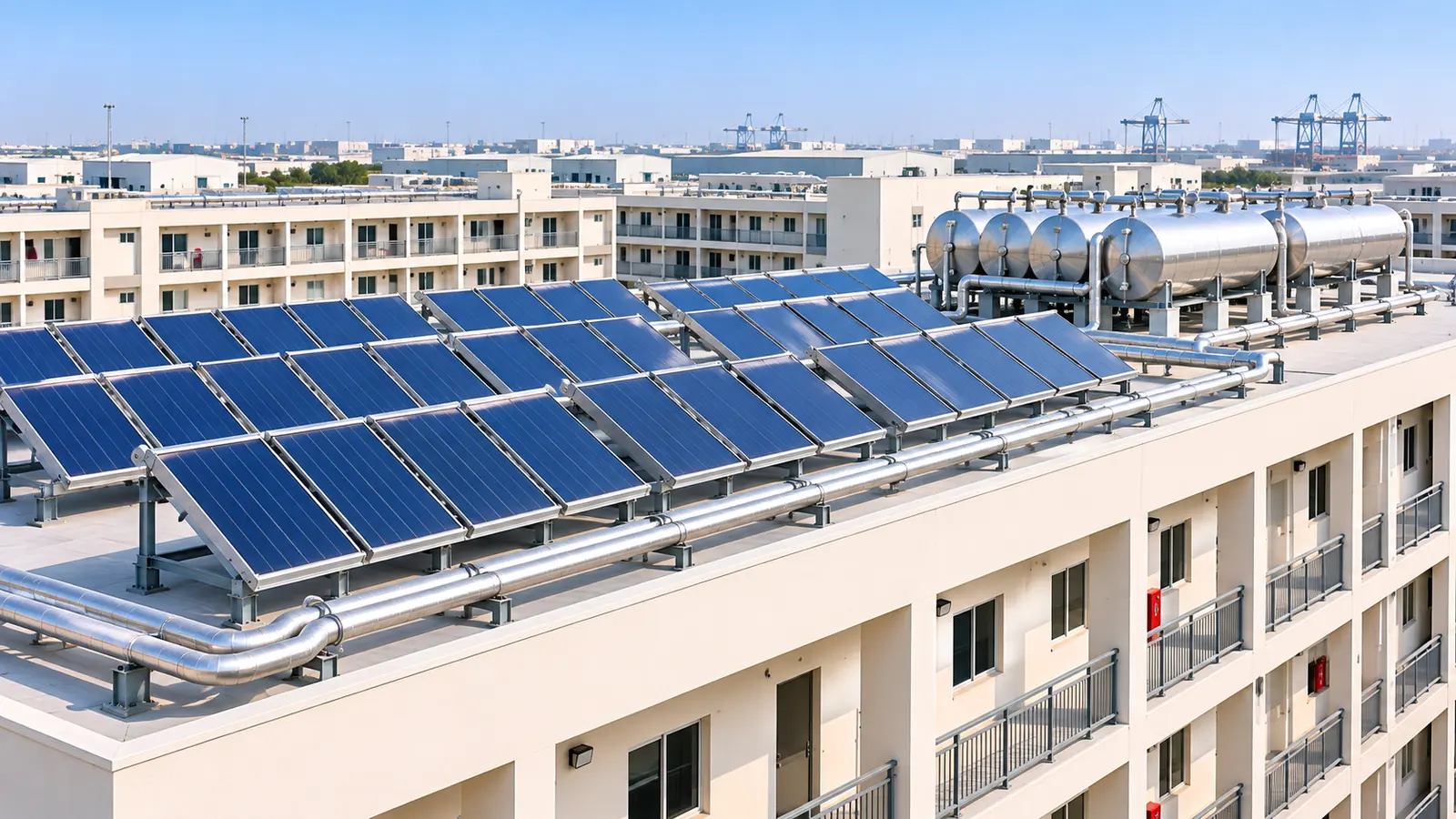 CommercialApartment building arrayUAE · Apartment building roof with rows of solar water heaters
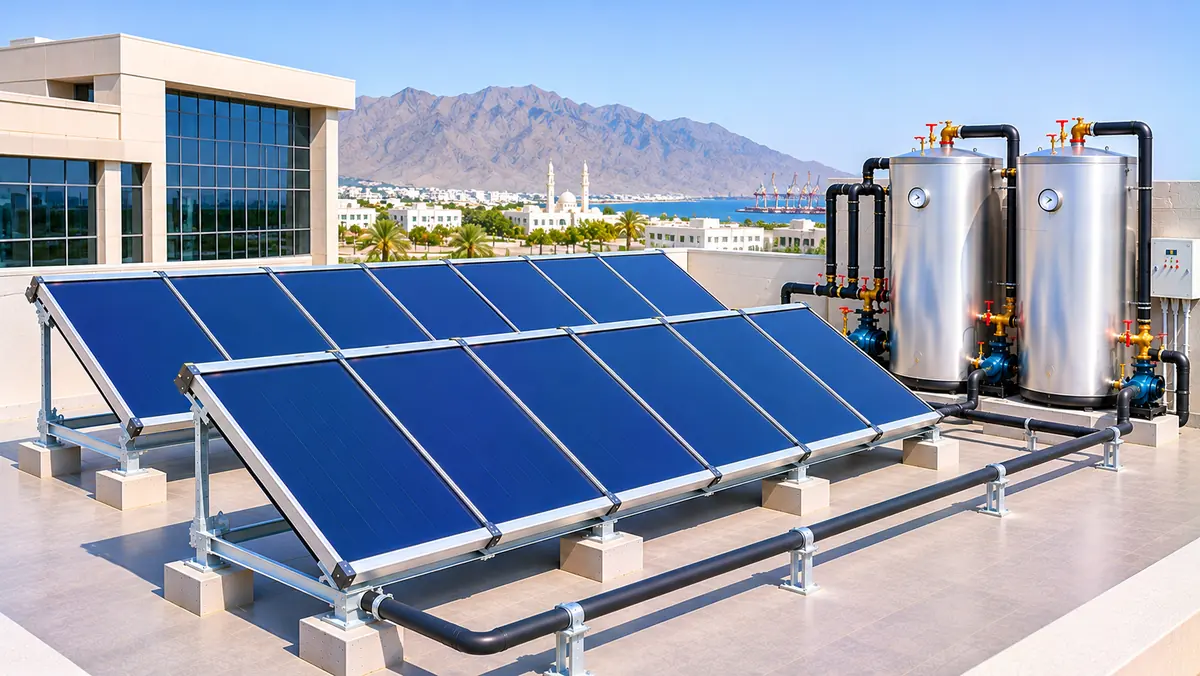
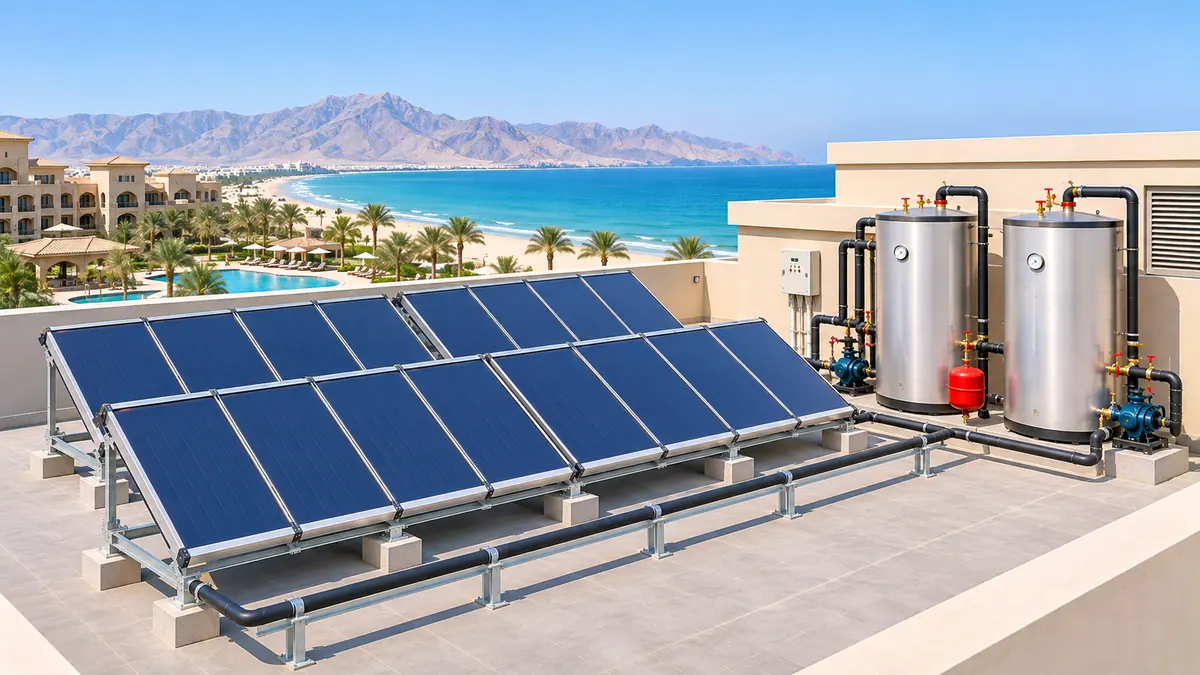
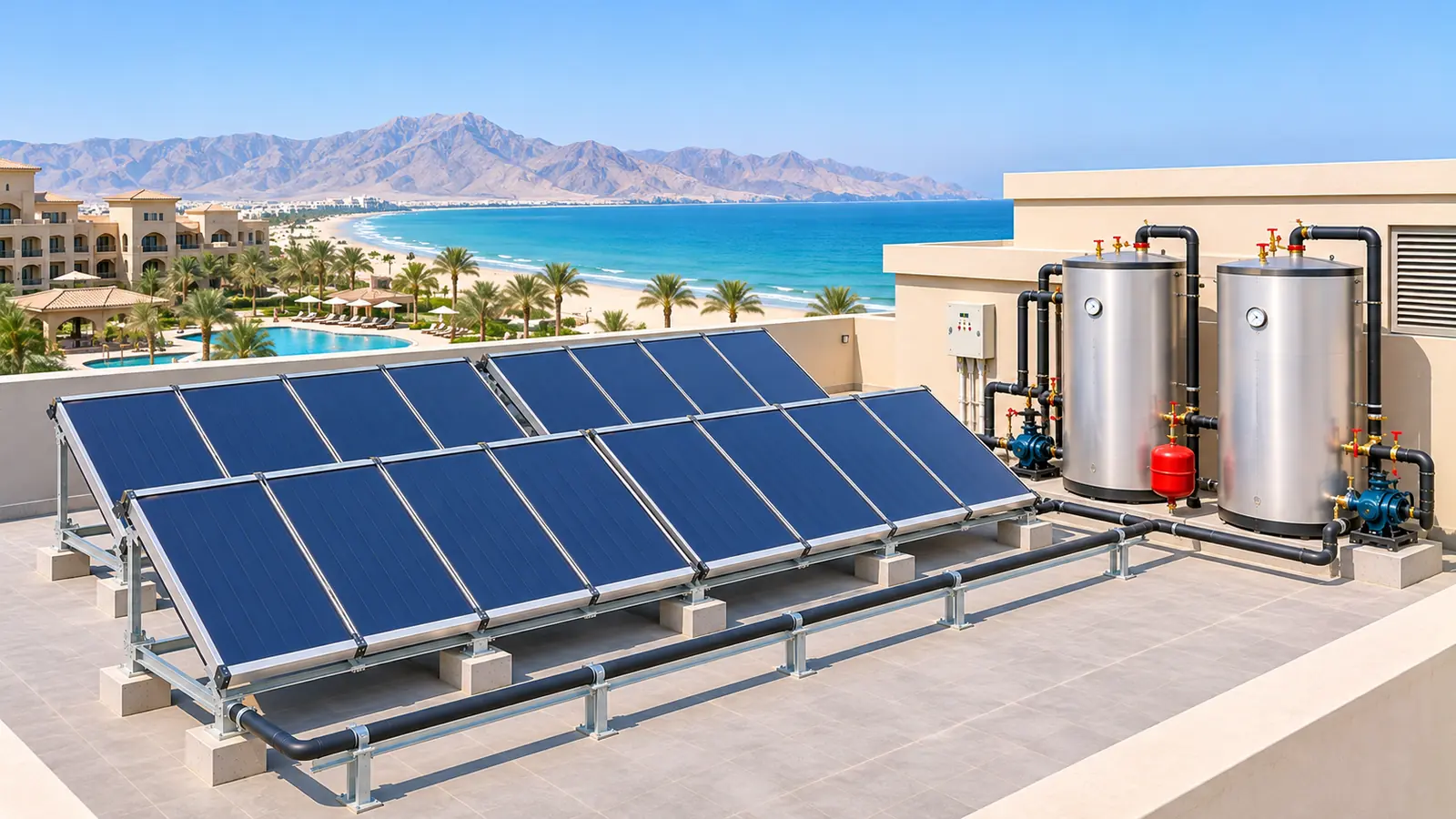 CommercialCoastal resortUAE · Solar thermal collectors and tanks on a coastal resort roof with mountains behind
 CommercialCity hotel hot water plantUAE · Video of a solar water heating plant on a city hotel roof
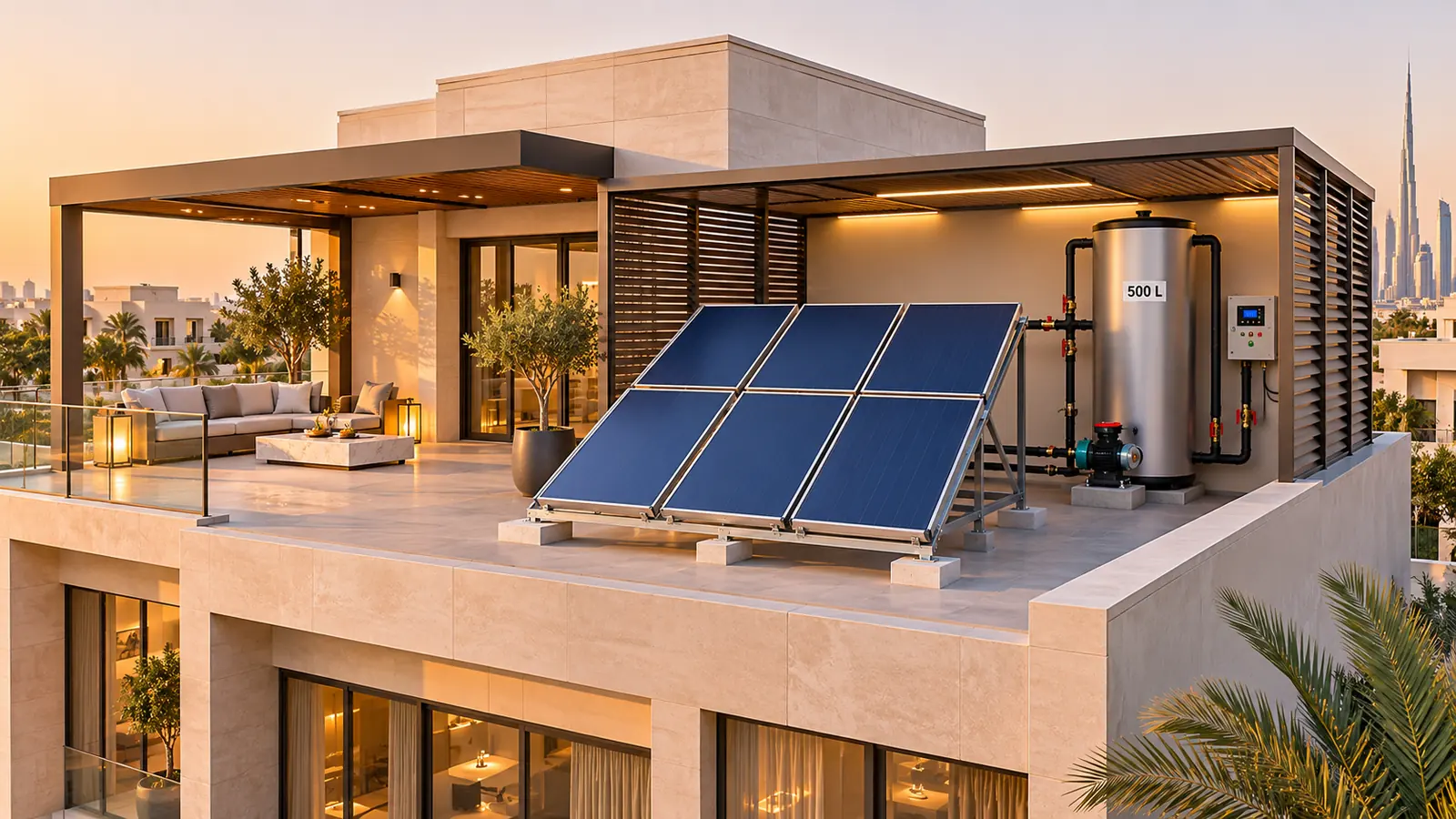 VillaLuxury villa roof terraceDubai · Luxury Dubai villa roof terrace with a solar water heater and storage tank
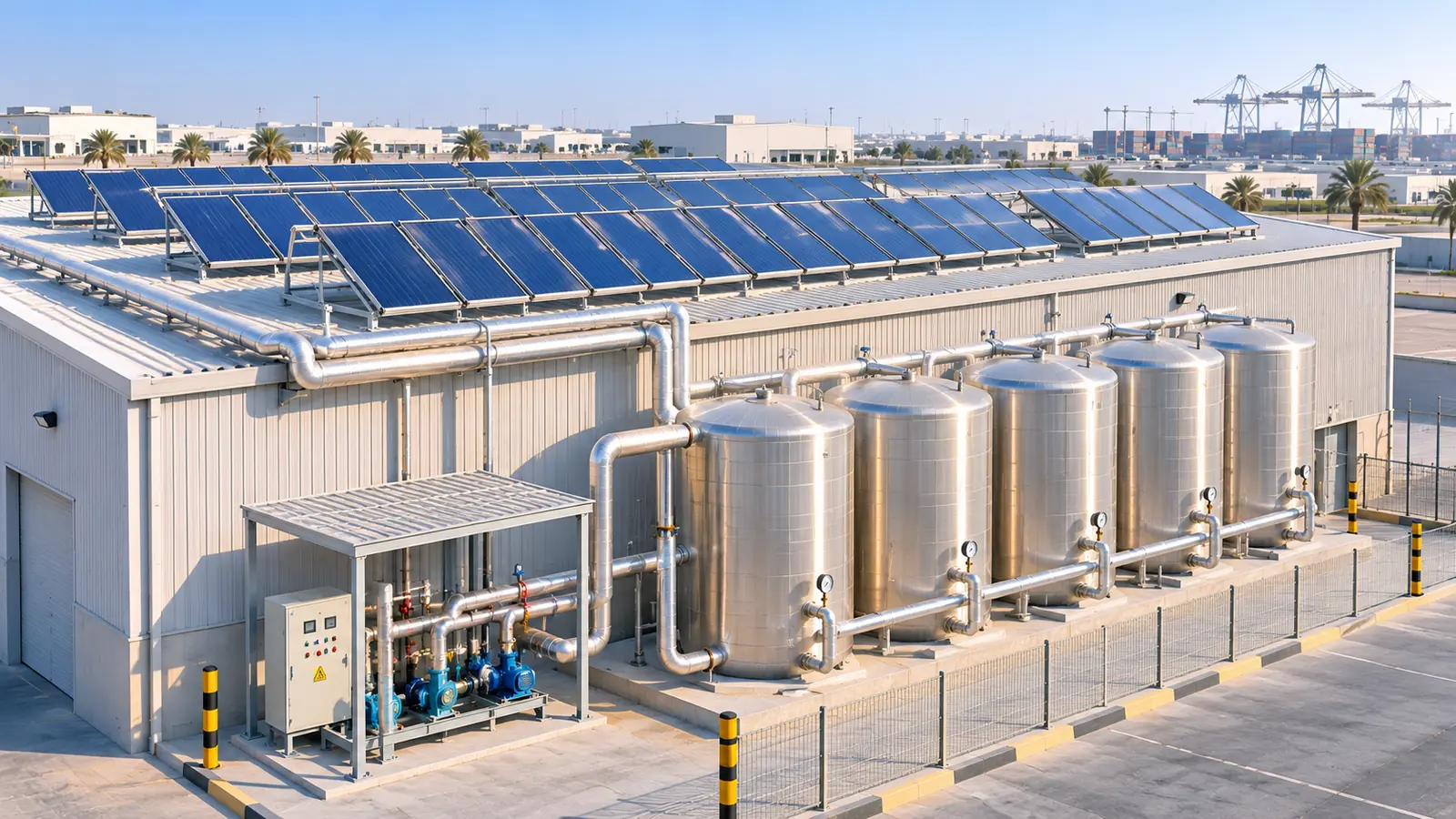 IndustrialIndustrial rooftop plantUAE · Large rooftop solar thermal plant with a row of storage tanks
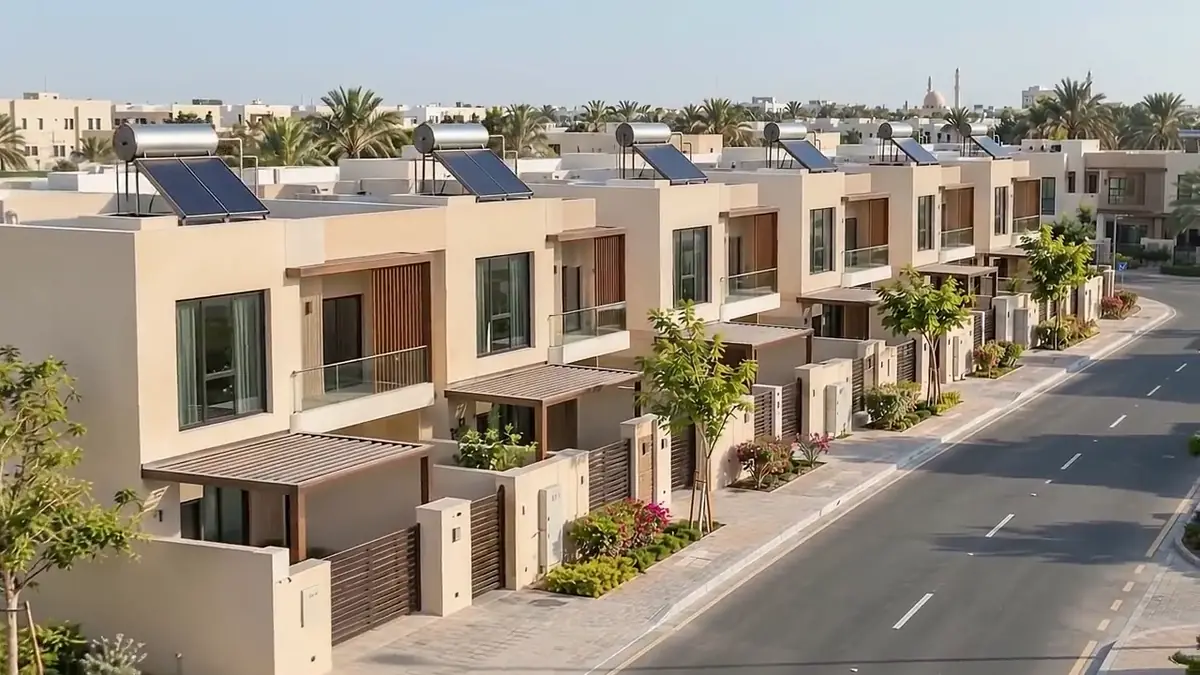 VillaTownhouse communityUAE · Aerial video of townhouses with rooftop solar water heaters
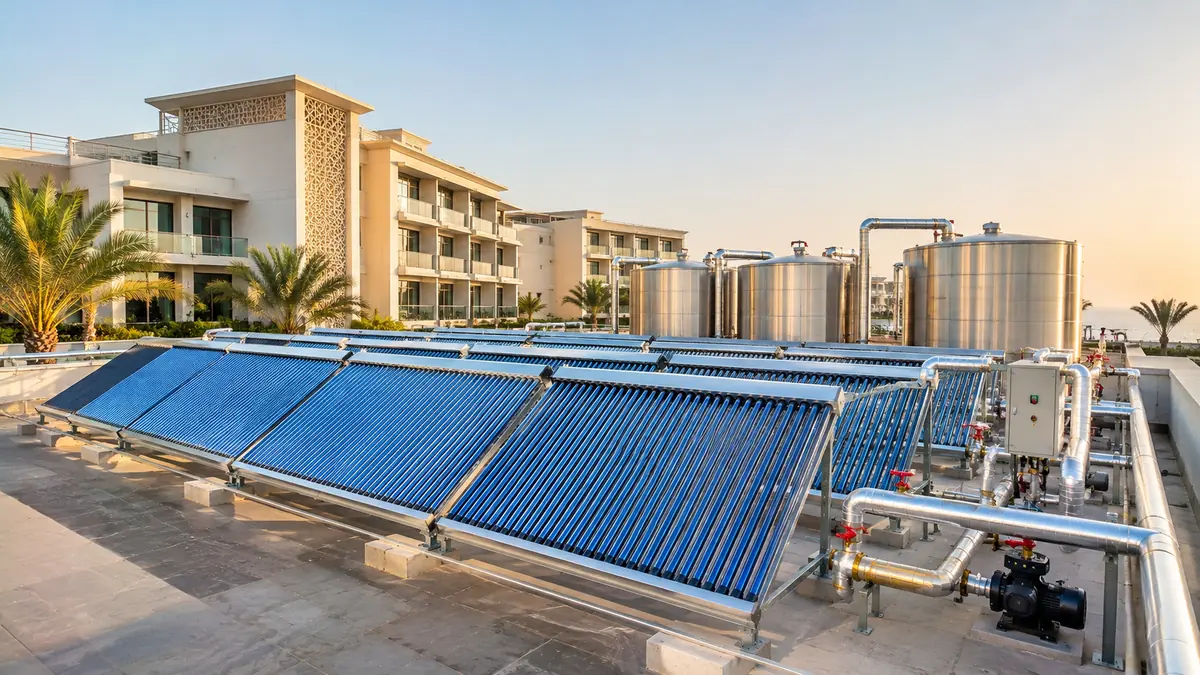
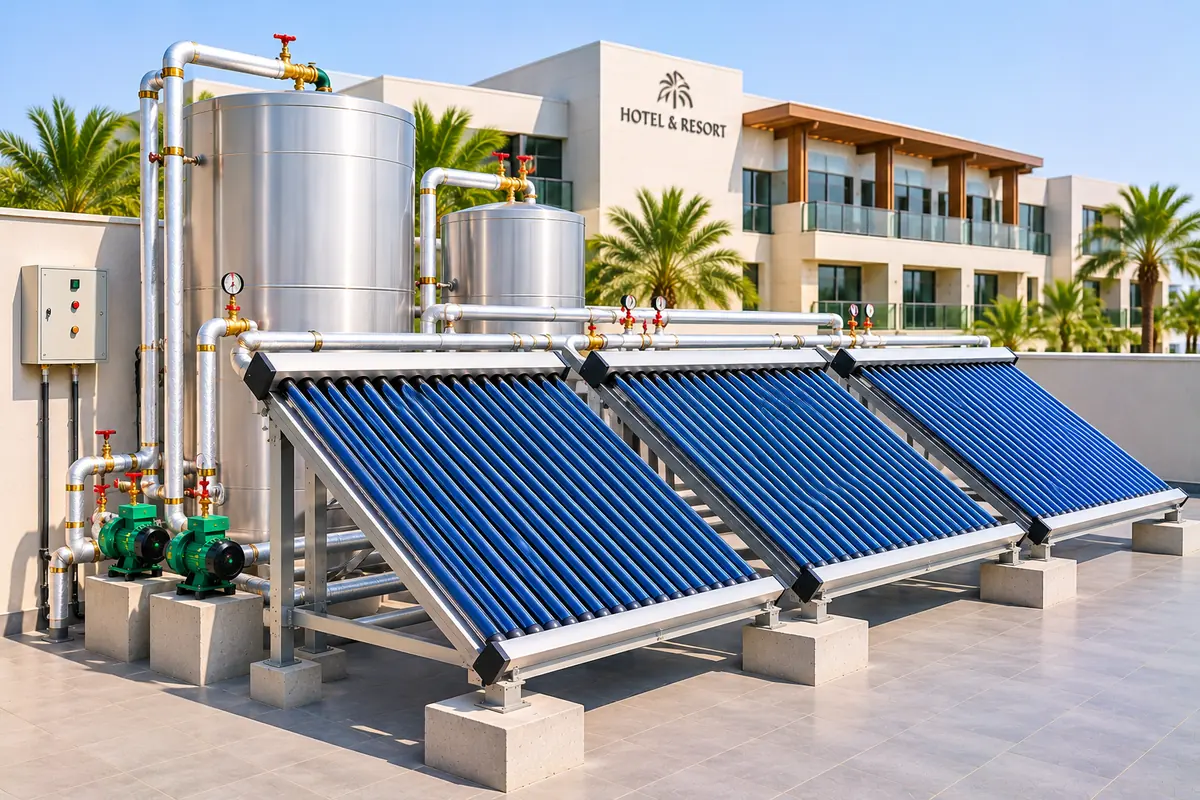 CommercialHotel and resortUAE · Evacuated tube collectors and storage tanks on a hotel resort roof
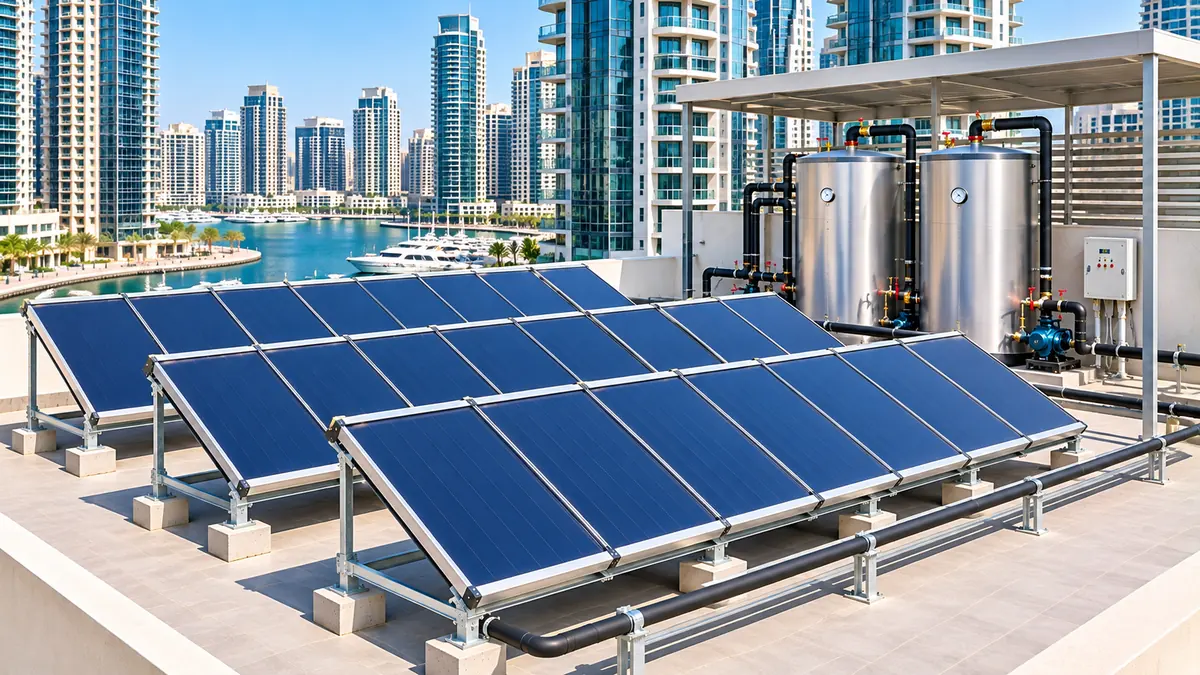
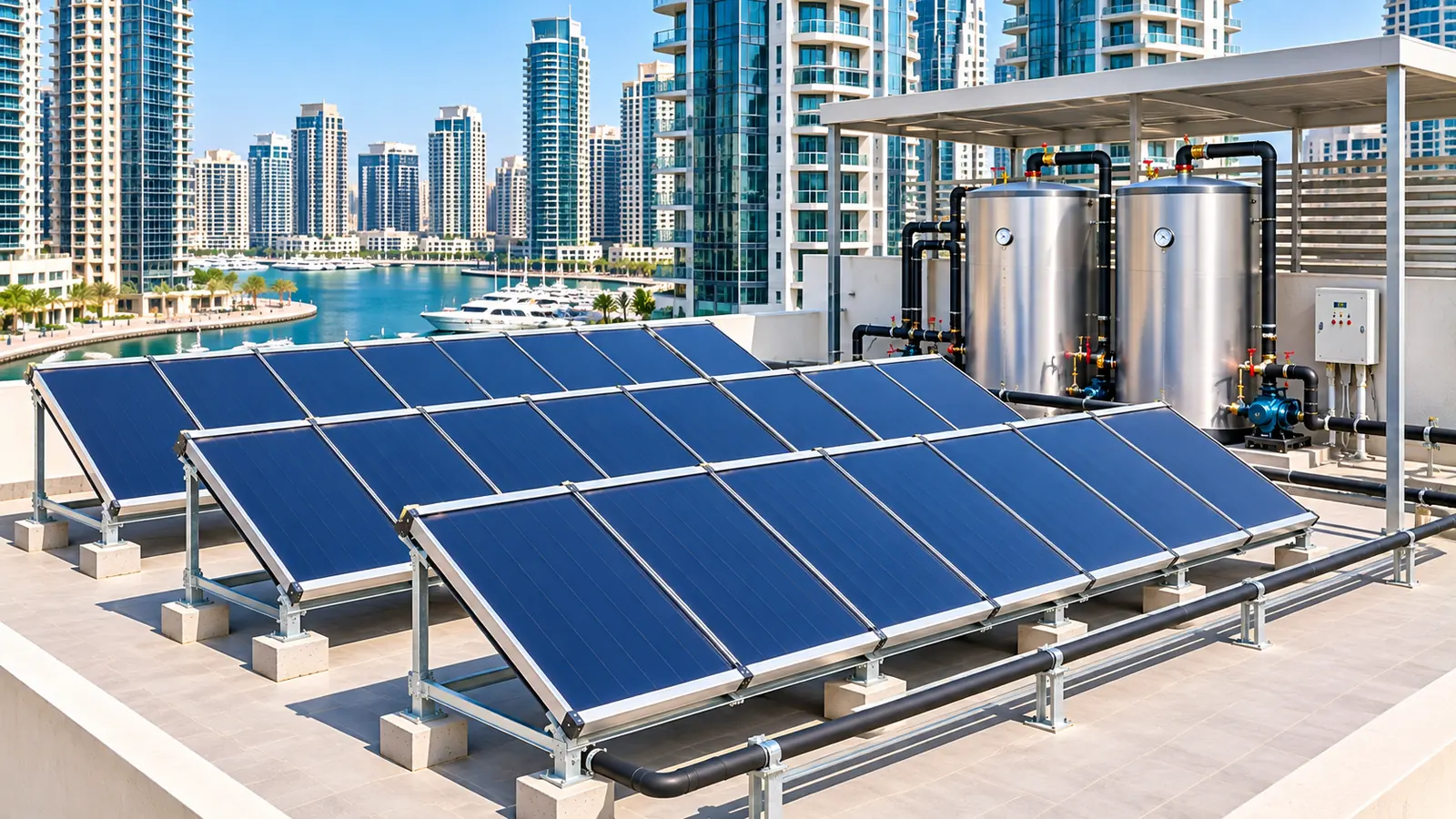 CommercialHigh-rise rooftopDubai · Solar thermal collectors and tanks on a Dubai Marina building roof
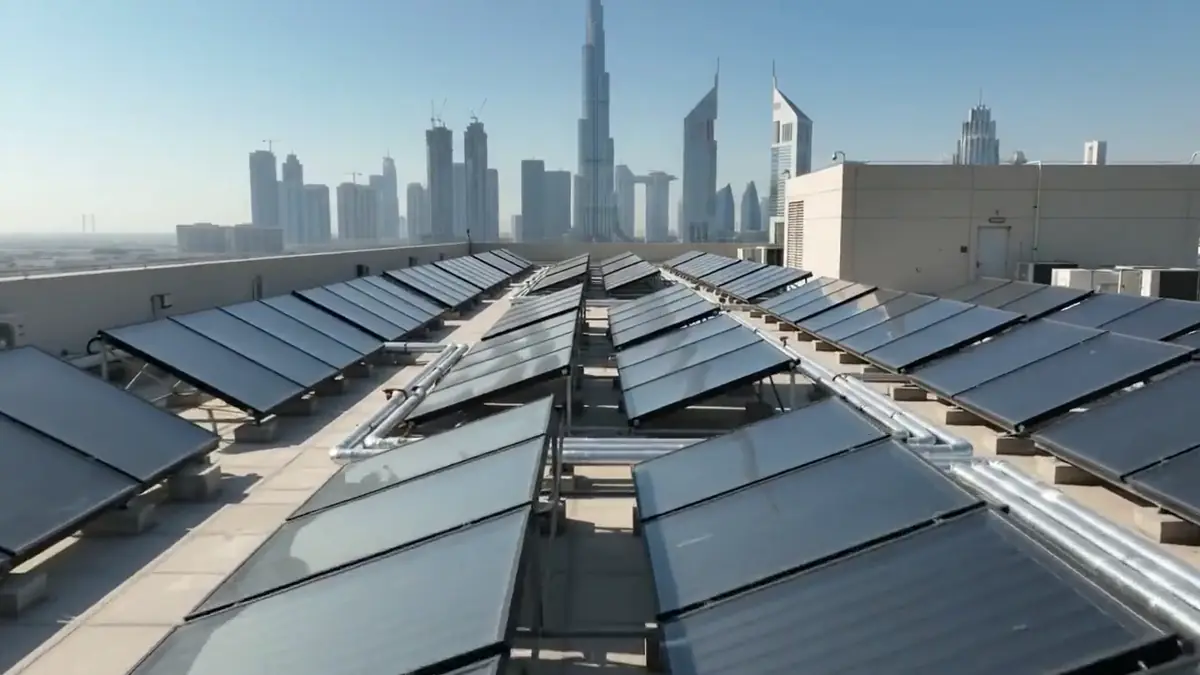 CommercialCommercial rooftop plantUAE · Video of a commercial rooftop solar hot water plant with the Dubai skyline
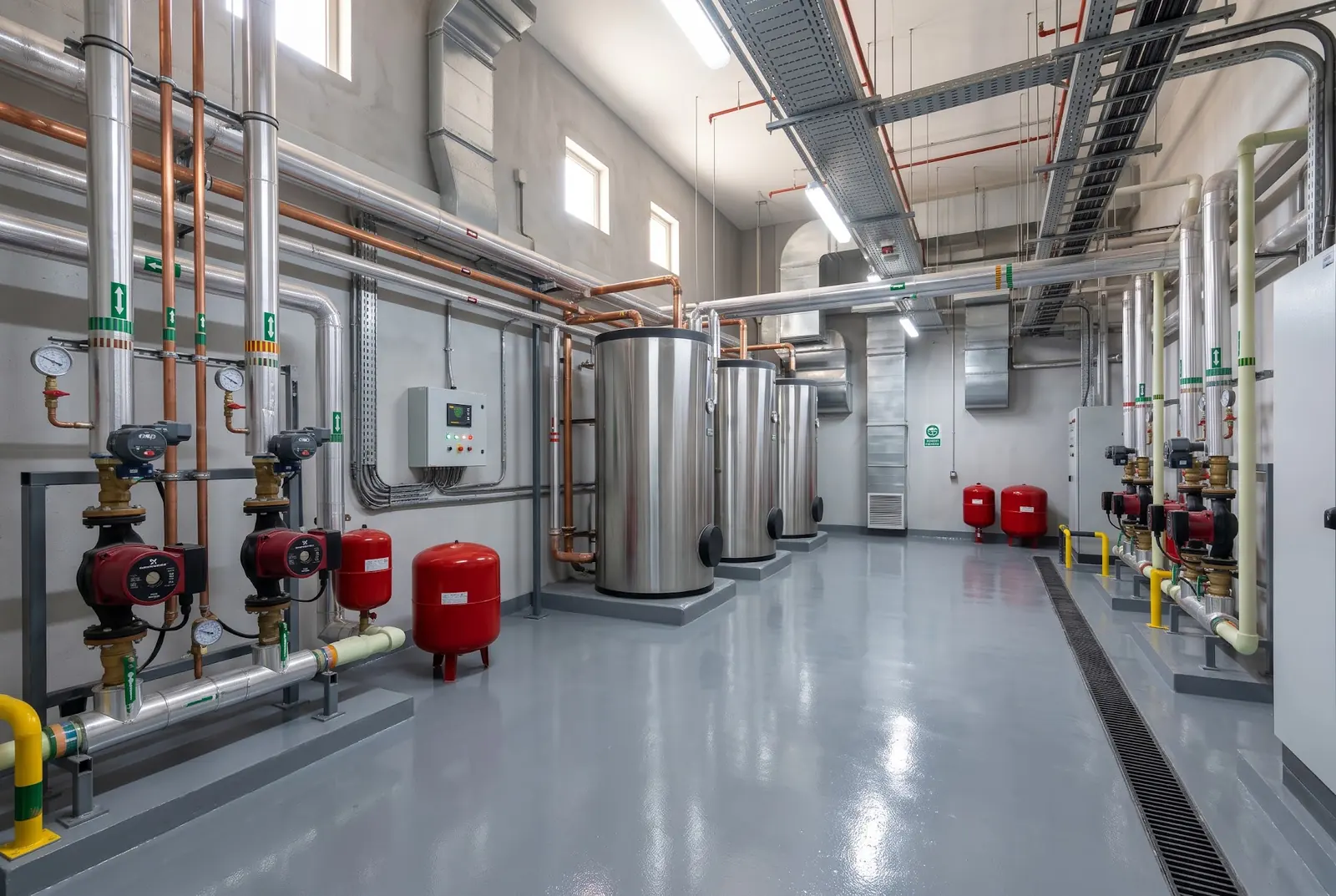 IndustrialPlant roomUAE · Clean plant room with hot water cylinders, pumps and expansion vessels
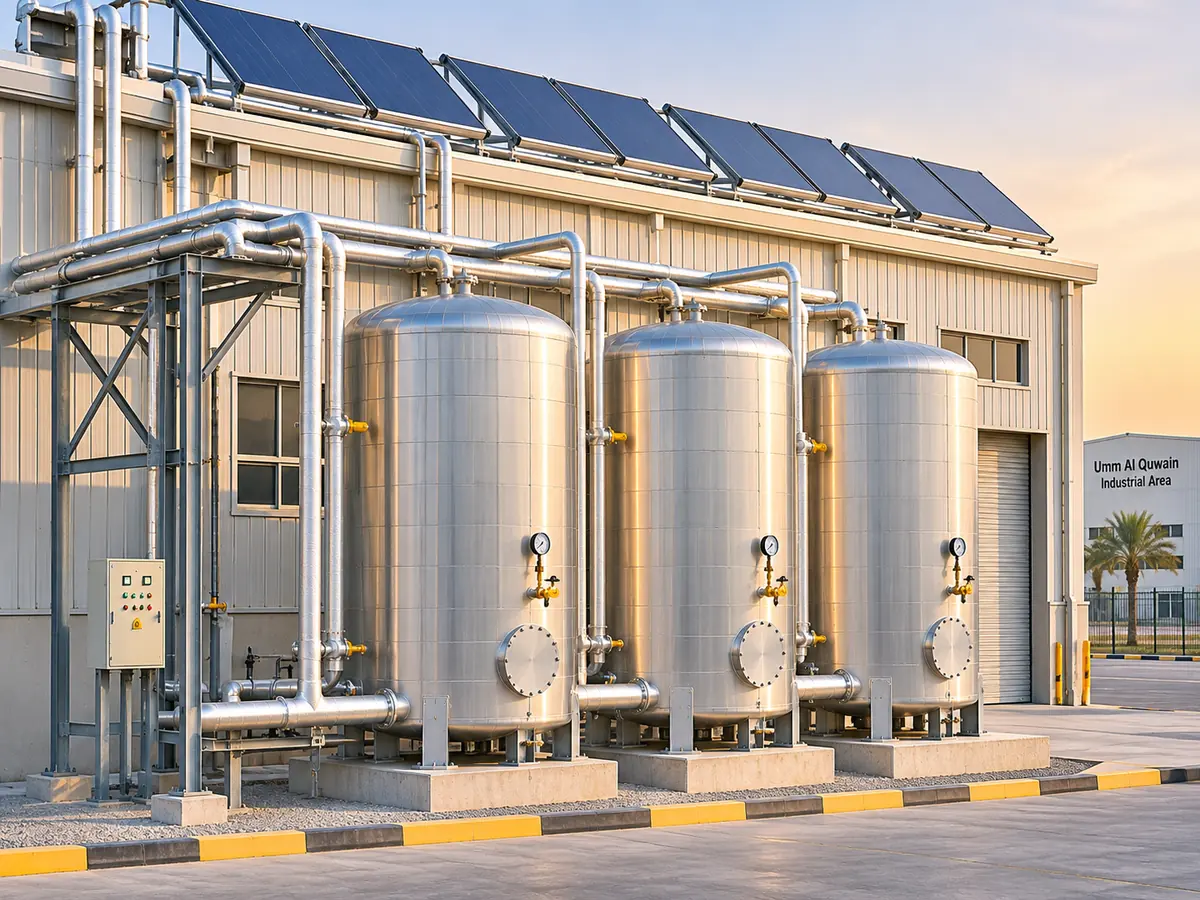 IndustrialIndustrial tank facilityUAE · Bank of large stainless steel solar hot water tanks at an industrial facility
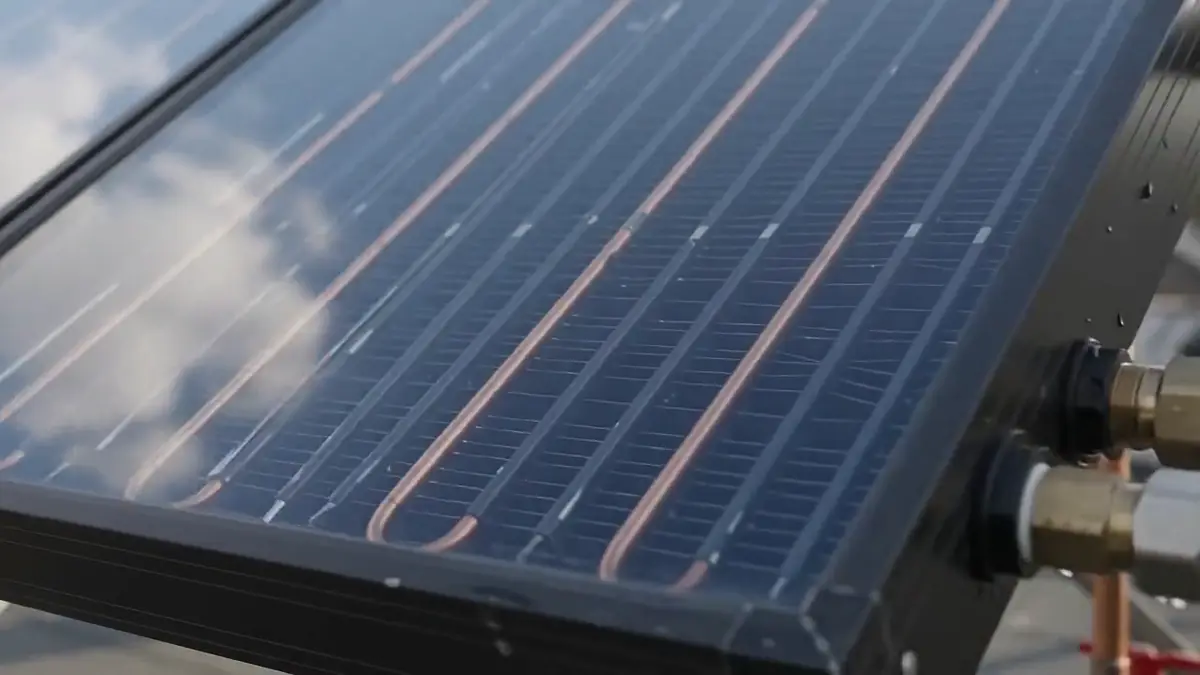 ResidentialCollector and tank connectionsUAE · Video close-up of solar collector pipe connections to the storage tank
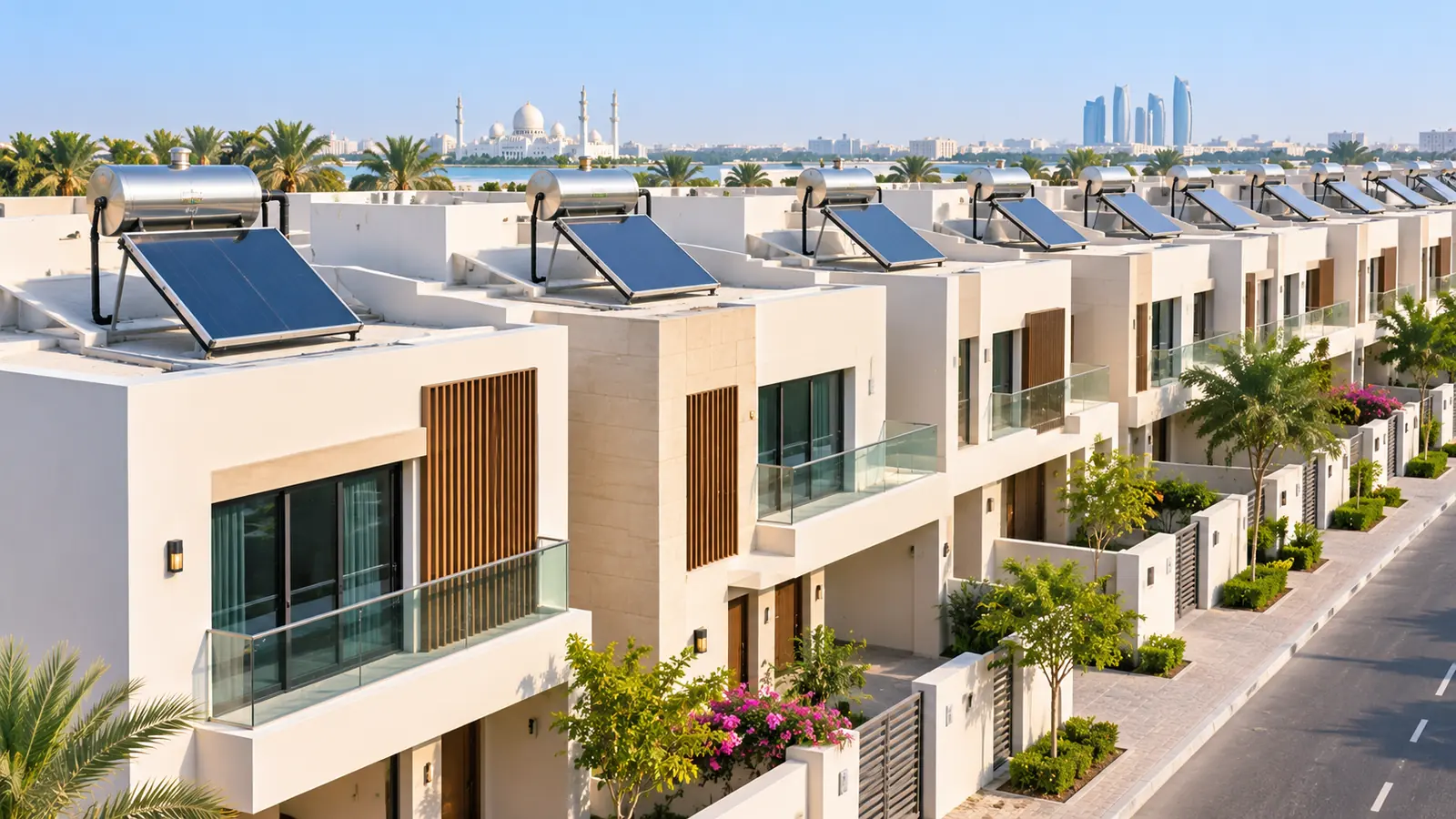 ResidentialTownhouse rooftopsAbu Dhabi · Abu Dhabi townhouses with solar water heaters on every roof
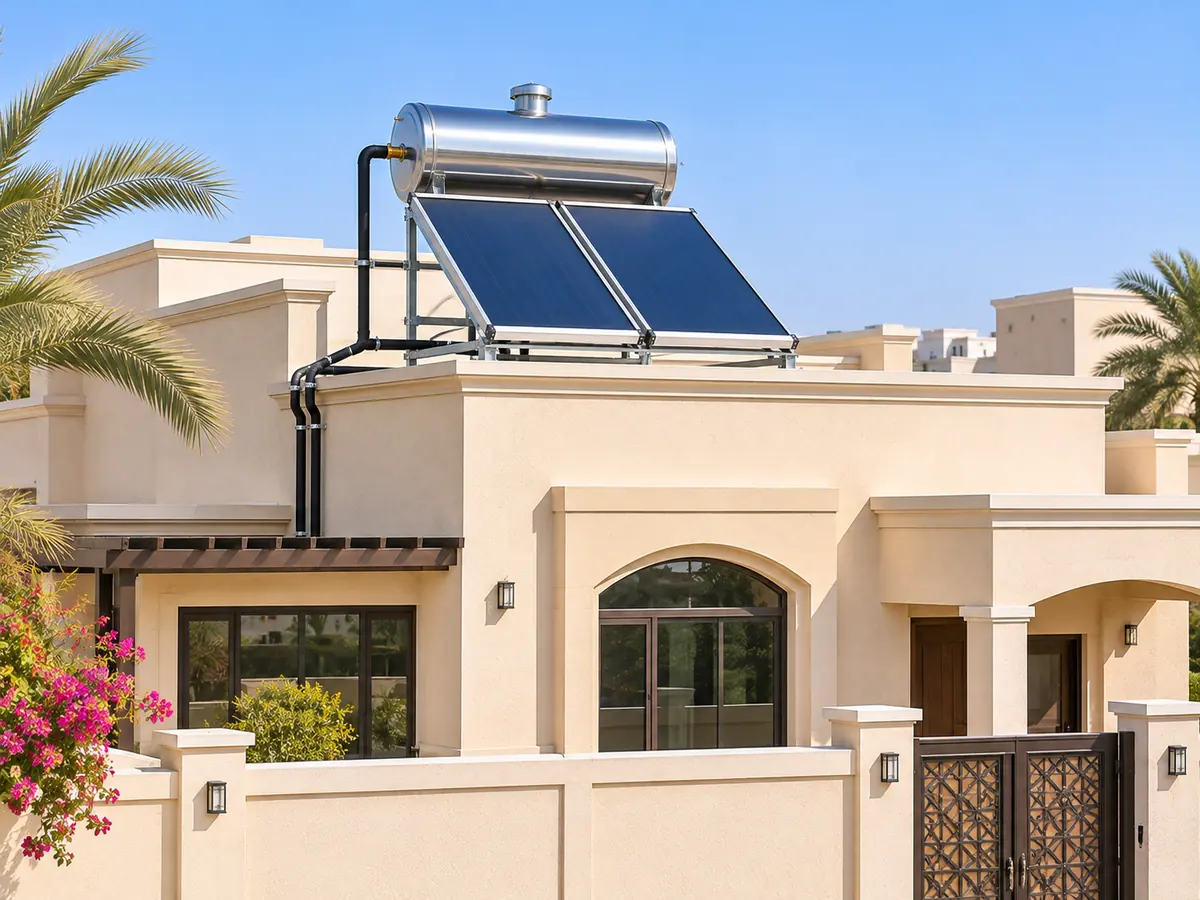 VillaArabian-style villaUAE · Arabian-style villa with a rooftop thermosiphon solar water heater
The four system designs you will find on UAE roofs, and where each one fits.
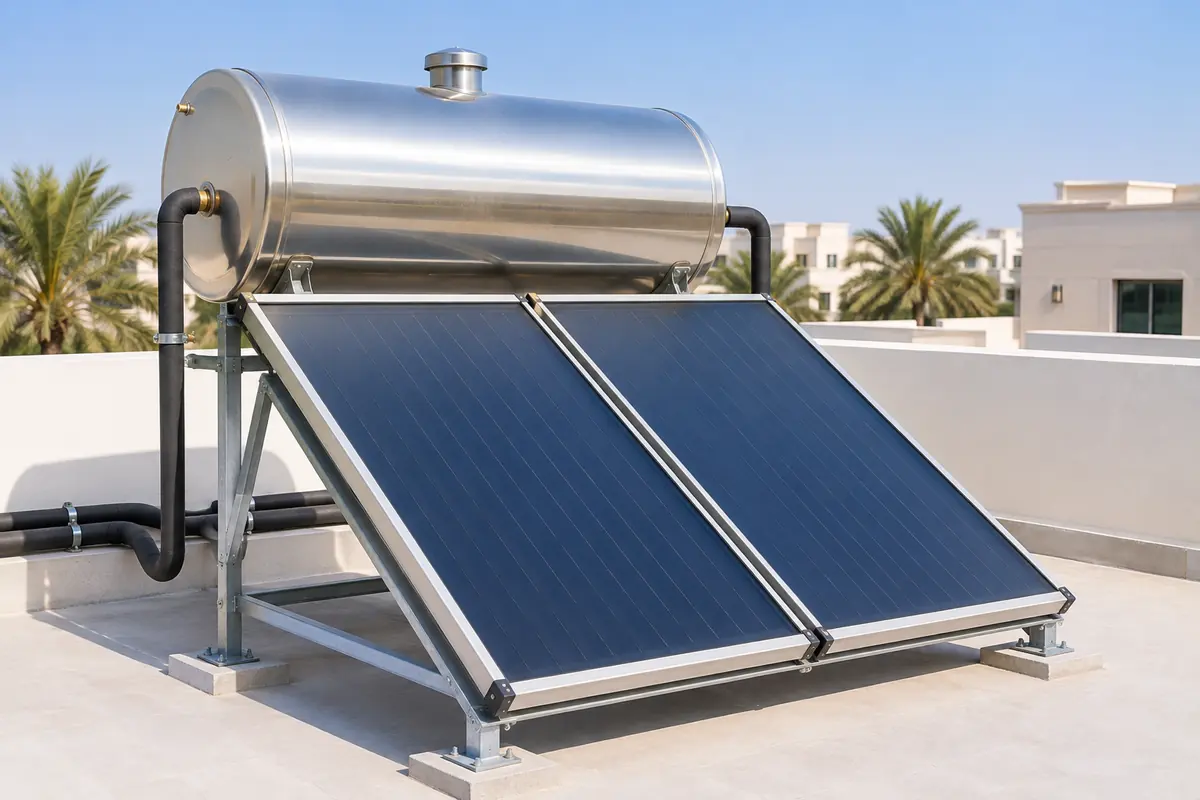
A glazed, insulated panel with an absorber plate and copper risers. Robust, simple to clean and a common choice for homes in the UAE.
Best for: Villas, townhouses and low-rise buildings
Learn more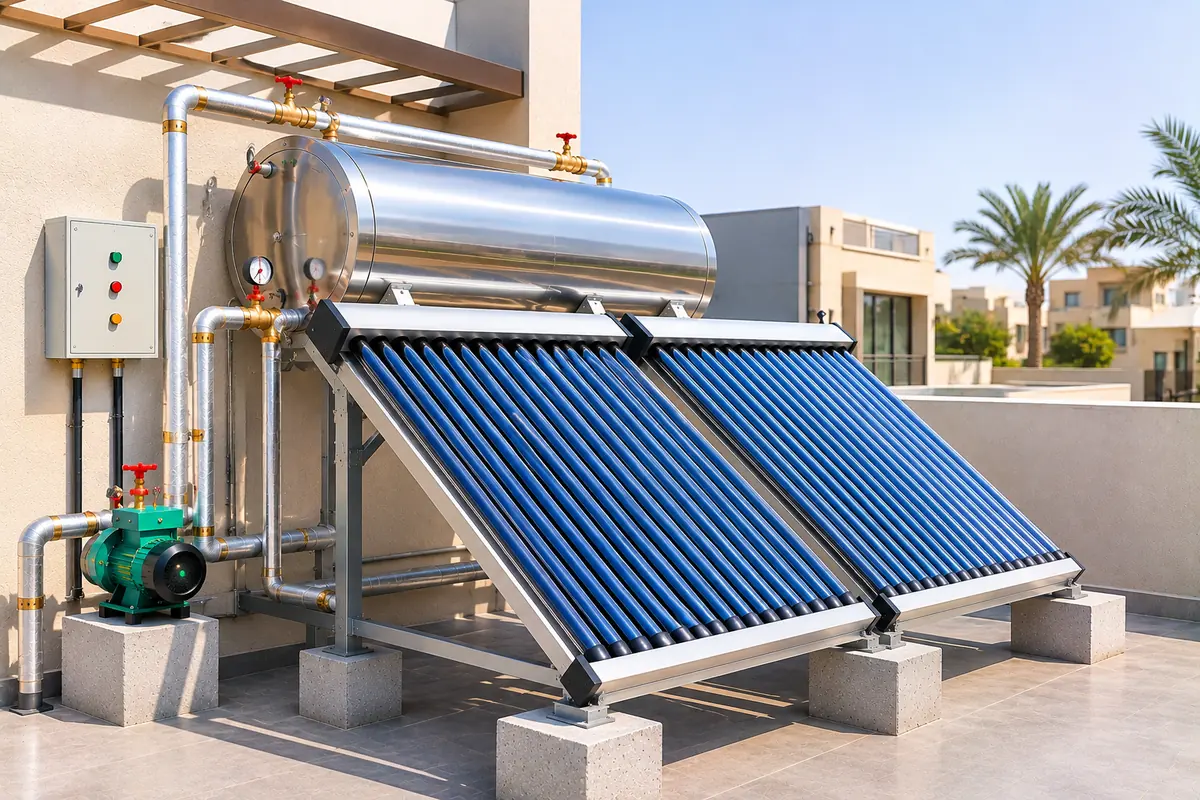
Rows of vacuum glass tubes that lose very little heat. They perform well on cooler or hazy days and suit higher hot water demand.
Best for: Larger homes, hotels and commercial buildings
Learn more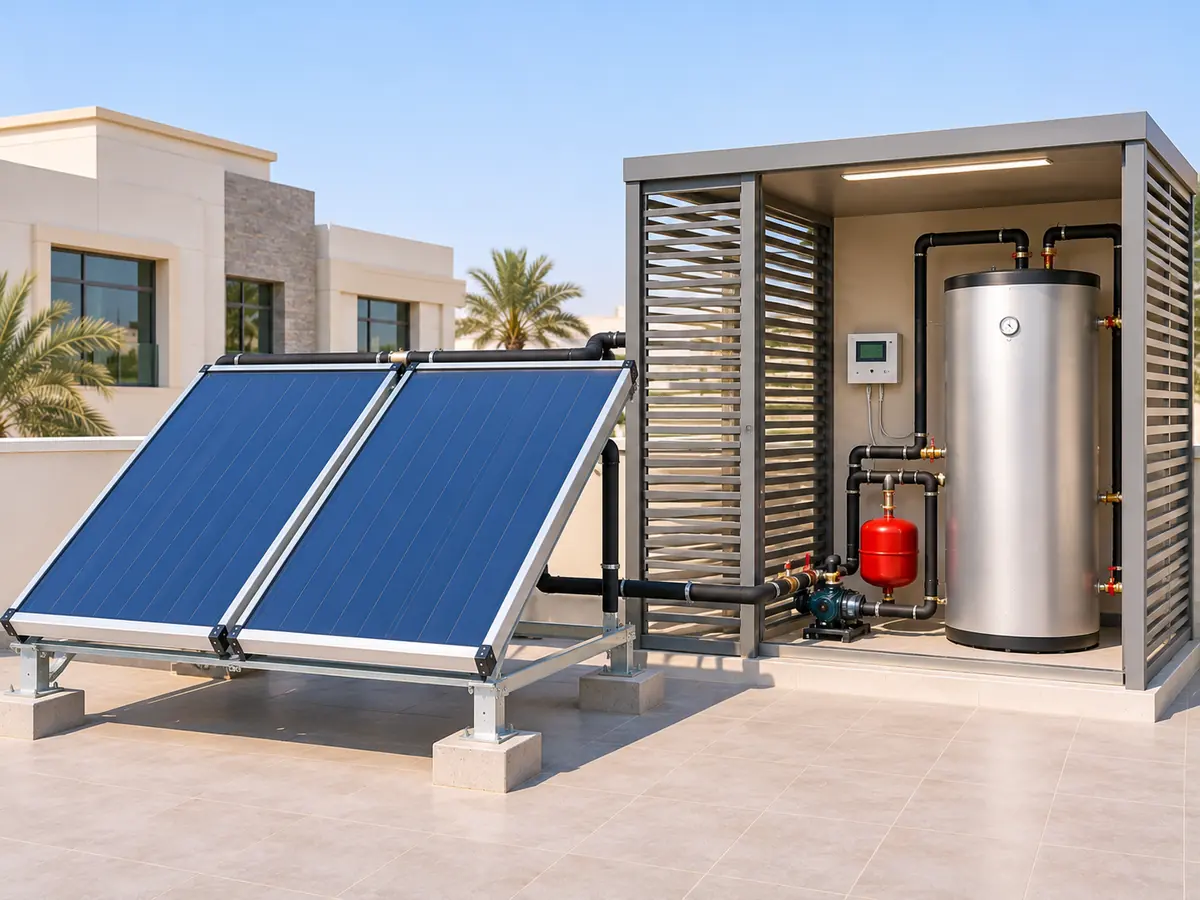
The tank works at mains or pump pressure, so showers and multiple outlets get strong, steady flow. Usually fitted with safety and expansion valves.
Best for: Villas, apartments and buildings with pressurised plumbing
Learn more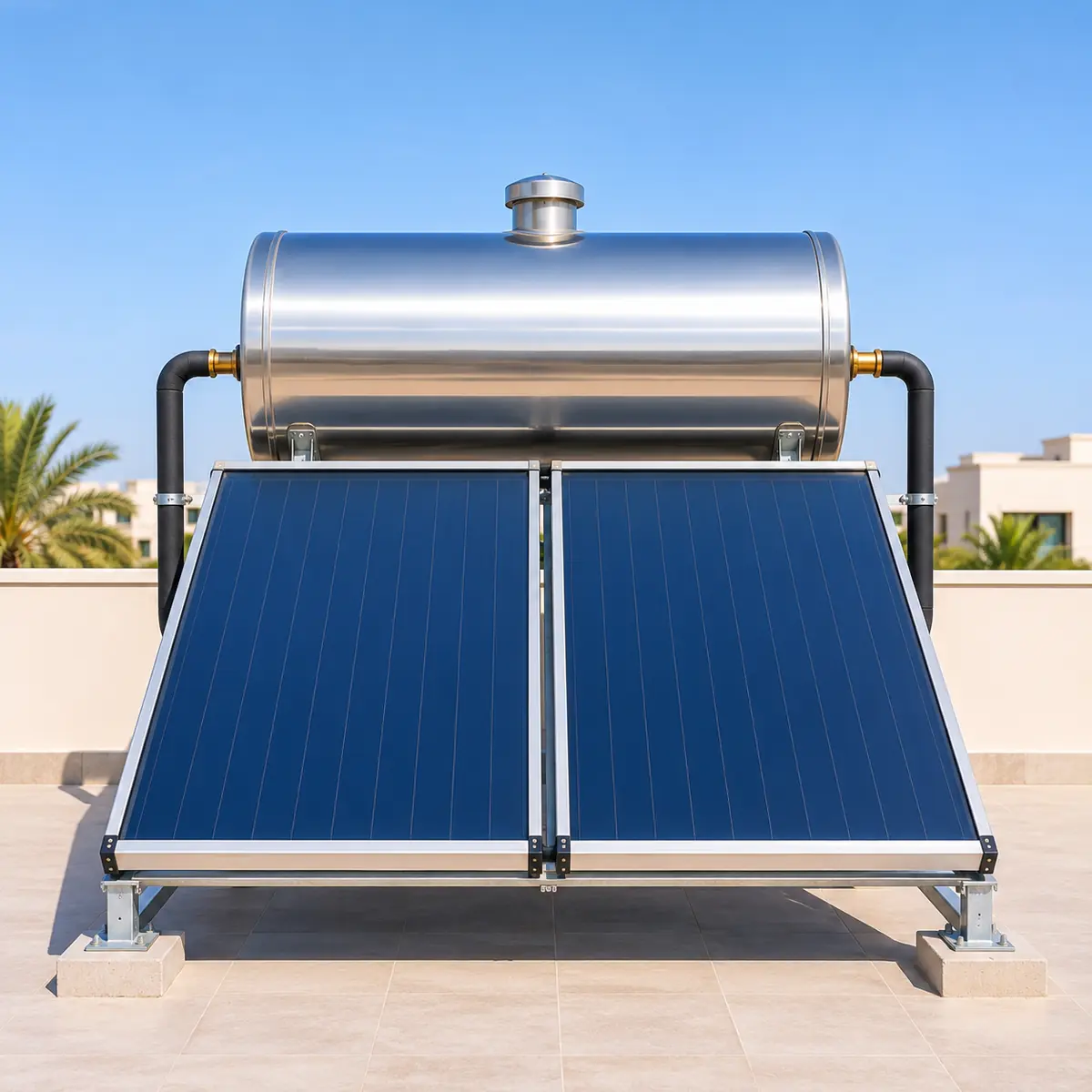
A gravity-fed tank above the collector with no pump. Simple and economical where outlets do not need high pressure.
Best for: Smaller homes, accommodation and gravity-fed supplies
Learn more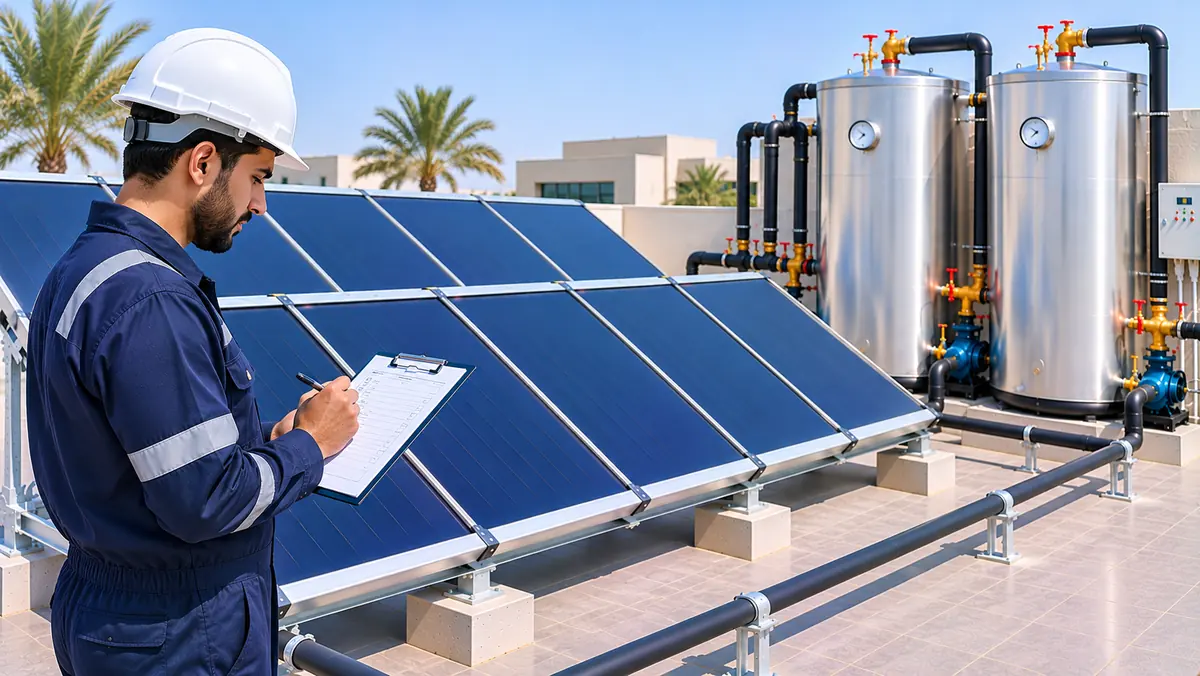
Survey, installation, servicing and repair are carried out by technicians who work on solar hot water systems.
Brands, models and capacities are stated in your quotation, so you know exactly what you are getting.
Systems and parts are chosen for intense sun, heat, dust, humidity and local water quality.
Secure frames, neat insulated pipe runs and a full test before handover.
A site survey comes first, then a written, itemised quote with no vague packages.
Servicing, repairs and annual maintenance plans are available after installation.
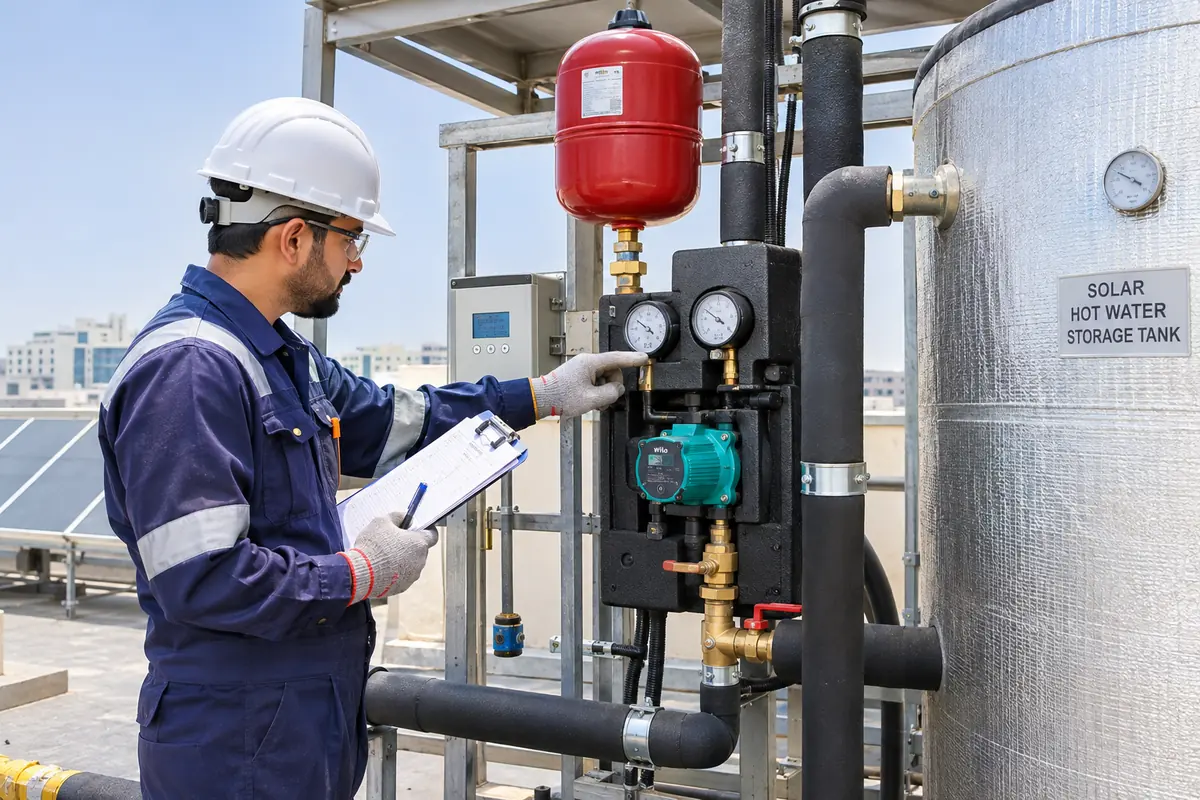
A collector covered in fine dust absorbs less of the sun’s heat, and the system makes up the difference by running the electric backup more. Sandstorms, construction dust and salt spray on the coast can coat a collector quickly. Inside the system, minerals in the water slowly form scale on the heating element and the tank floor, reducing efficiency and shortening the element’s life.
You can rinse the collector yourself if the roof is safe to access, the glass is cool, you use plain water and a soft brush, and your manufacturer allows it. Don’t climb onto pitched or unguarded roofs, and leave descaling, draining and anything electrical to a technician.
A cleaning visit focuses on the collector and, if booked, descaling. A full maintenance service adds valve, anode, element and pump checks. For buildings or anyone who wants it scheduled, cleaning included in a contract is often the simplest option. In Dubai, see servicing in Dubai.
A solar water heater has two main parts: solar collectors on the roof and an insulated storage tank. The collectors use a dark absorber, either a flat plate or rows of vacuum tubes, to soak up heat from sunlight.
That heat passes into water or a heat-transfer fluid running through the collector. In a thermosiphon system, warm water rises naturally into a tank mounted above the collector; in a pumped system, a small pump and controller move the fluid whenever the collector is hotter than the tank.
The tank stores the hot water until you need it, so showers in the evening still use heat collected during the day. Hot water is drawn from the top of the tank to your taps, and cold mains water refills it from the bottom.
When the sun cannot keep up, on hazy days, in cooler months or with heavy use, an electric backup element with a thermostat tops up the temperature automatically. For most of the UAE year the sun does most of the work.
Servicing costs depend on the type and number of systems and what each one needs on the day. We do not publish fixed prices or savings figures because they depend on the property. These are the factors that shape your quotation and your long-term savings:
The tank size in litres, set by how many people and outlets need hot water.
A villa, an apartment building and a hotel have very different demand profiles.
Daily usage and peak times decide collector area and storage.
Collector type, tank material and lining, and brand all affect price.
Roof access, structure, pipe length and any crane or scaffold work.
Water quality and dust exposure shape the servicing a system will need.
Solar heat replaces much of the electricity a conventional water heater would use. How much you save depends on your hot water use, the system size, its condition and how often the backup element runs. We can talk you through the likely effect for your property during the survey.
Choose your emirate for local conditions, property types and contact options.
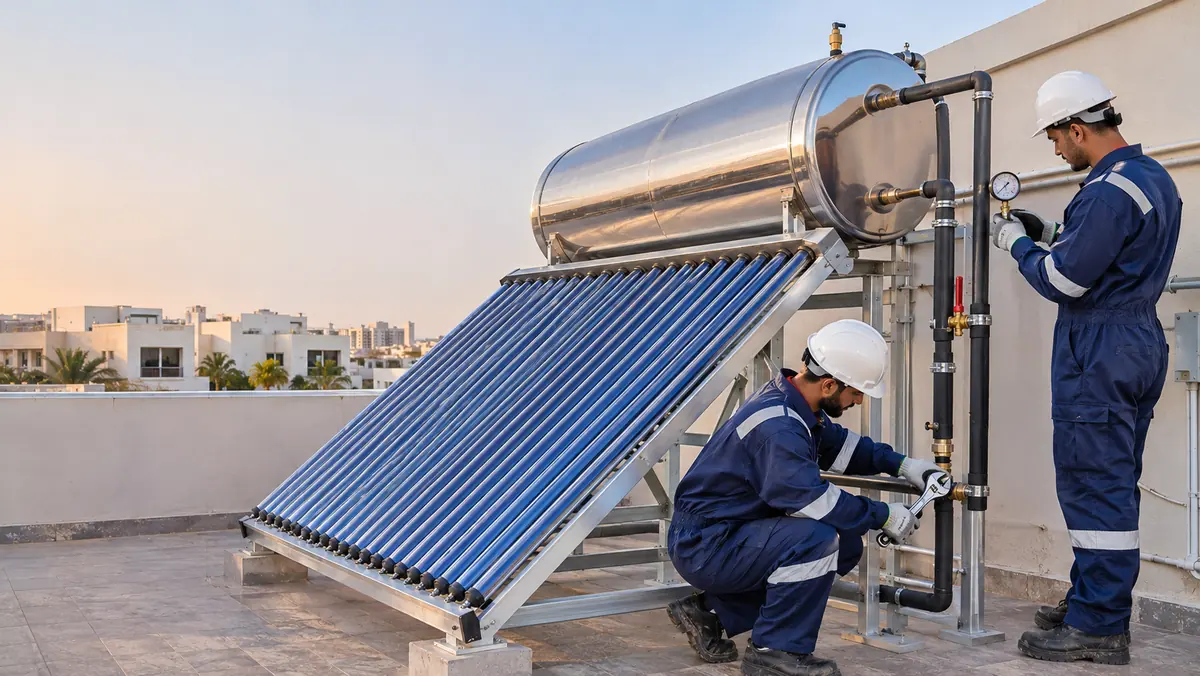
Solar water heater installation in the UAE: choosing the right system, emirate-specific site factors,…
View serviceSolar water heater maintenance in the UAE: which parts wear and when, how coastal, inland and dusty sites…
View service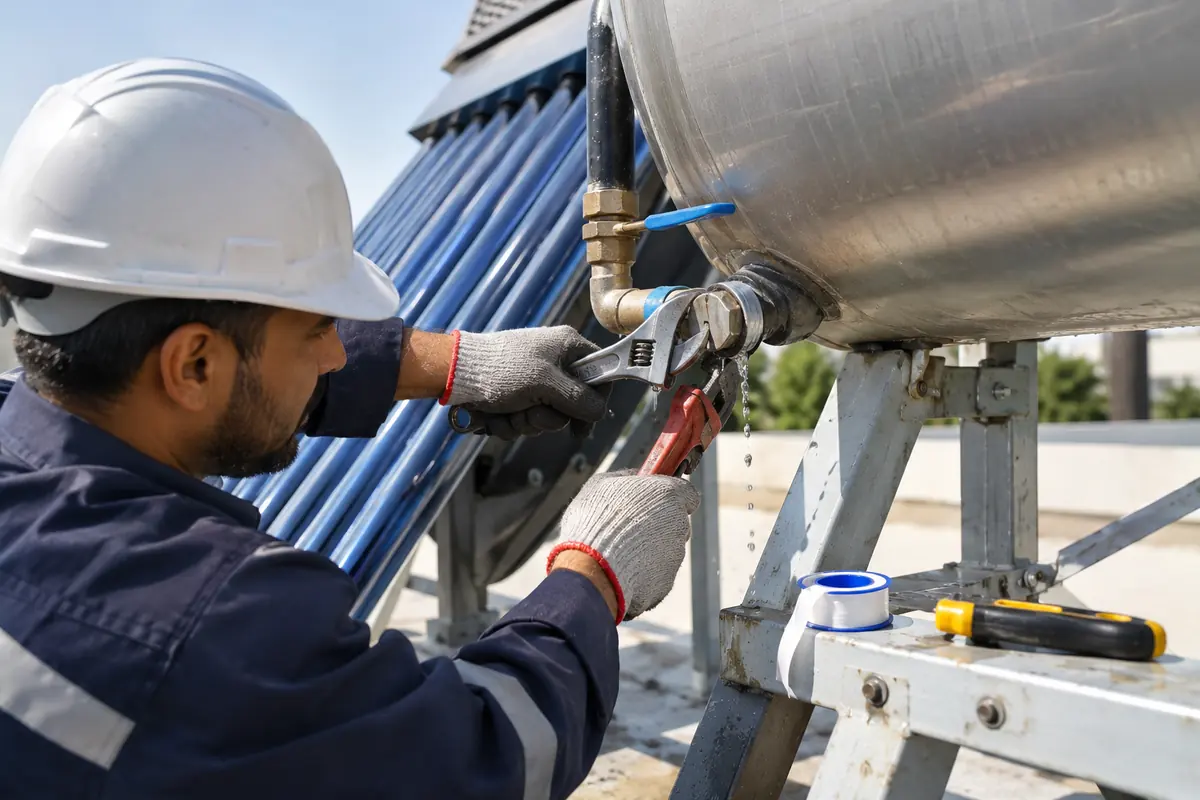
Solar water heater repair in the UAE: faults by system type, specialist pump, element, collector and tank…
View service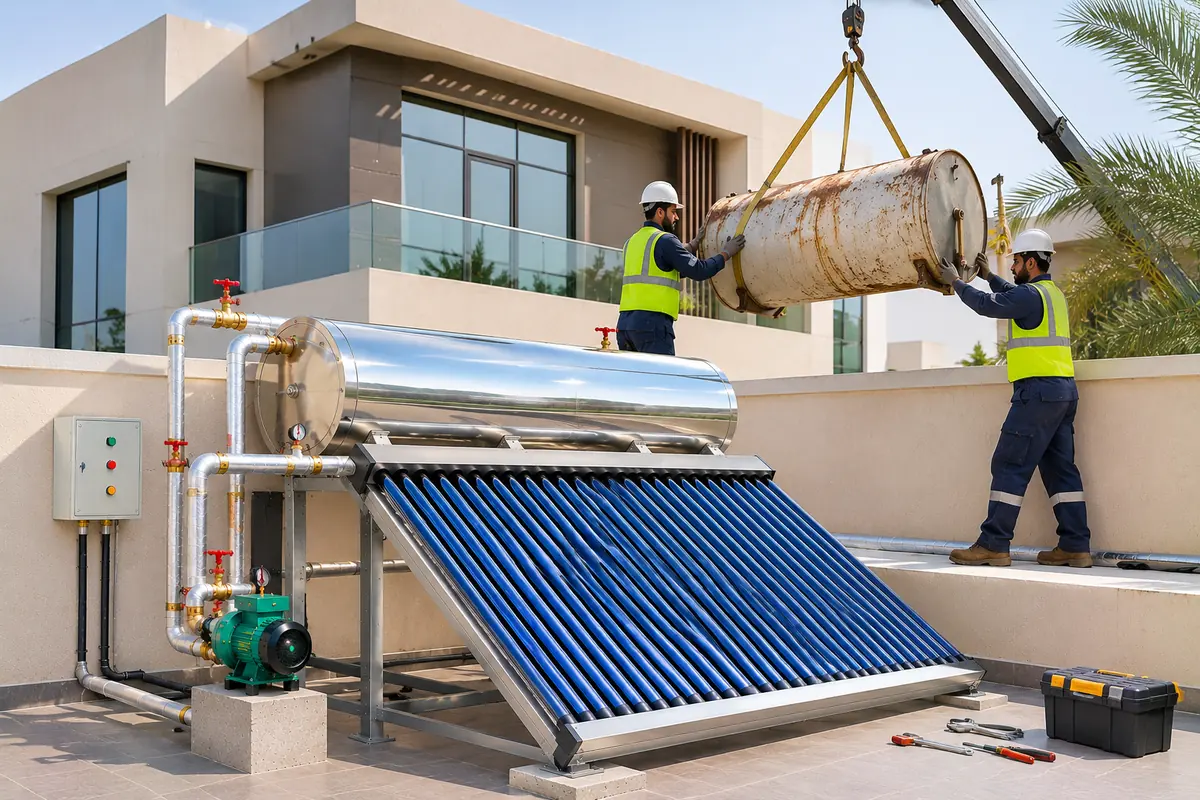
Solar water heater replacement in the UAE: condition surveys, partial or full replacement, upgrade options…
View service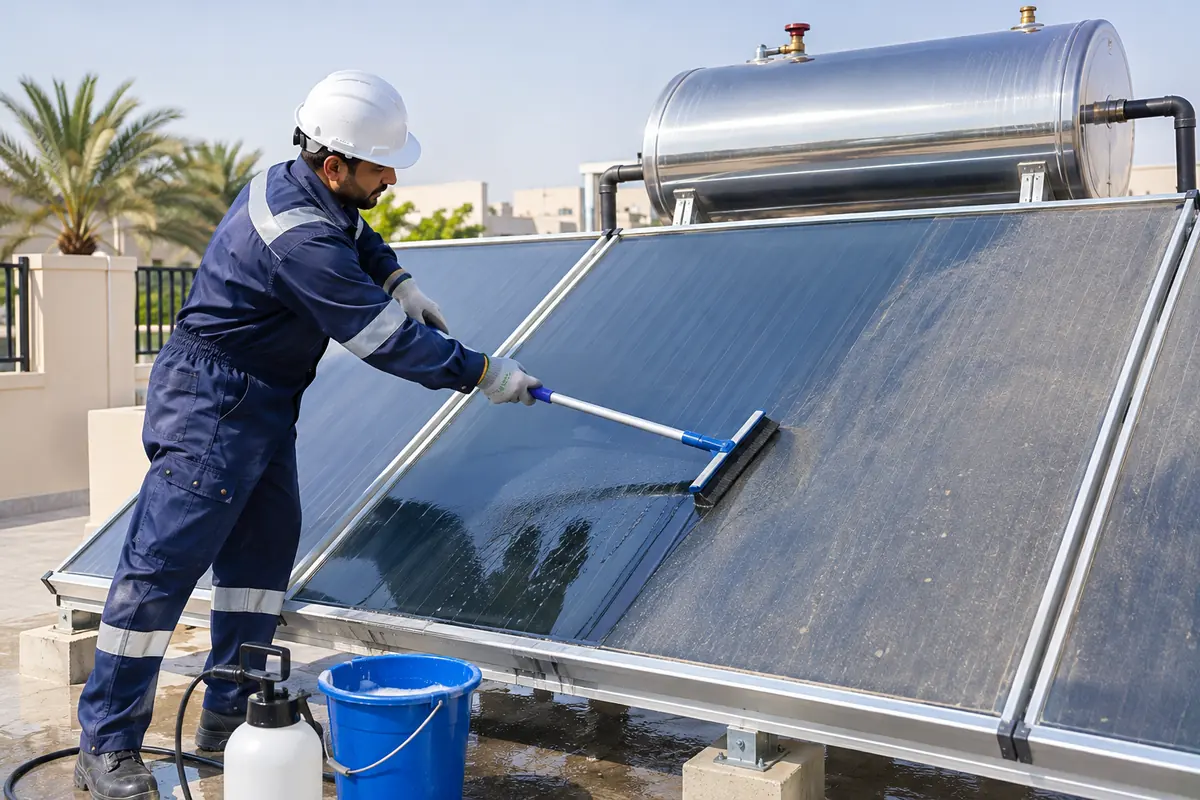
Collectors usually every 3–6 months in typical areas, and more often on dusty or coastal sites. Descaling depends on your water and how much hot water you use, so it’s checked at each service.
We don’t recommend it. High pressure can push water past seals and damage glass tubes.
A clean collector absorbs more sunlight than a dusty one, so the electric backup usually runs less. How much difference it makes depends on how dirty the collector was and on your usage.
Yes. Tubes are cleaned individually and checked for damage.
It depends on the job. Many residential visits can be completed in a day, while larger systems, commercial sites and replacements take longer. We confirm the expected timing in your quotation.
That depends on occupancy, hot water use, roof space, water quality and whether your plumbing is pressurised. A short survey lets us recommend the right type and capacity.
Yes. The UAE has strong sun for most of the year. On hazy or cloudy days, and in cooler months, the electric backup element tops up the temperature automatically.
Yes. We work on villas, townhouses and apartments as well as hotels, buildings, accommodation and industrial sites.
Equipment warranties are set by the manufacturer and vary by brand and component. The warranty terms that apply are confirmed in writing in your quotation.
Often, yes. Depending on its condition, a system can be enlarged, have parts replaced, or have solar added to an existing electric heater setup. We assess it on site first.
Contact our team for a professional assessment and a customised quotation for your property.
Tell us your emirate, system type (flat plate or tubes) and when it was last cleaned. Photos help.