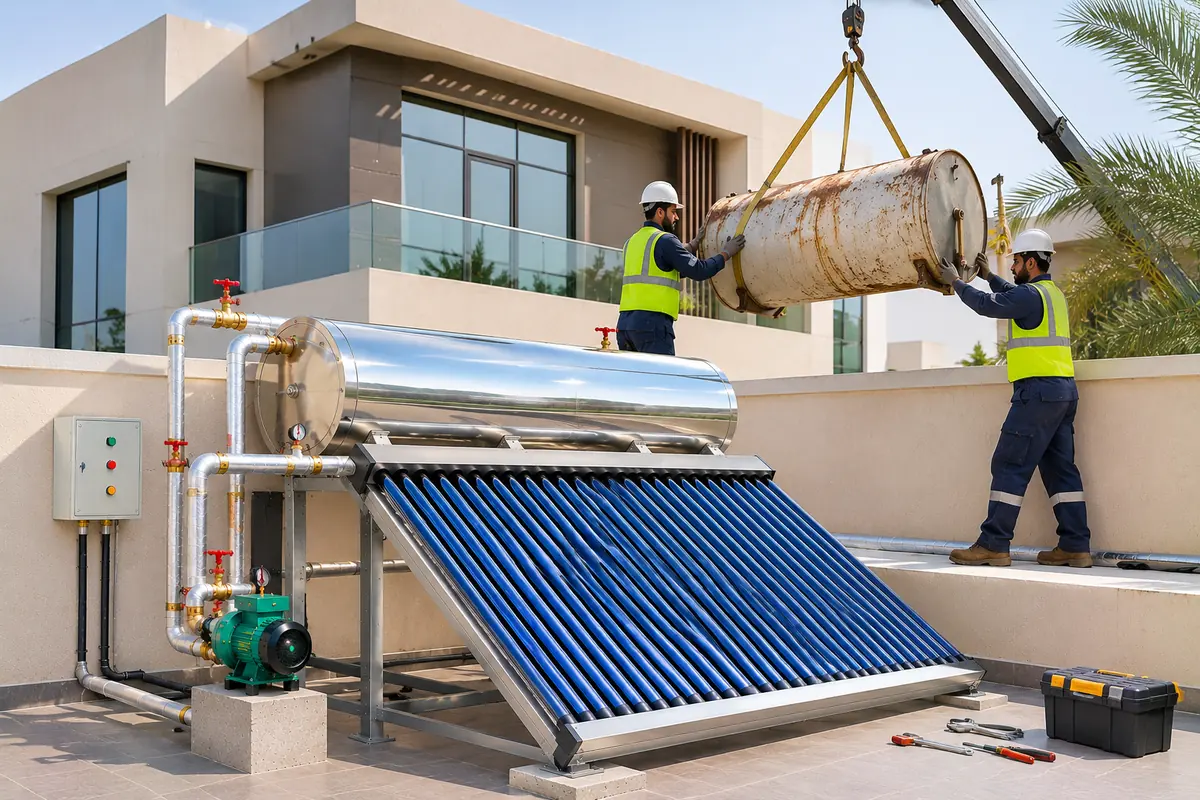
Tank only
- When it makes sense
- Tank has failed; collector and frame are in good condition
- Points to check
- Compatibility with the collector and connections. See tank-only replacement
Solar water heater replacement in the UAE is best planned before a system fails completely.
Solar water heater replacement in the UAE is best planned before a system fails completely. A condition survey shows whether you need a whole new system or just a new tank or collector, what size and type suits current demand, and, for buildings with many units, which systems to replace first.
Replacing only the failed component can extend a system’s life, as long as the rest is sound and compatible.
As a rule of thumb, if two major components are near end of life, full replacement is usually better value than replacing them one at a time.
What a properly done job means for your property and your hot water.
Replacing a leaking or scaled-up system brings solar heating back instead of relying on the backup element.
Occupancy and usage change over time; a replacement is the chance to correct the capacity.
Choose between flat-plate and evacuated tube designs to suit your roof and hot water needs.
A new tank, collectors and fittings remove the weak points of an ageing system.
The old system is drained, disconnected and taken down safely before the new one goes in.
Removal, new equipment, installation and testing are set out together in writing.
A selection of residential, commercial and industrial solar water heating projects we have completed.
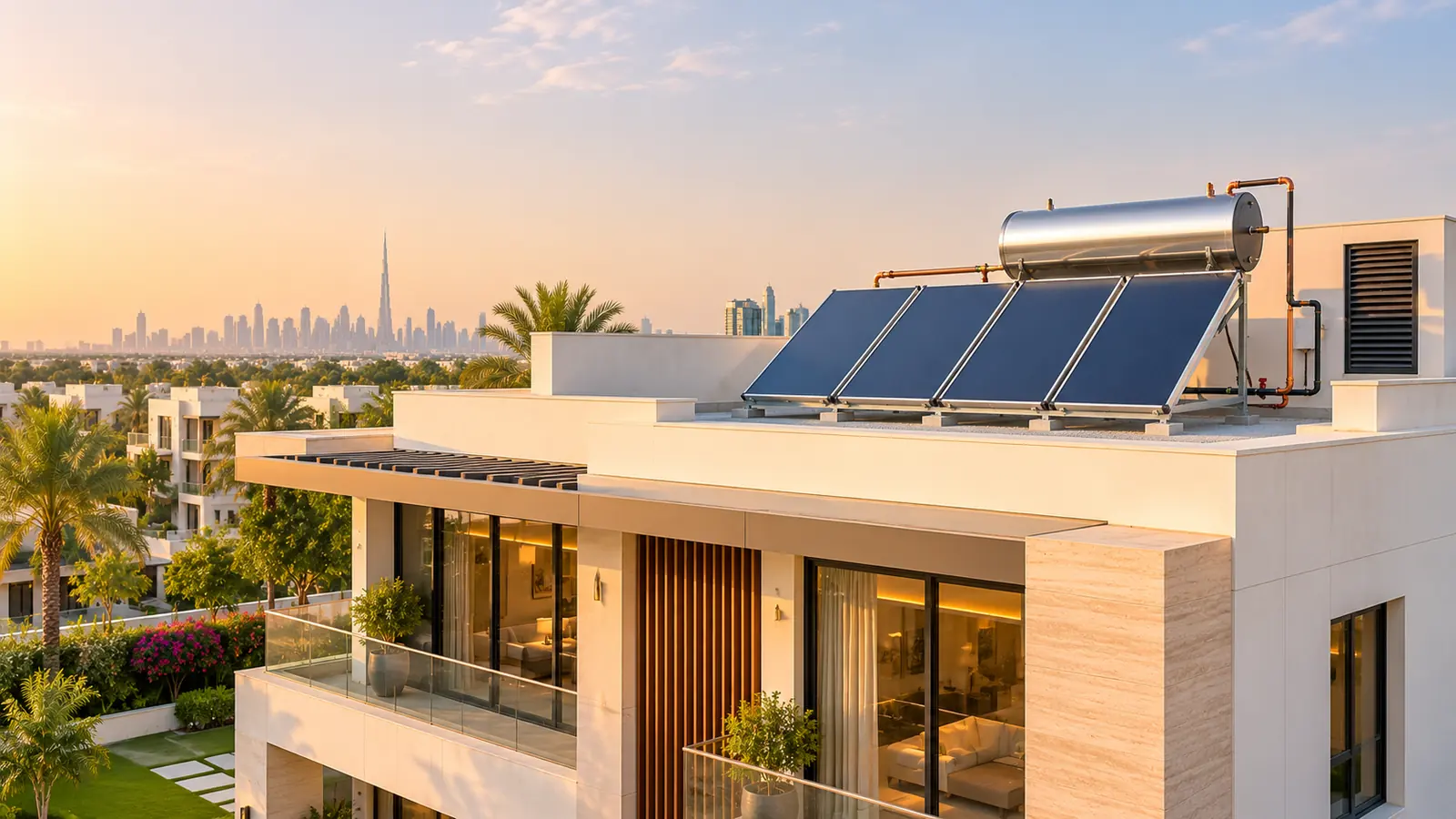 VillaVilla rooftop systemUAE · Modern UAE villa with a flat-plate solar water heater on the roof at golden hour
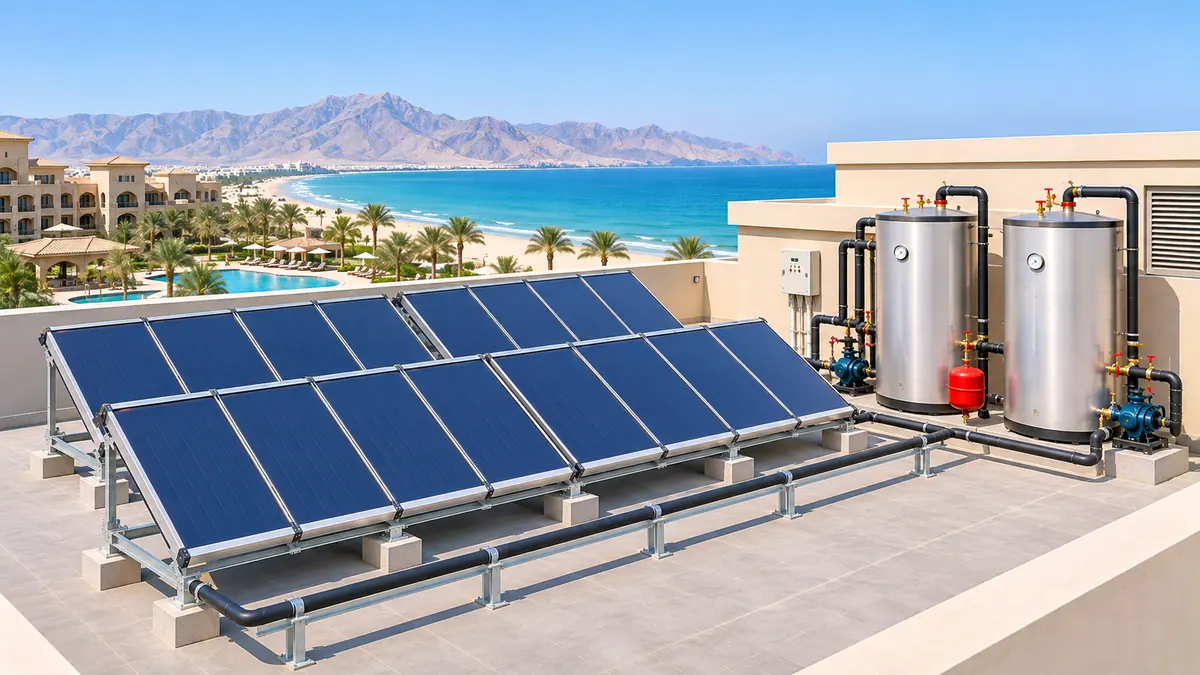
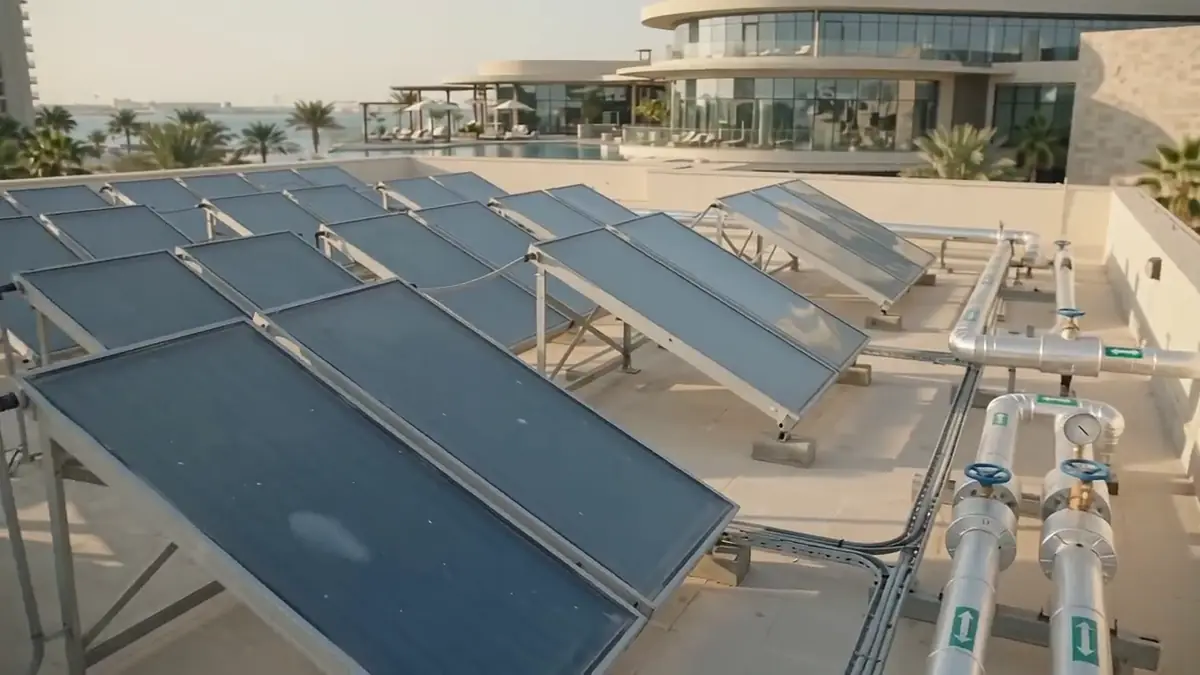 CommercialBeachfront resort rooftopUAE · Video of solar collectors and storage tanks on a beachfront resort roof
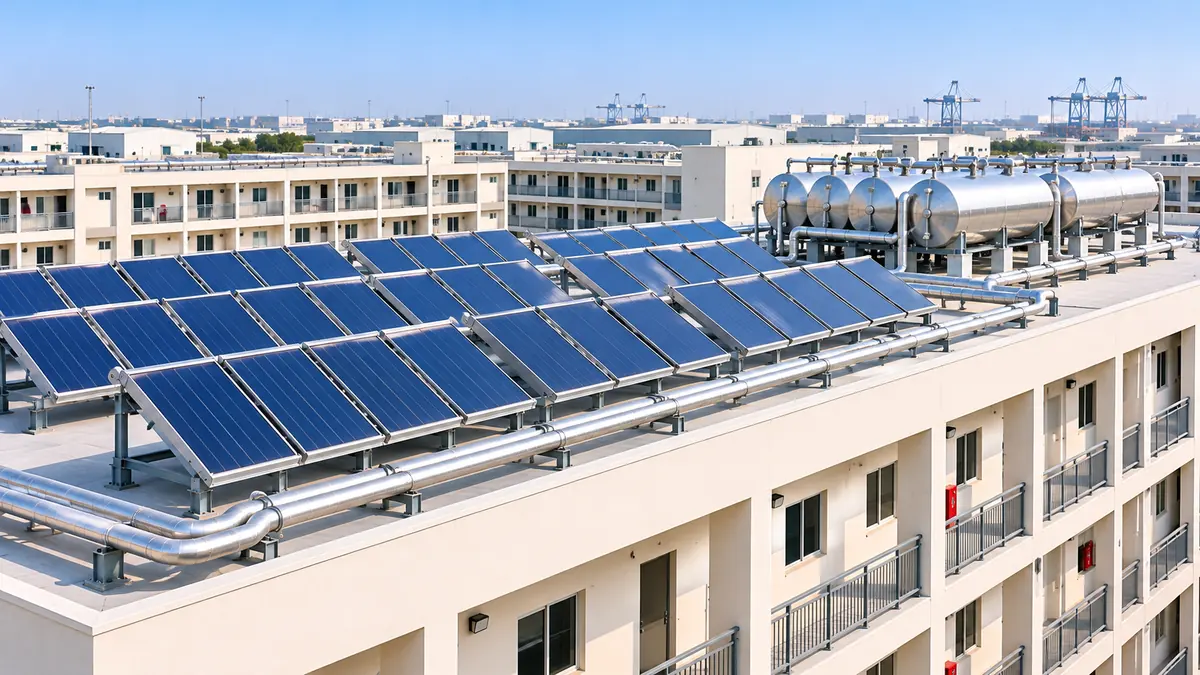
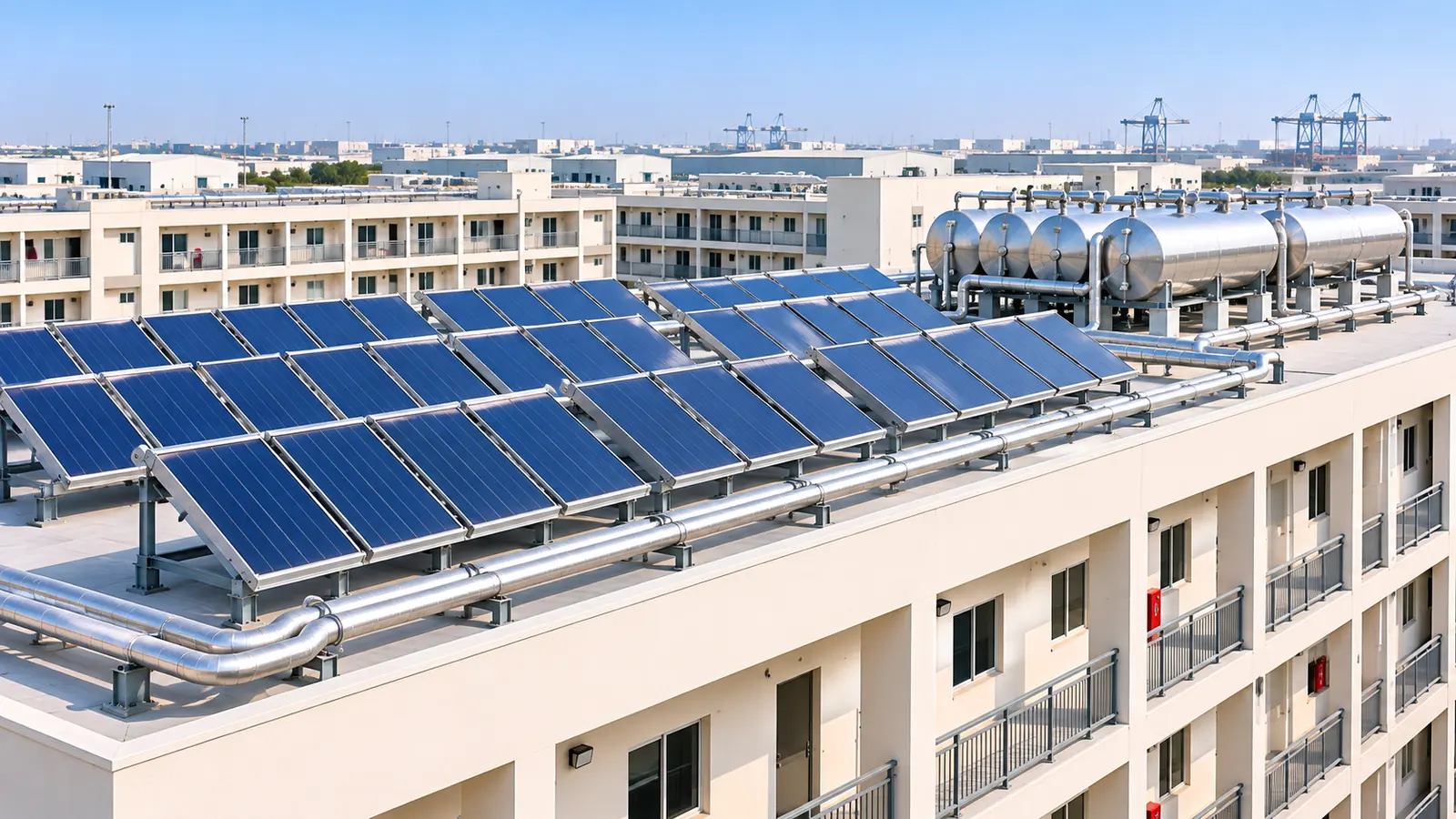 CommercialApartment building arrayUAE · Apartment building roof with rows of solar water heaters
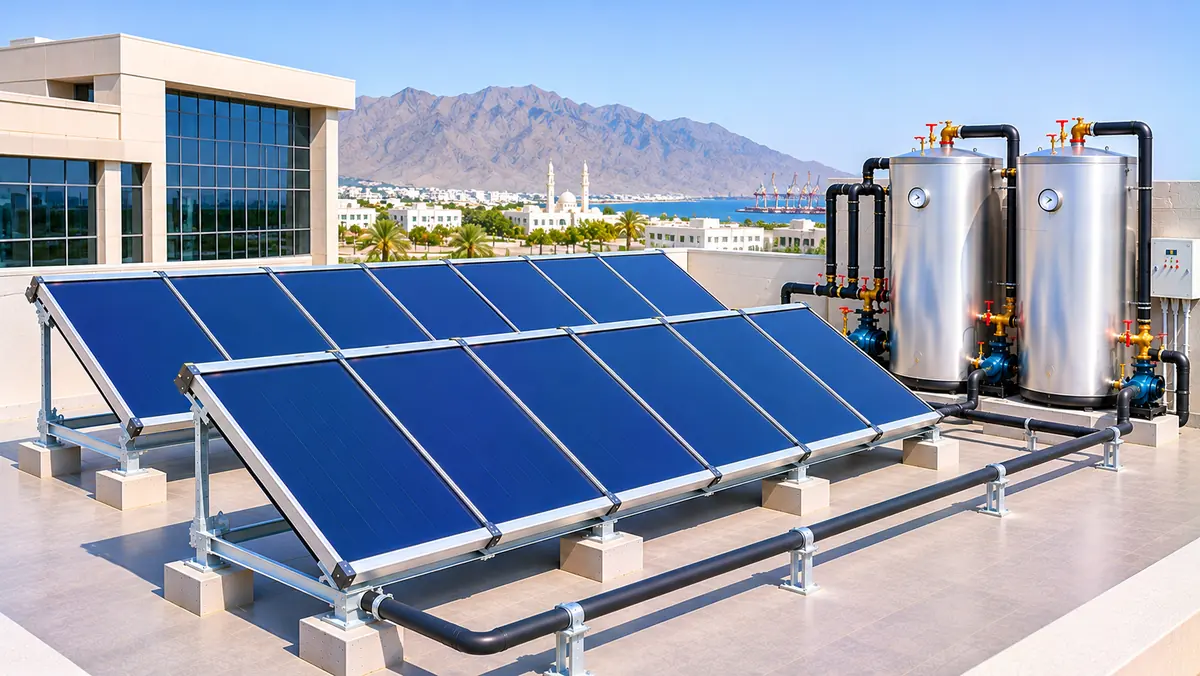
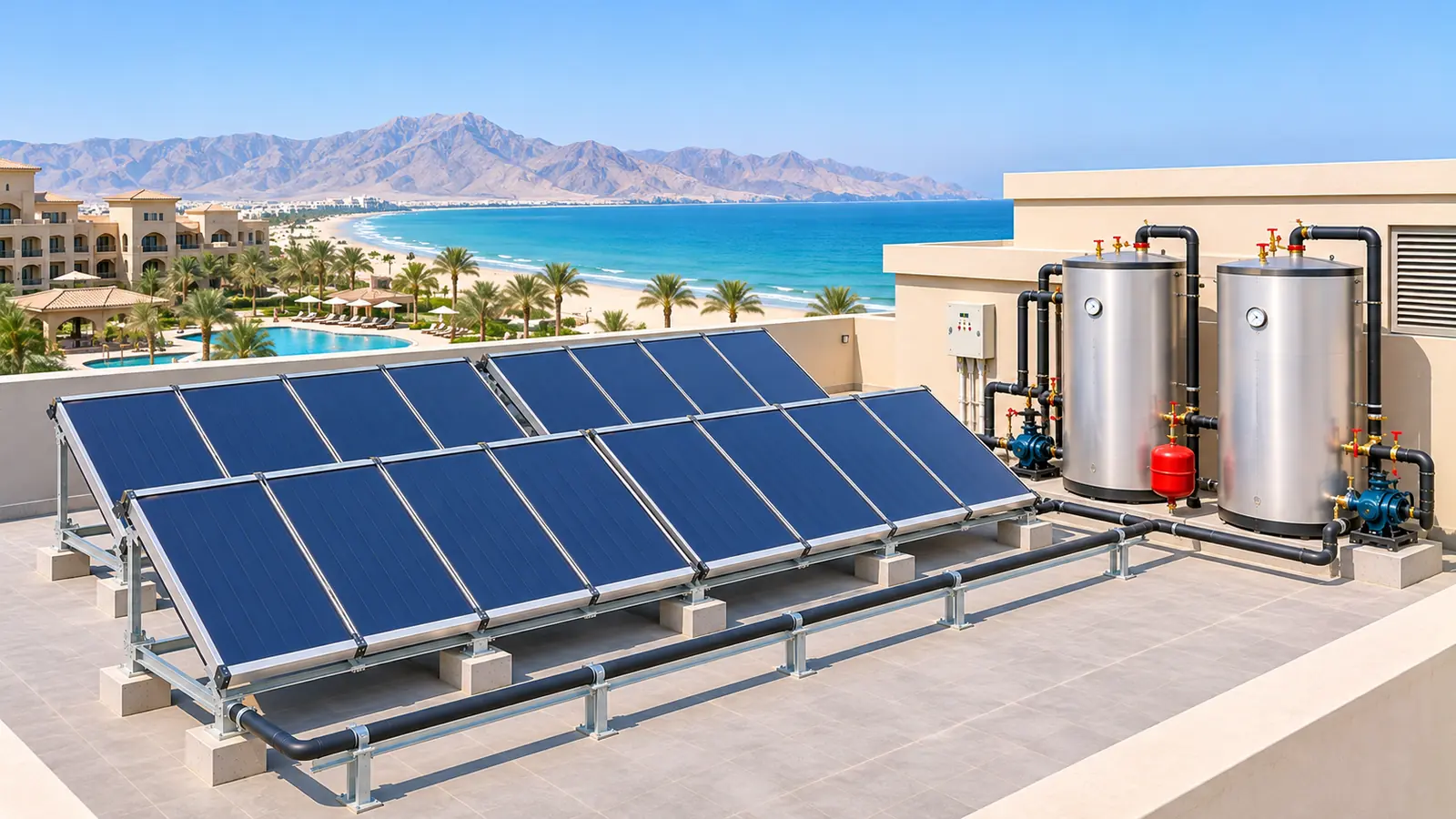 CommercialCoastal resortUAE · Solar thermal collectors and tanks on a coastal resort roof with mountains behind
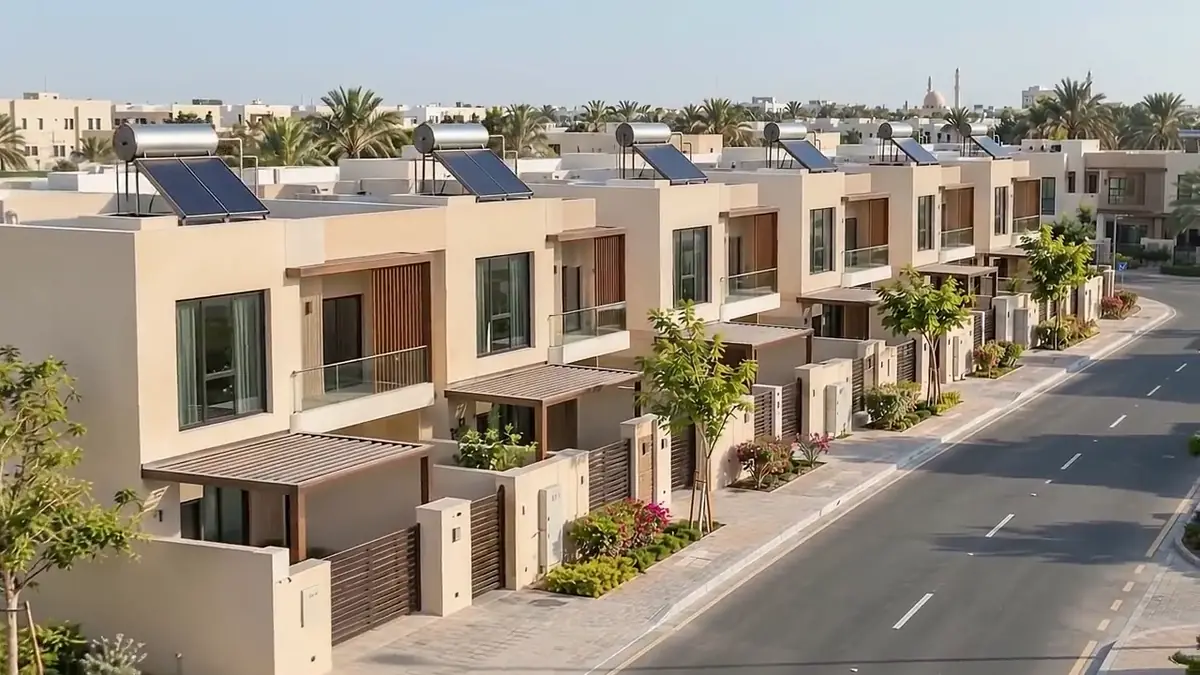 VillaTownhouse communityUAE · Aerial video of townhouses with rooftop solar water heaters
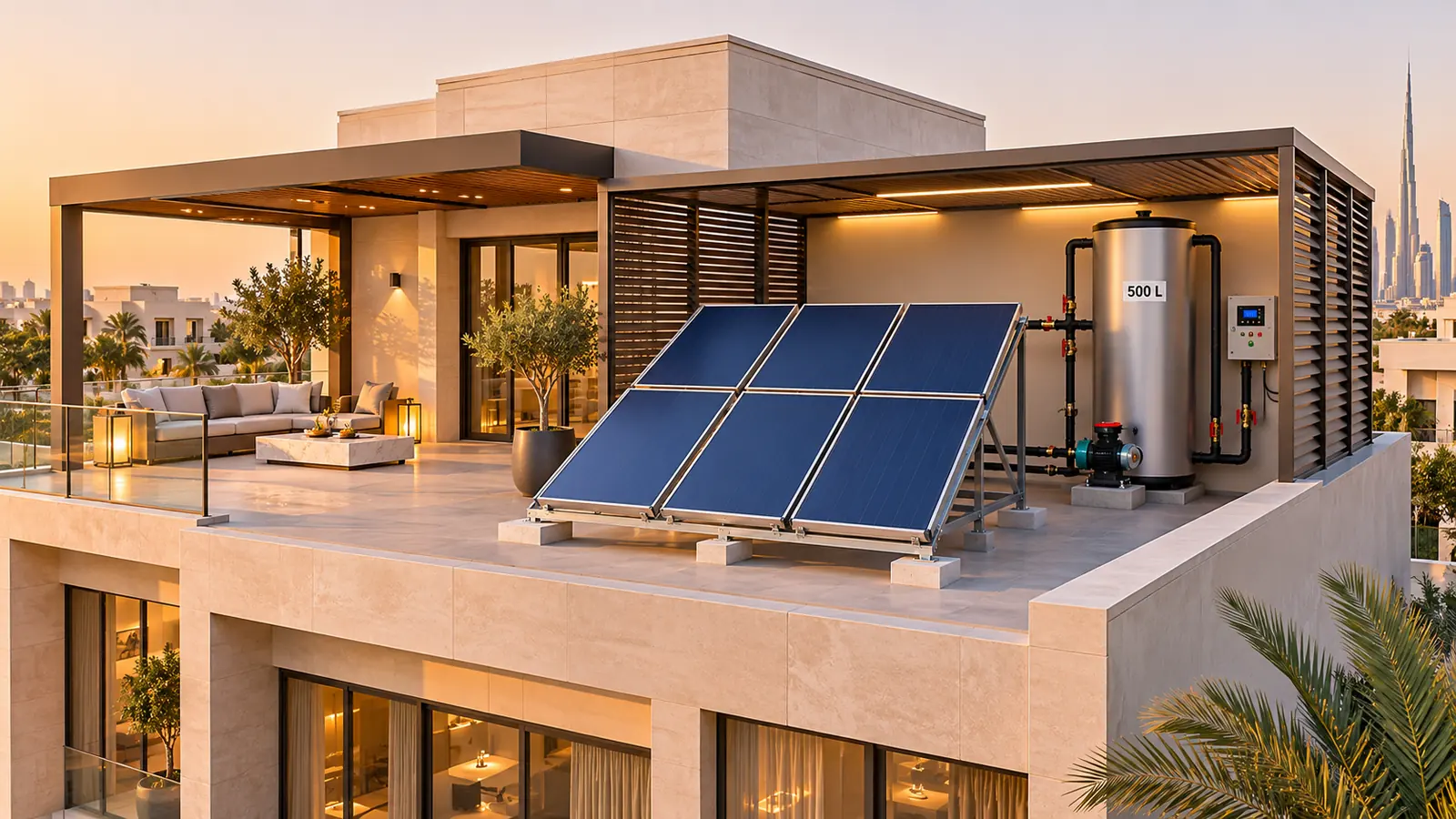 VillaLuxury villa roof terraceDubai · Luxury Dubai villa roof terrace with a solar water heater and storage tank
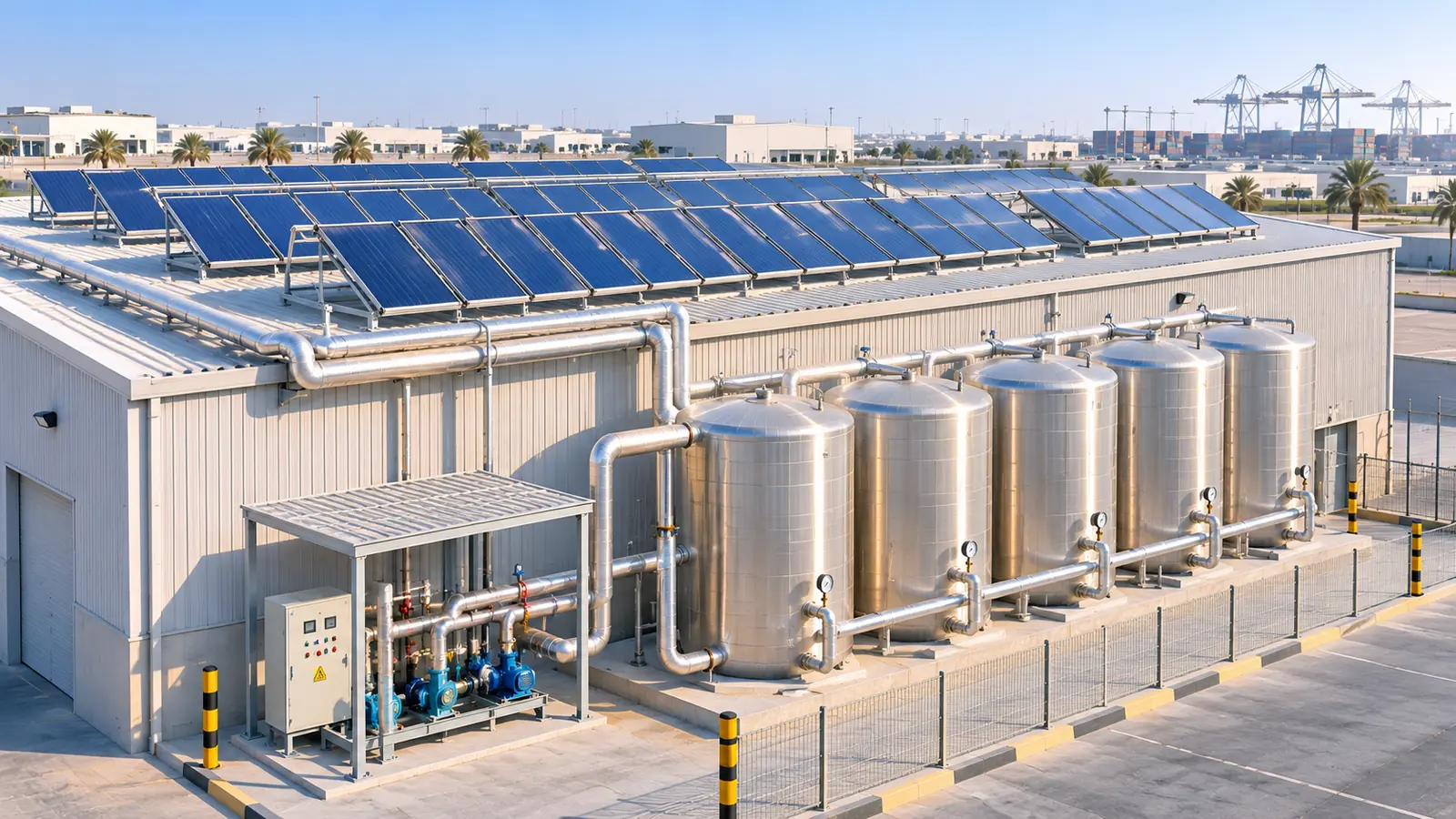 IndustrialIndustrial rooftop plantUAE · Large rooftop solar thermal plant with a row of storage tanks
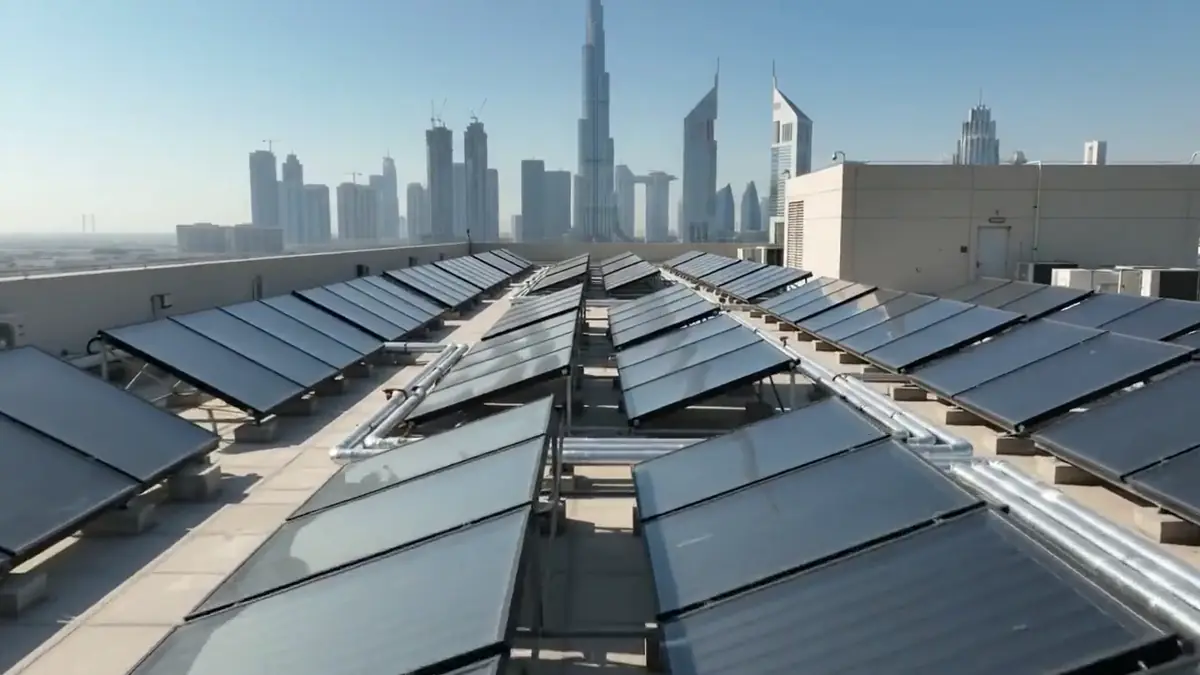 CommercialCommercial rooftop plantUAE · Video of a commercial rooftop solar hot water plant with the Dubai skyline
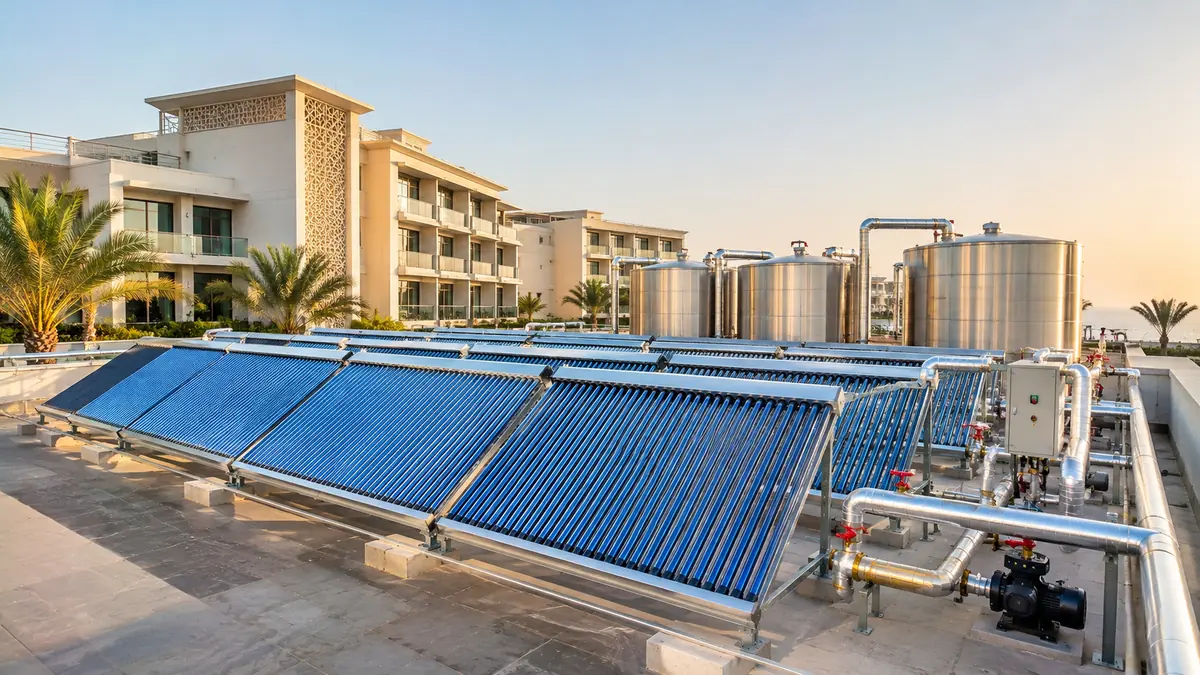
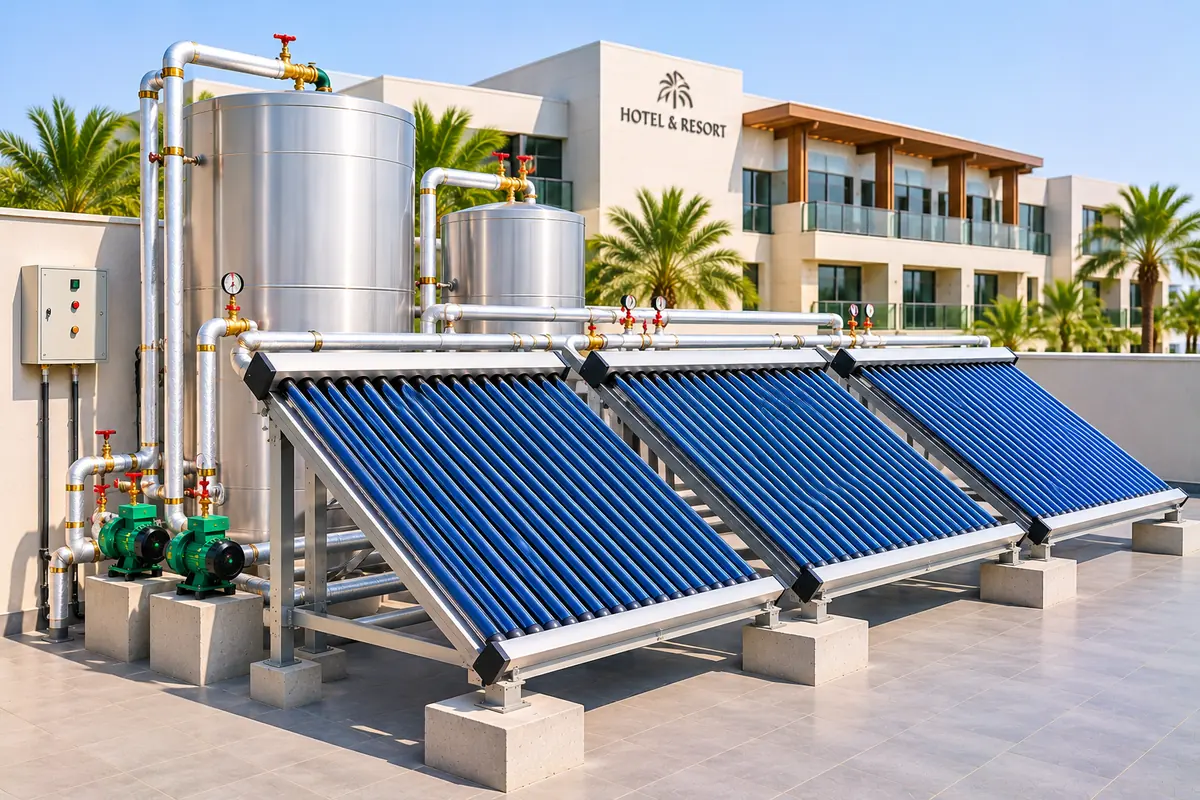 CommercialHotel and resortUAE · Evacuated tube collectors and storage tanks on a hotel resort roof
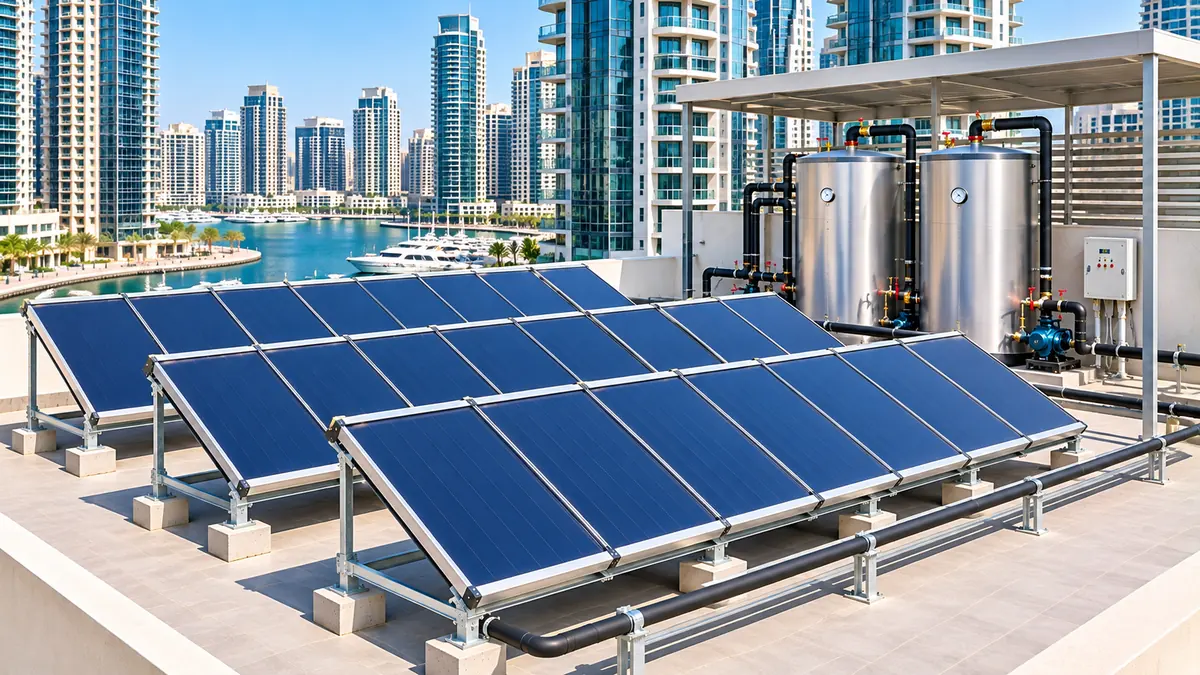
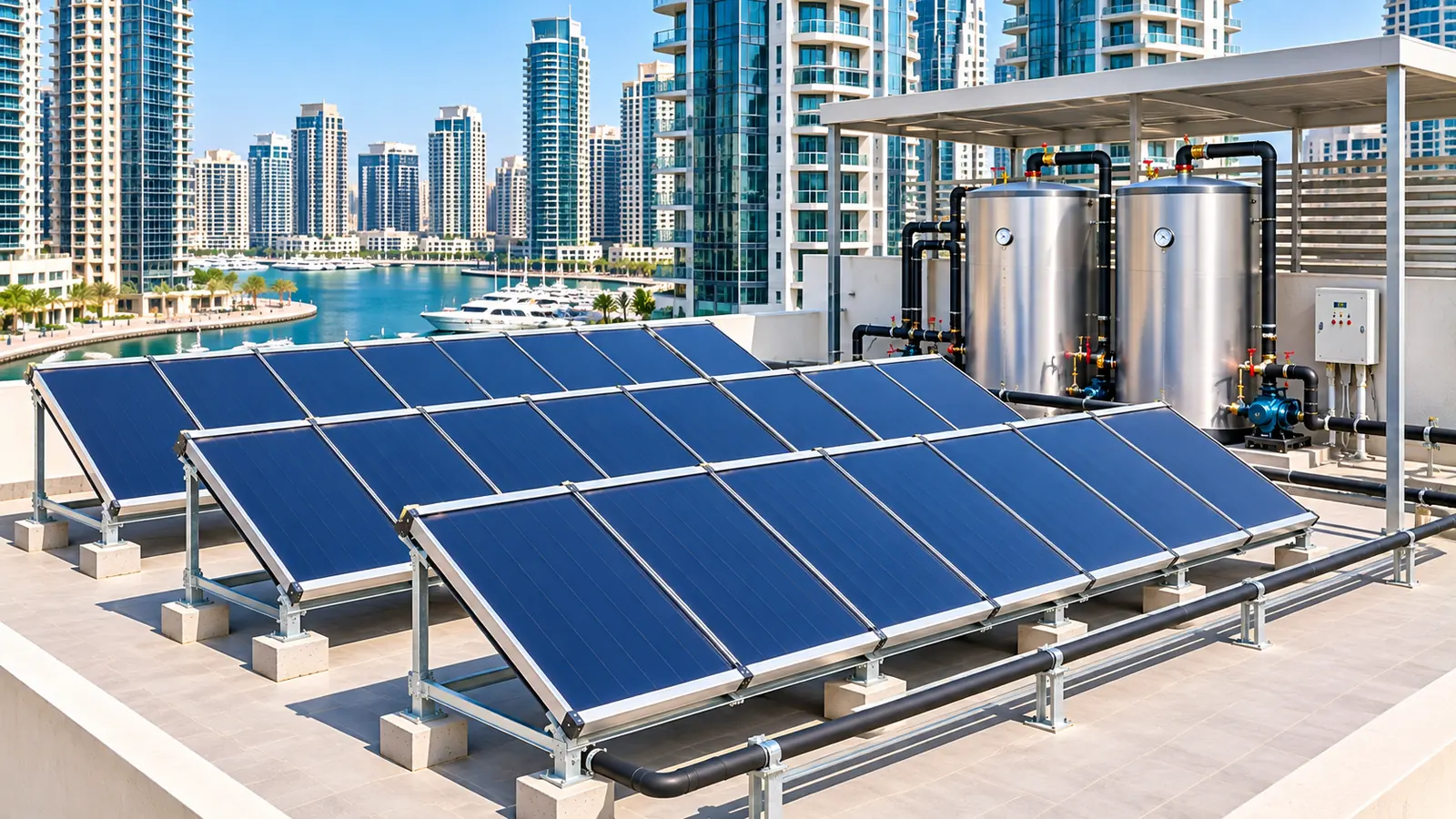 CommercialHigh-rise rooftopDubai · Solar thermal collectors and tanks on a Dubai Marina building roof
 CommercialCity hotel hot water plantUAE · Video of a solar water heating plant on a city hotel roof
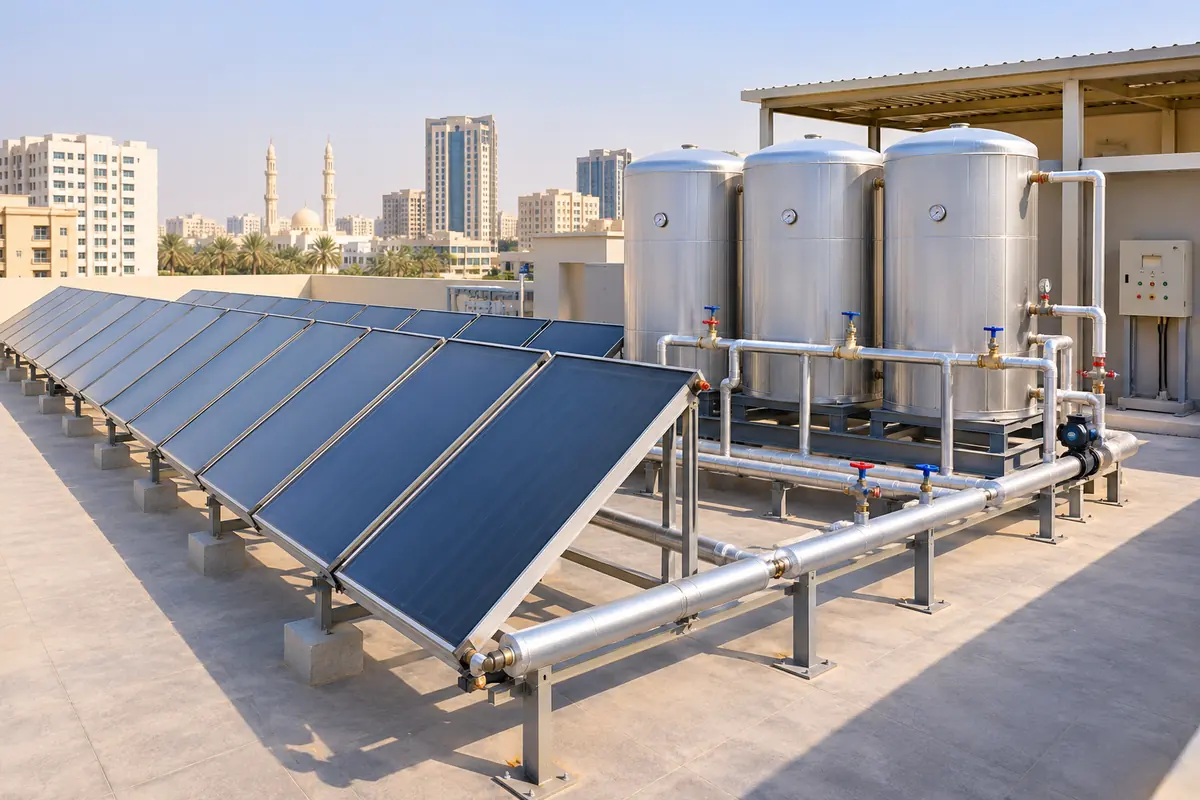
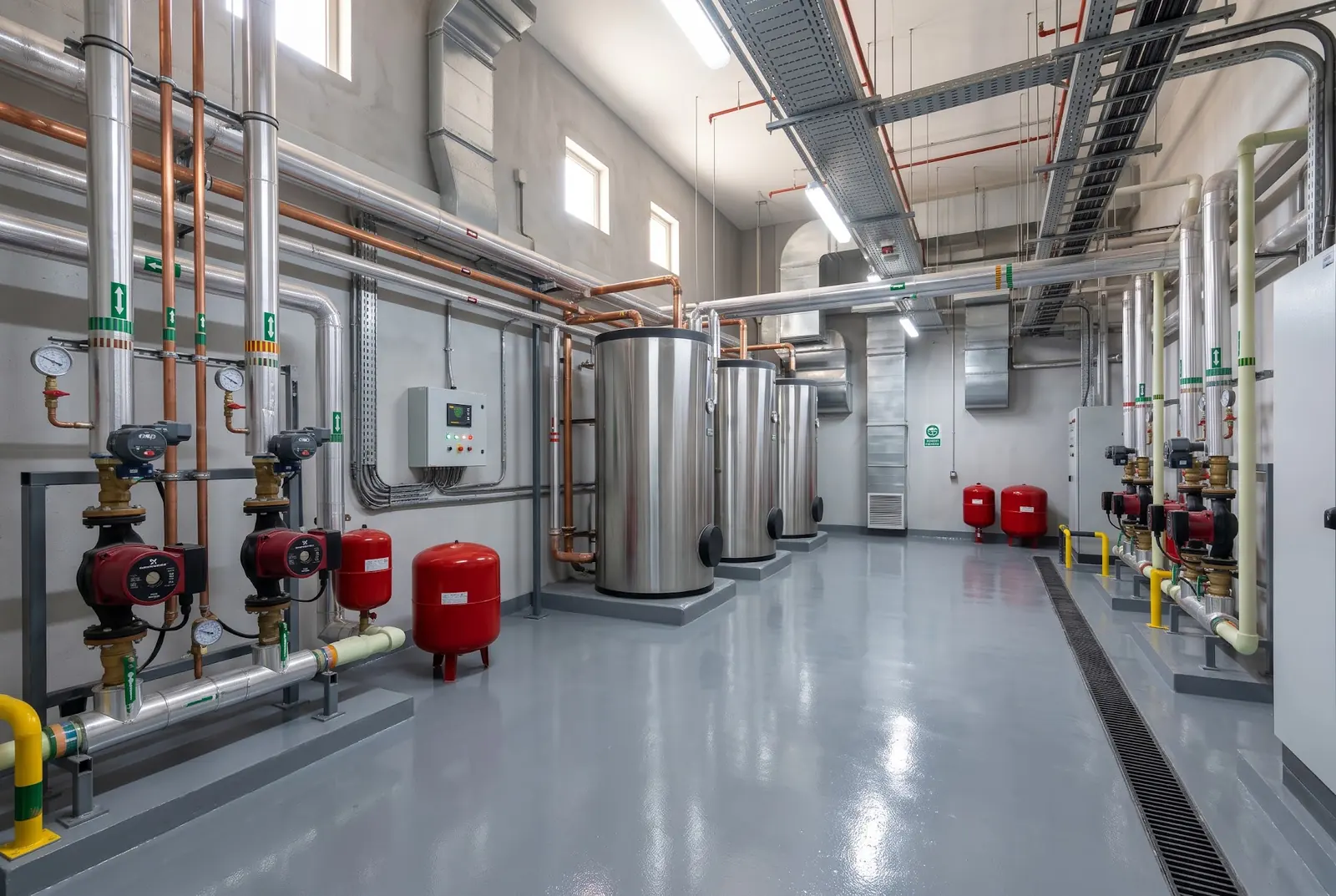 IndustrialPlant roomUAE · Clean plant room with hot water cylinders, pumps and expansion vessels
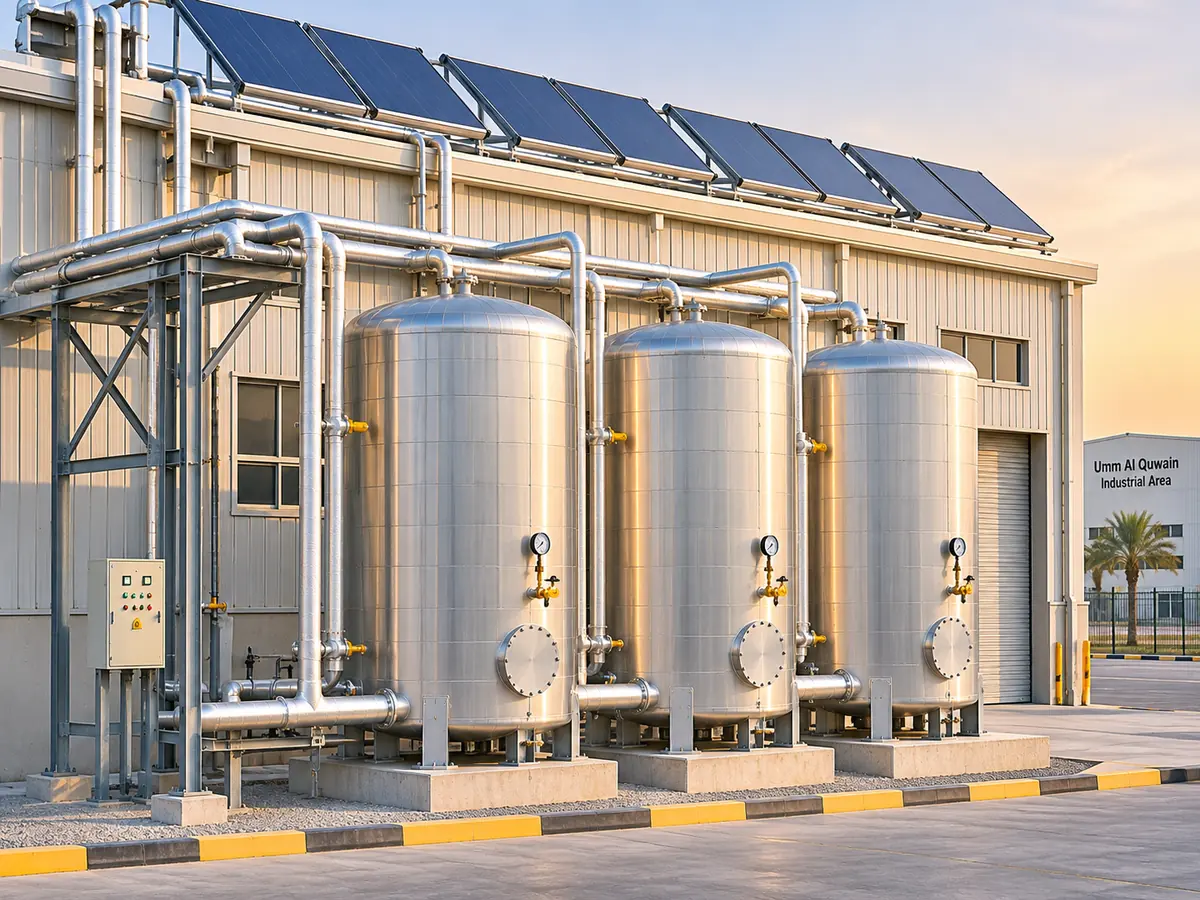 IndustrialIndustrial tank facilityUAE · Bank of large stainless steel solar hot water tanks at an industrial facility
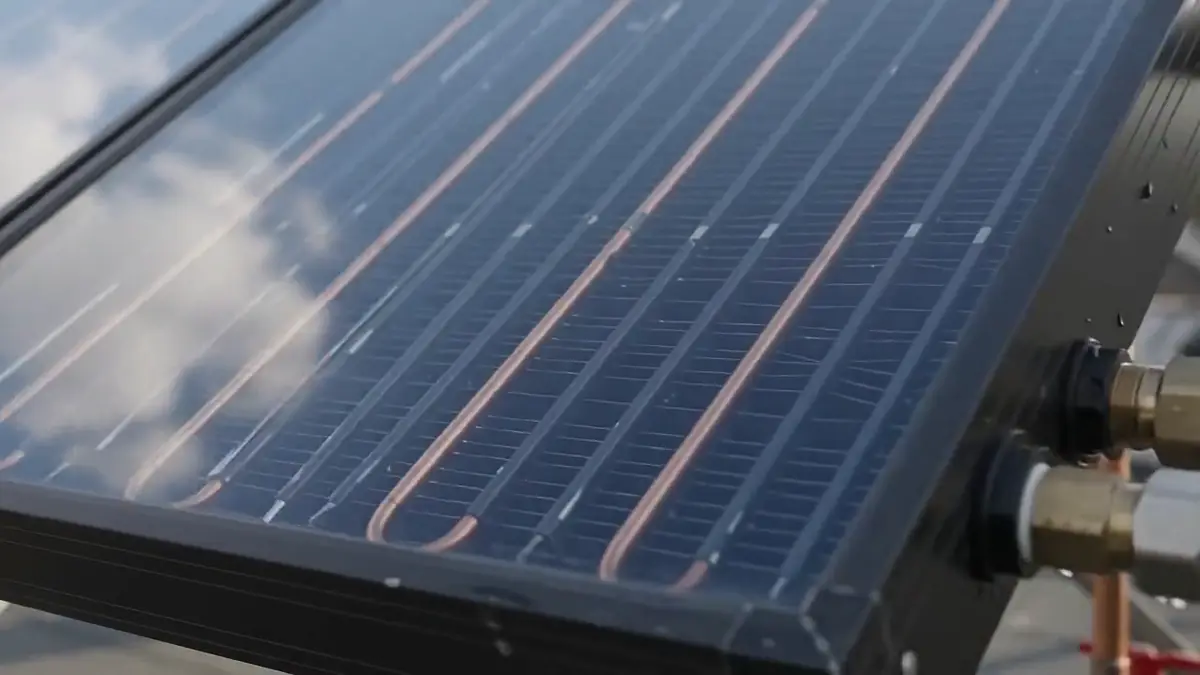 ResidentialCollector and tank connectionsUAE · Video close-up of solar collector pipe connections to the storage tank
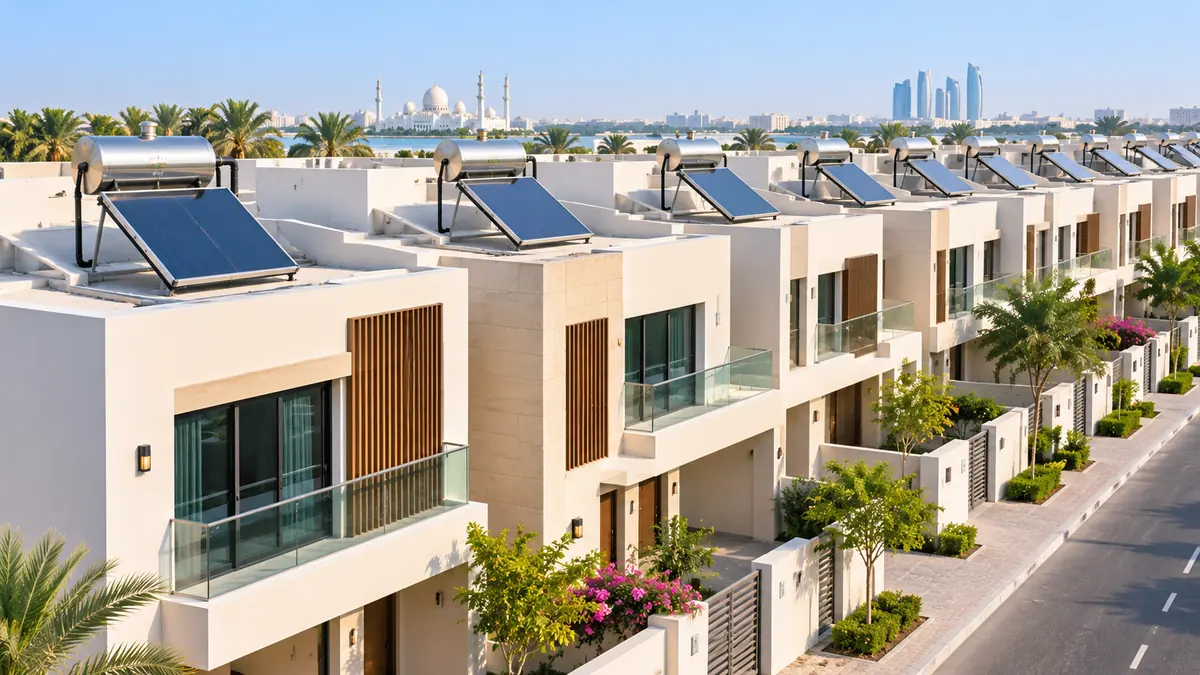
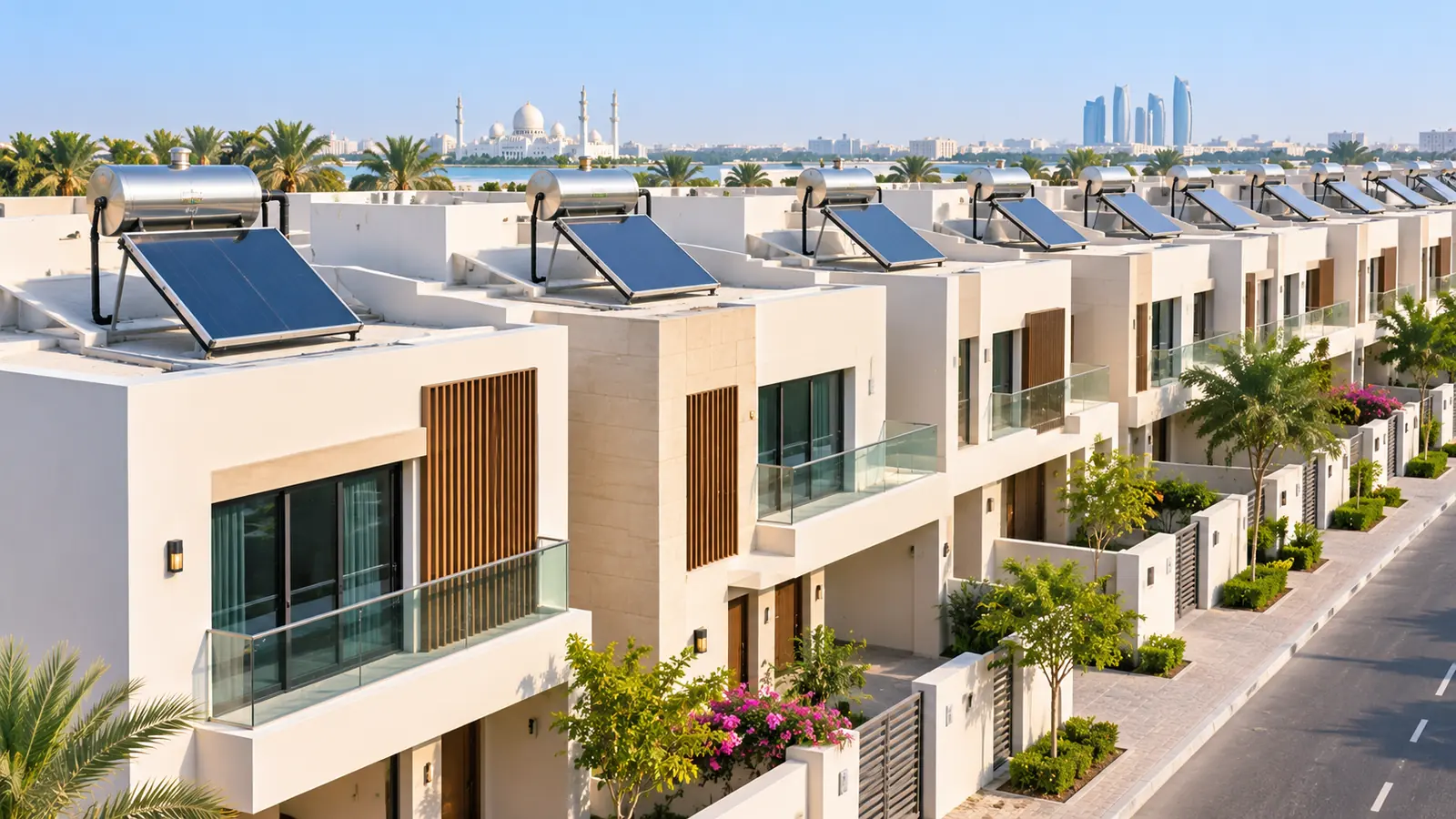 ResidentialTownhouse rooftopsAbu Dhabi · Abu Dhabi townhouses with solar water heaters on every roof
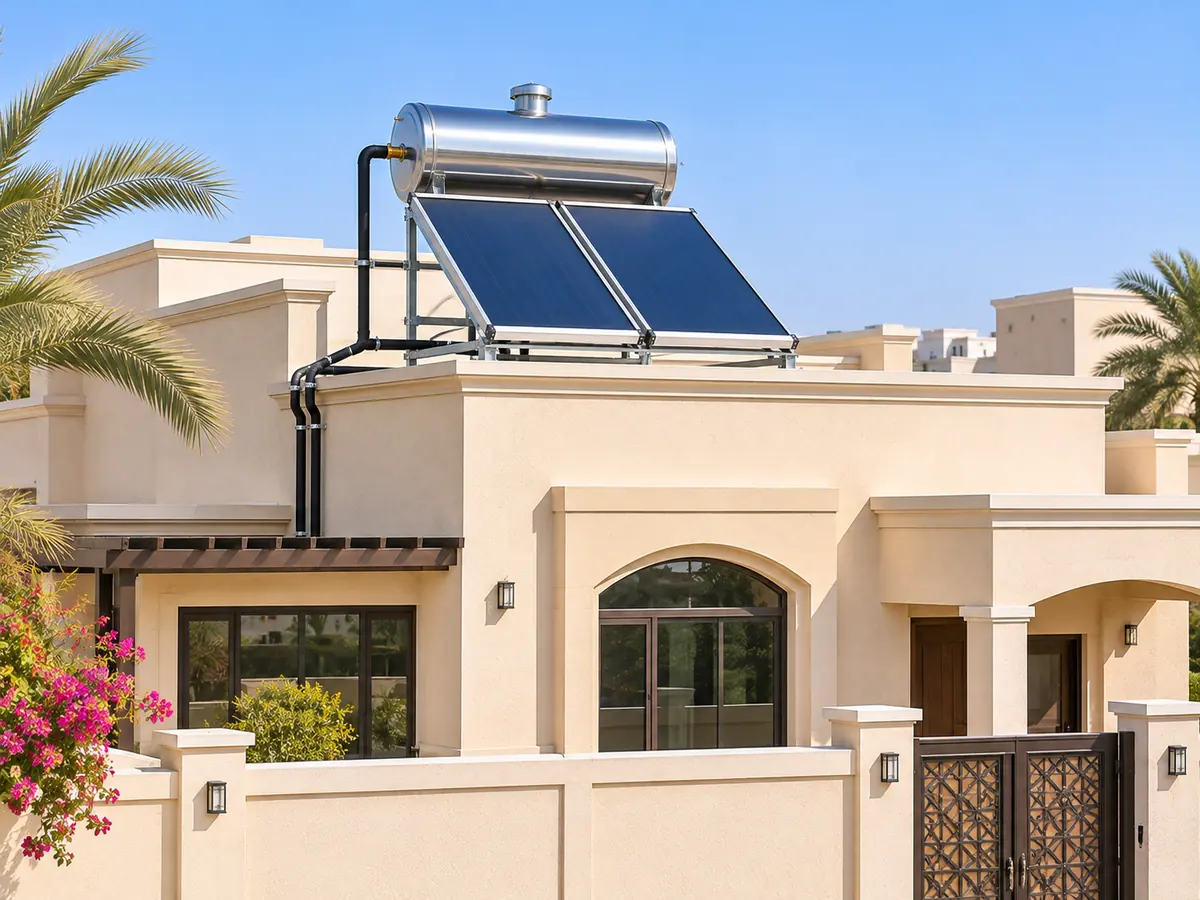 VillaArabian-style villaUAE · Arabian-style villa with a rooftop thermosiphon solar water heater
The four system designs you will find on UAE roofs, and where each one fits.
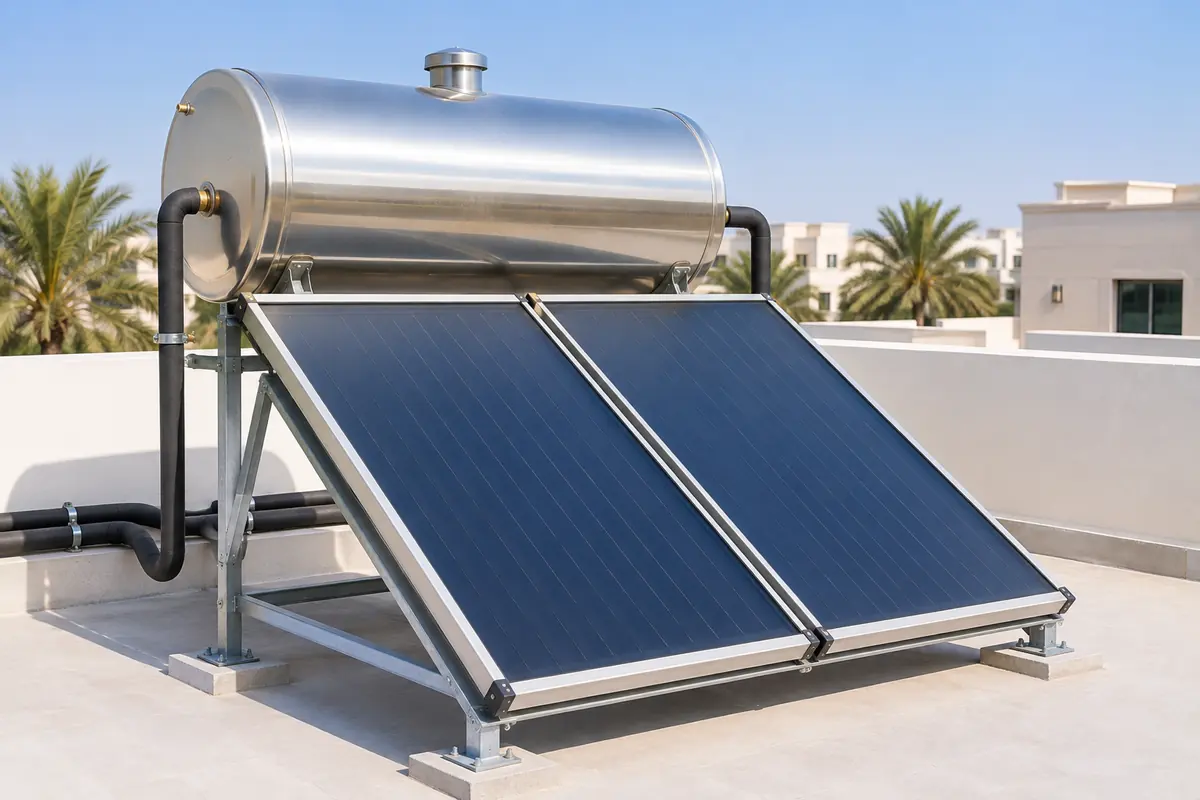
A glazed, insulated panel with an absorber plate and copper risers. Robust, simple to clean and a common choice for homes in the UAE.
Best for: Villas, townhouses and low-rise buildings
Learn more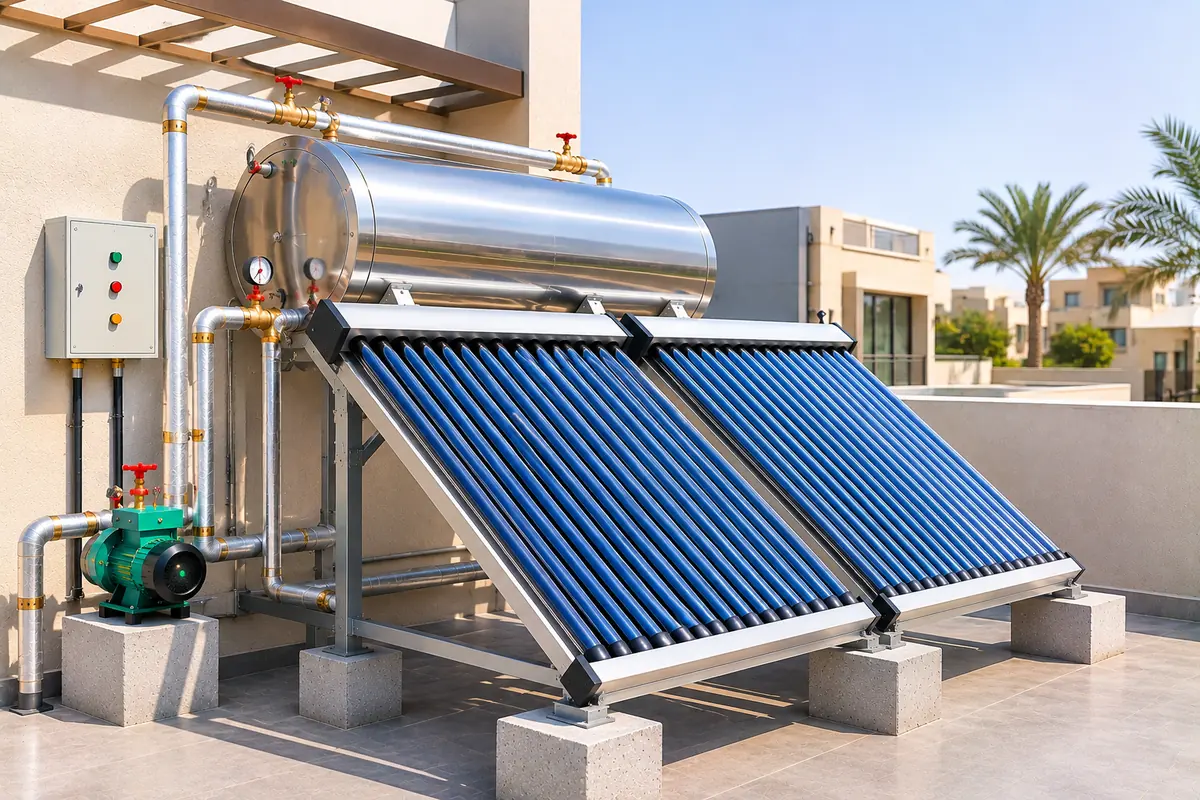
Rows of vacuum glass tubes that lose very little heat. They perform well on cooler or hazy days and suit higher hot water demand.
Best for: Larger homes, hotels and commercial buildings
Learn more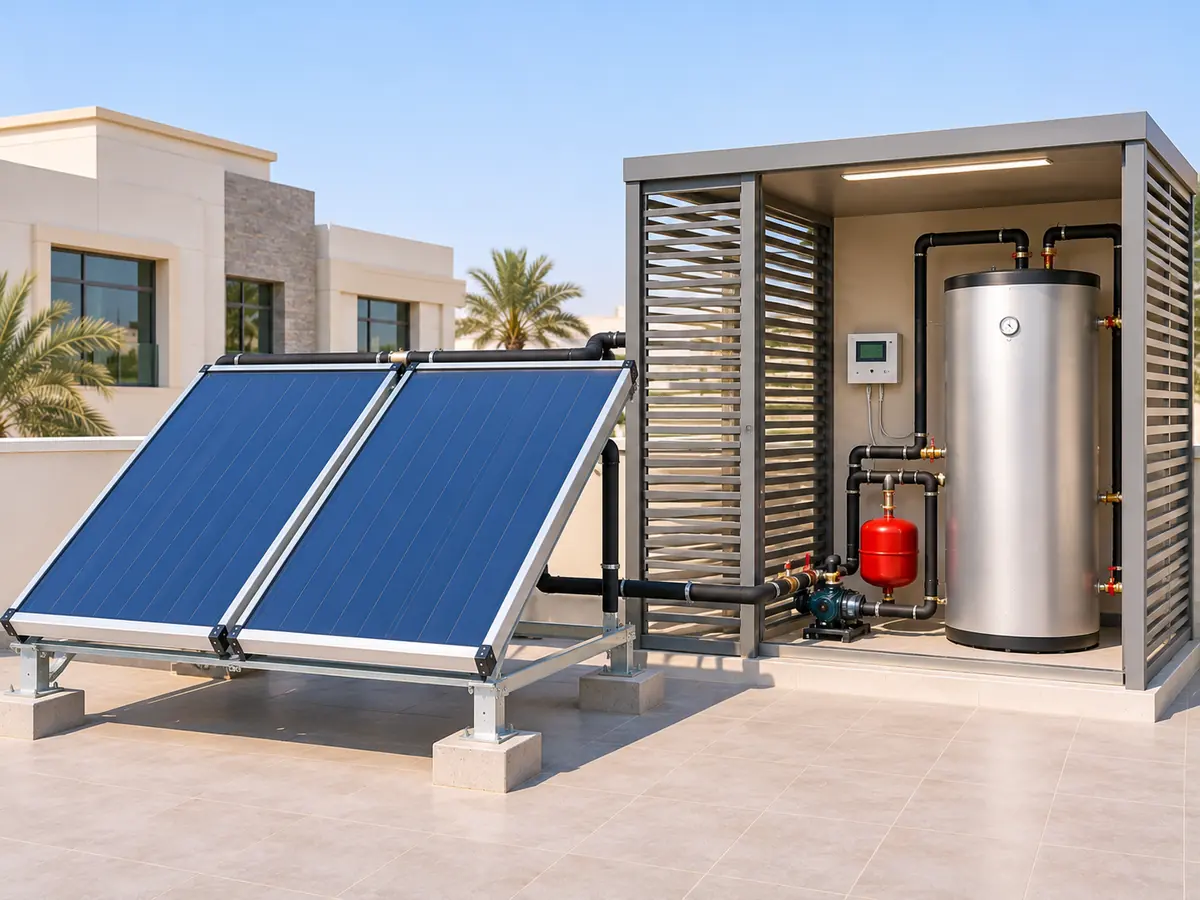
The tank works at mains or pump pressure, so showers and multiple outlets get strong, steady flow. Usually fitted with safety and expansion valves.
Best for: Villas, apartments and buildings with pressurised plumbing
Learn more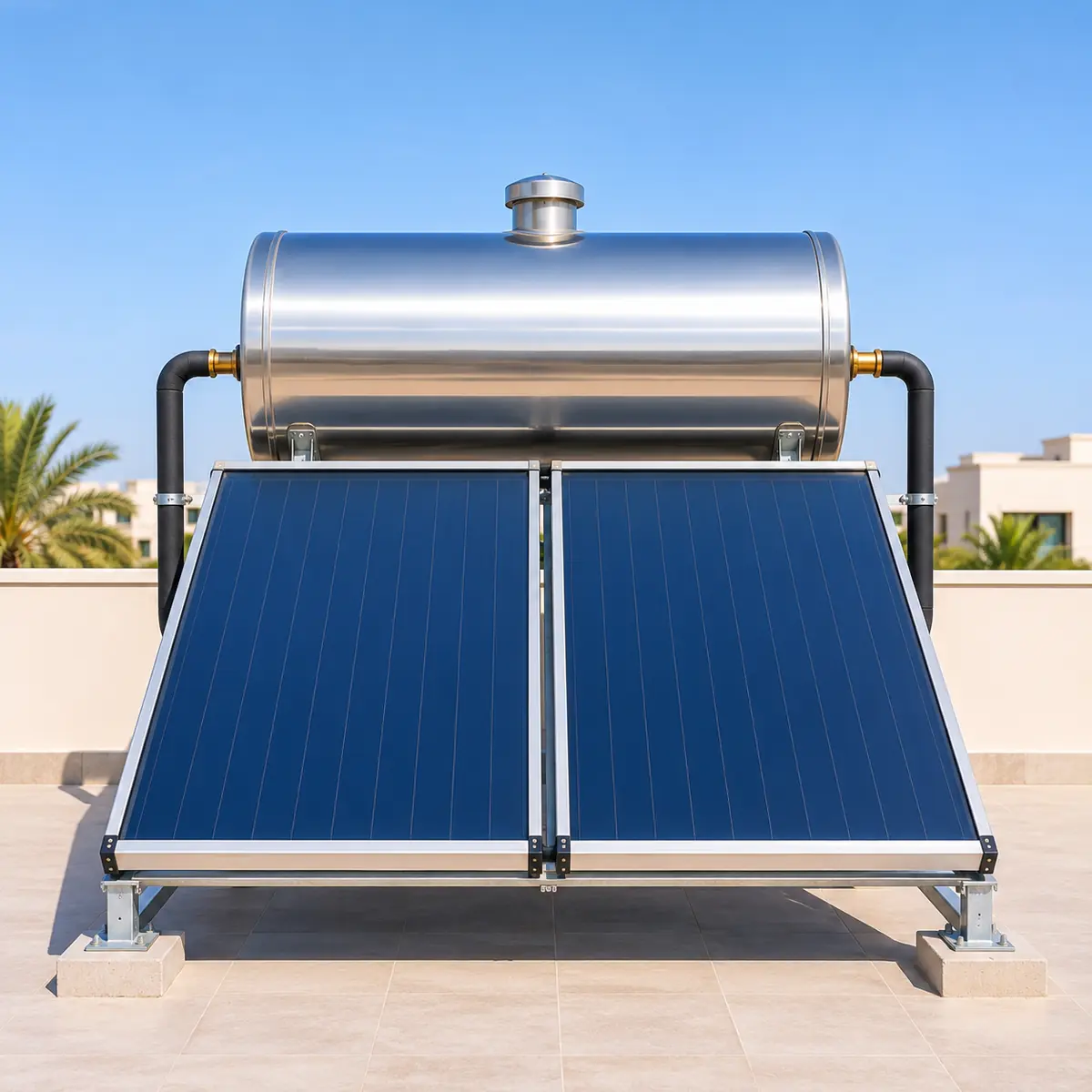
A gravity-fed tank above the collector with no pump. Simple and economical where outlets do not need high pressure.
Best for: Smaller homes, accommodation and gravity-fed supplies
Learn more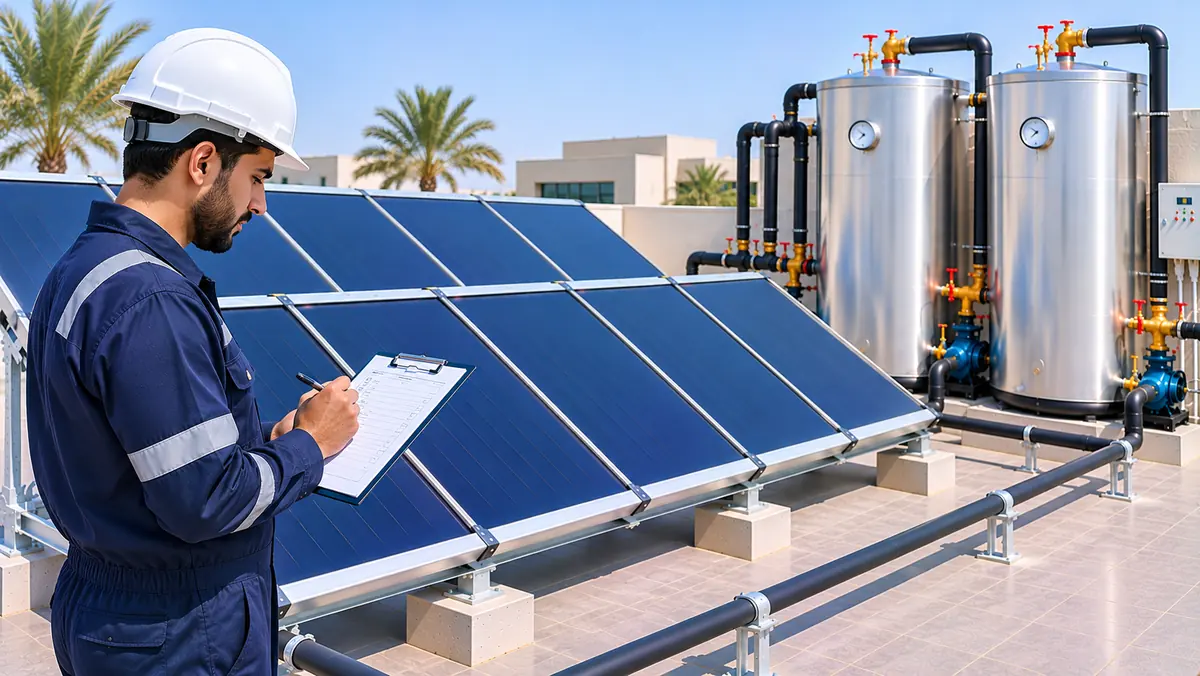
Survey, installation, servicing and repair are carried out by technicians who work on solar hot water systems.
Brands, models and capacities are stated in your quotation, so you know exactly what you are getting.
Systems and parts are chosen for intense sun, heat, dust, humidity and local water quality.
Secure frames, neat insulated pipe runs and a full test before handover.
A site survey comes first, then a written, itemised quote with no vague packages.
Servicing, repairs and annual maintenance plans are available after installation.
Replacement decisions should be based on evidence, not age alone. A survey records the condition of each main component:
For one villa, this is a single visit. For a building or portfolio, each system gets a condition rating so you can see priorities at a glance.
Replacement is the best time to fix what the old system didn’t do well:
See choosing a new system for the selection criteria, and our capacity guide for sizing.
For buildings with many units, or owners with several properties, a planned approach avoids emergency replacements and spreads cost over time.
The old system is isolated, drained, disconnected and taken off the roof. Steel tanks, frames and glass can often be recycled through scrap and recycling channels.
We quote each project after the survey. The main factors are:
For general pricing guidance, see our solar water heater price guide.
Register the new system’s warranty, keep the installation documents, and book regular servicing.
A solar water heater has two main parts: solar collectors on the roof and an insulated storage tank. The collectors use a dark absorber, either a flat plate or rows of vacuum tubes, to soak up heat from sunlight.
That heat passes into water or a heat-transfer fluid running through the collector. In a thermosiphon system, warm water rises naturally into a tank mounted above the collector; in a pumped system, a small pump and controller move the fluid whenever the collector is hotter than the tank.
The tank stores the hot water until you need it, so showers in the evening still use heat collected during the day. Hot water is drawn from the top of the tank to your taps, and cold mains water refills it from the bottom.
When the sun cannot keep up, on hazy days, in cooler months or with heavy use, an electric backup element with a thermostat tops up the temperature automatically. For most of the UAE year the sun does most of the work.
Choose your emirate for local conditions, property types and contact options.
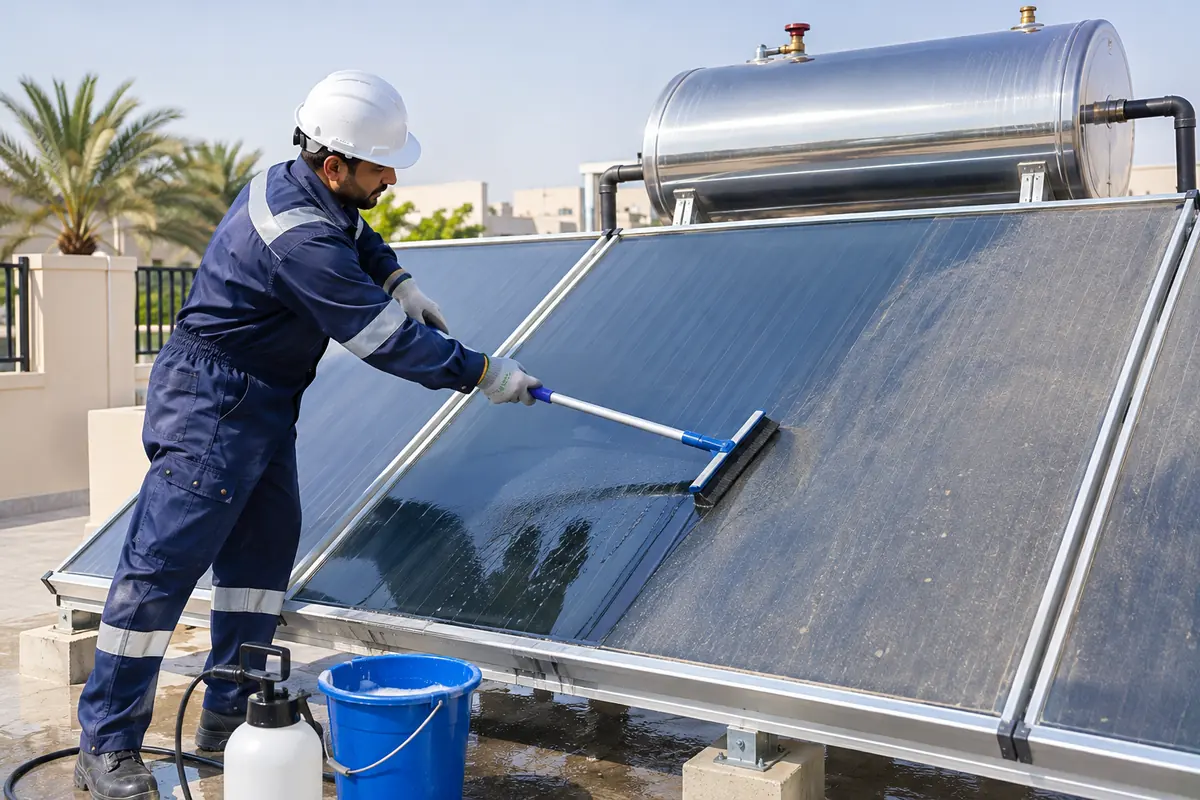
Read our maintenance checklist or see solar water heater maintenance and annual maintenance contracts.
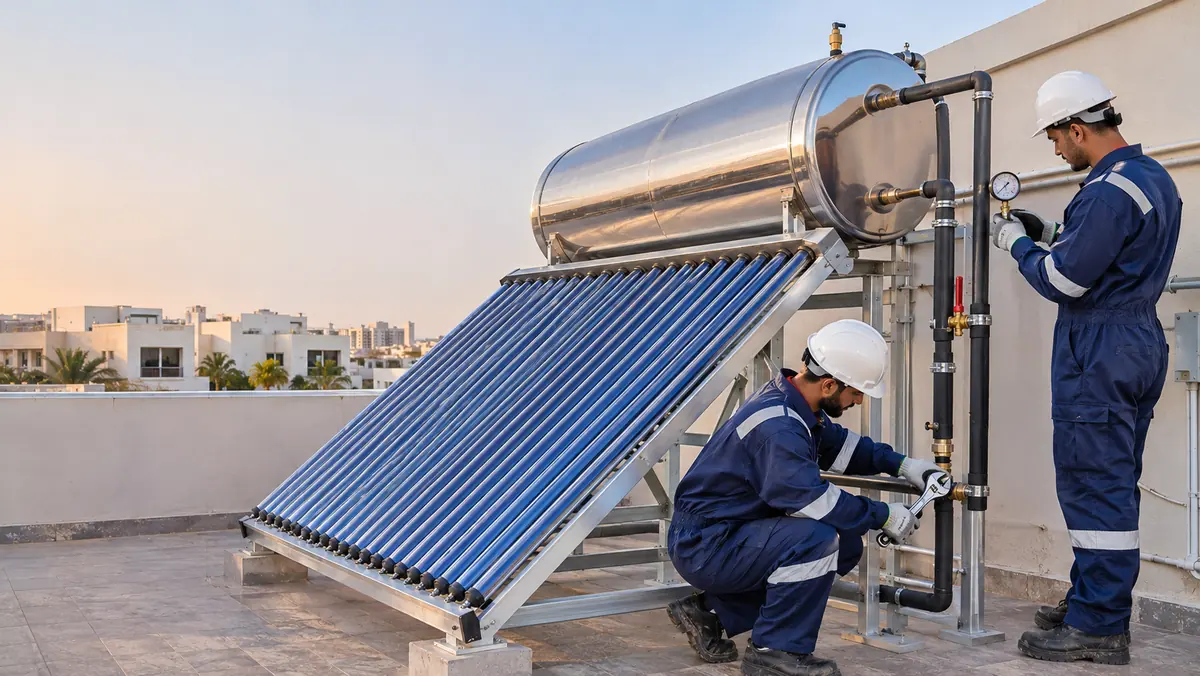
Solar water heater installation in the UAE: choosing the right system, emirate-specific site factors,…
View service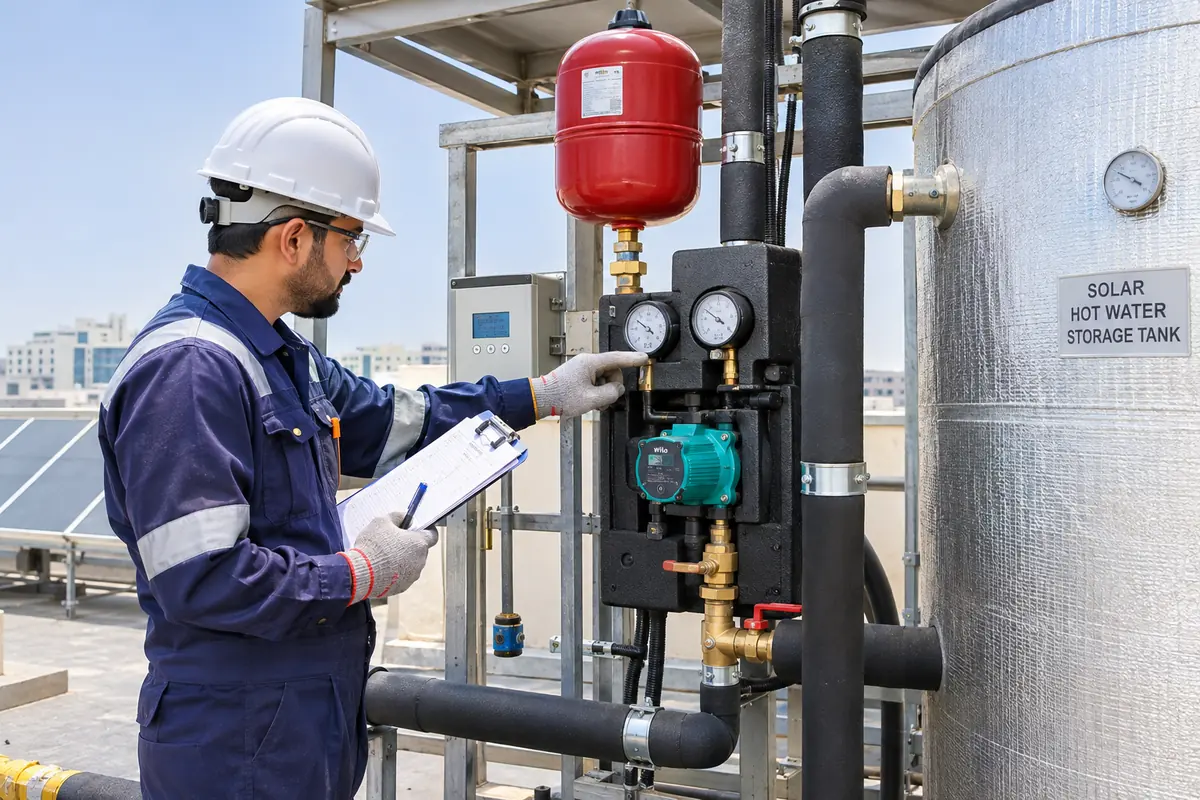
Solar water heater maintenance in the UAE: which parts wear and when, how coastal, inland and dusty sites…
View service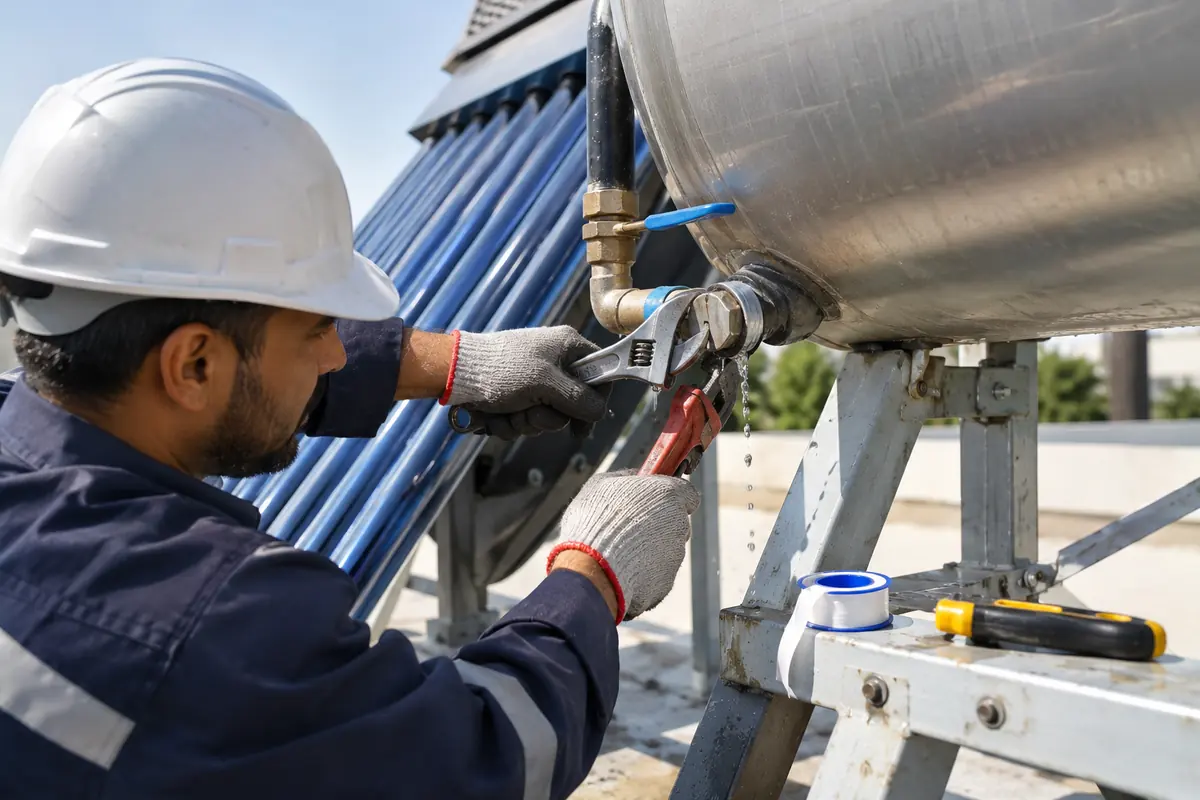
Solar water heater repair in the UAE: faults by system type, specialist pump, element, collector and tank…
View service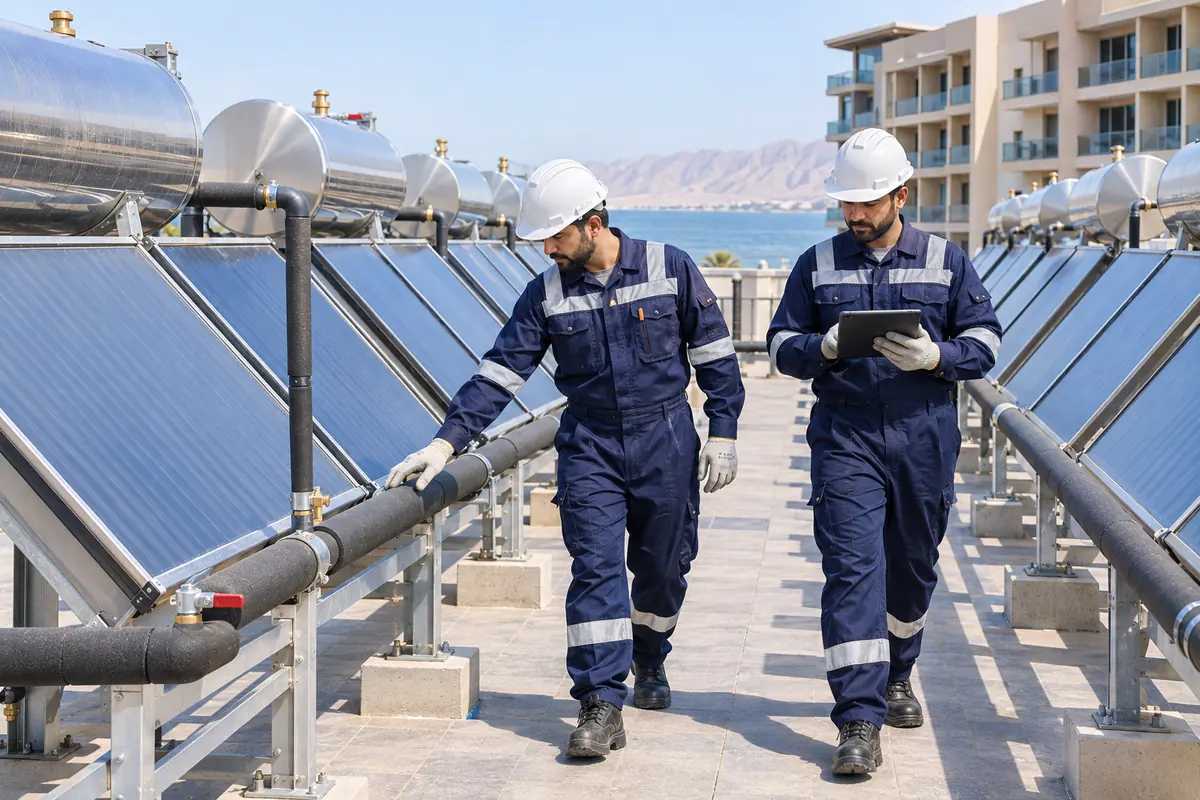
Solar water heater AMC in the UAE: labour-only, parts-inclusive and comprehensive contracts, multi-site cover…
View service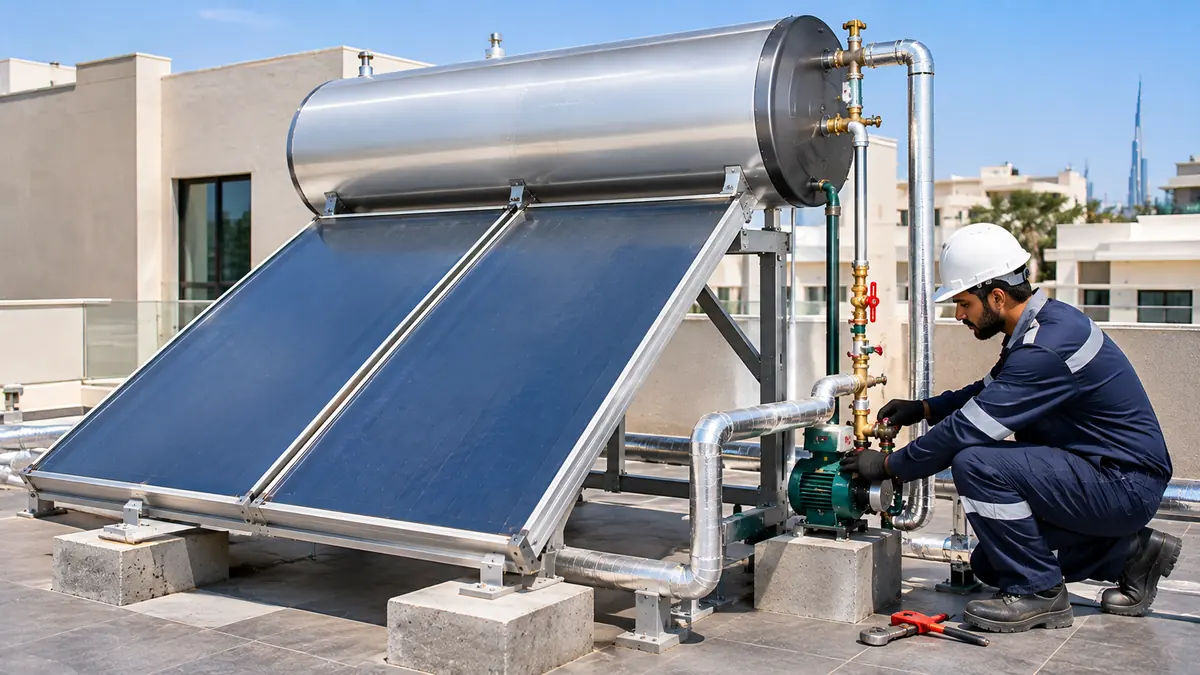
If the collector and frame are sound and compatible, replacing just the tank can make sense. If several components are worn or parts aren’t available, a full replacement is usually better value.
Yes. We survey every unit, prioritise by condition, and can phase the work so hot water stays available.
Usually, yes. A full replacement can use any suitable system. For partial replacement, the new part must be compatible with what’s left. See replacement equipment we supply.
Outside the hottest months where possible, and before winter if the current system is struggling. For commercial sites, low-occupancy periods are best.
No. Age alone isn’t a reason. If the tank and collector are sound, repairing it may give it several more years.
It depends on the system, its condition and the work required. We survey or diagnose first and then give you a written quotation, so you know the cost before any work starts.
It depends on the job. Many residential visits can be completed in a day, while larger systems, commercial sites and replacements take longer. We confirm the expected timing in your quotation.
Most systems benefit from an annual service, with collector cleaning more often in dusty locations. Hard water may call for more frequent descaling.
Equipment warranties are set by the manufacturer and vary by brand and component. The warranty terms that apply are confirmed in writing in your quotation.
Often, yes. Depending on its condition, a system can be enlarged, have parts replaced, or have solar added to an existing electric heater setup. We assess it on site first.
Contact our team for a professional assessment and a customised quotation for your property.
Select your emirate, tell us how many systems you have and their approximate age, and attach photos of the units and tank labels.